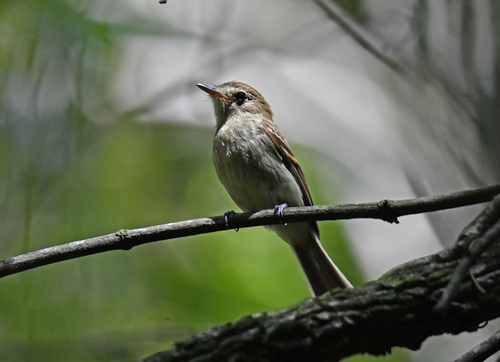
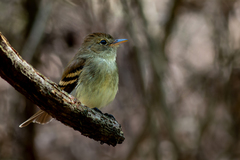
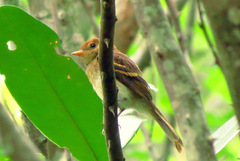

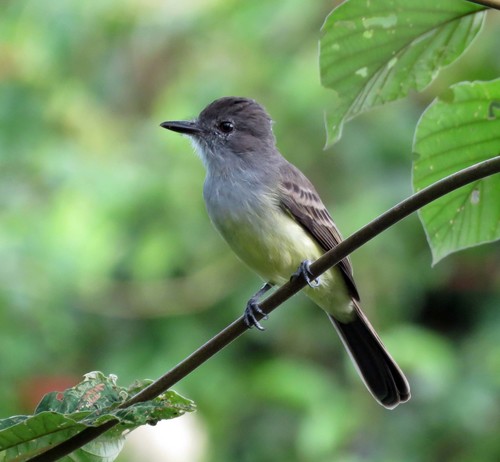
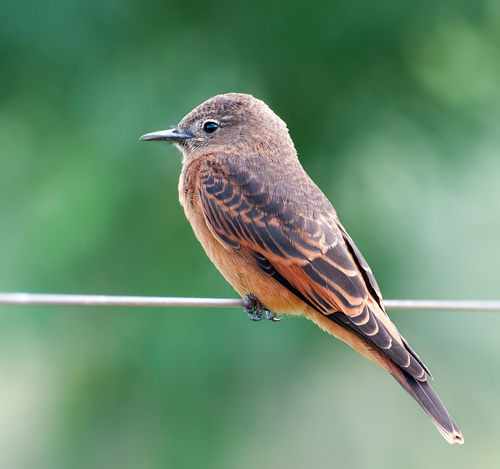
Euler's Flycatcher

Euler's Flycatcher

Lathrotriccus euleri

Silhouette: Emily Willoughby · PhyloPic

LCLeast ConcernNTVUENCR
Daily sighting probability <5% · Rare
at Rio de Janeiro

In 3 days ~10%

56 Verified sightings at Rio de Janeiro
1,509 In all 17 parks From 2019 to 2026
June Best month
☀️ Diurnal When it's spotted

About the Euler's Flycatcher

Euler's flycatcher (Lathrotriccus euleri) is a small passerine bird in the family Tyrannidae, the tyrant flycatchers. It is found on Trinidad and in every mainland South American country except Chile. It formerly was found on Grenada.

Euler's flycatcher has a complicated taxonomic history. Subspecies L. e. flaviventris was originally described as Blaccicus flaviventris. Subspecies L. e. lawrencei was originally described as Ochthaeca flaviventris but later renamed Empidonax lawrencei. In the early 1900s genus Empidochanes was merged into Empidonax. Wikipedia →

Sounds

Call0:17

Brazil · 2026

© JAYRSON ARAUJO DE OLIVEIRA · XC1186157 · CC BY-NC-SA 4.0

Alarm call0:50

Ecuador · 2025

© Manuel Sánchez-Nivicela · XC1151619 · CC BY-NC-ND 4.0

Song0:20

Brazil · 2025

© Joost van Bruggen · XC1050475 · CC BY-NC-ND 4.0

Global Distribution

Parks Where Found

# Park Country Daily sighting probability
1 Serra dos Órgãos National Park 🇧🇷 Brazil
~40%
2 Itatiaia National Park 🇧🇷 Brazil
~20%
3 El Palmar National Park 🇦🇷 Argentina
~10%
4 Iberá National Park 🇦🇷 Argentina
~10%
5 Amboró National Park 🇧🇴 Bolivia
~10%
6 Tijuca National Park 🇧🇷 Brazil
~10%
7 Serra da Canastra National Park 🇧🇷 Brazil
~10%
8 Iguazú National Park 🇦🇷 Argentina
<5%
9 Chapada Diamantina National Park 🇧🇷 Brazil
<5%
10 Iguaçu National Park 🇧🇷 Brazil
<5%
11 Tambopata National Reserve 🇵🇪 Peru
<5%
12 Manu National Park 🇵🇪 Peru
<5%
13 Anavilhanas National Park 🇧🇷 Brazil
<5%
14 Sierra de la Macarena National Park 🇨🇴 Colombia
<5%
15 Amacayacu National Natural Park 🇨🇴 Colombia
<5%
16 Yasuní National Park 🇪🇨 Ecuador
<5%
17 Podocarpus National Park 🇪🇨 Ecuador
<5%

Cities Where Found

# City Country Daily sighting probability
1 Curitiba 🇧🇷 Brazil
~10%
2 Belo Horizonte 🇧🇷 Brazil
<5%
3 São Paulo 🇧🇷 Brazil
<5%
4 Rio de Janeiro 🇧🇷 Brazil
<5%
5 Santos 🇧🇷 Brazil
<5%
6 Santa Cruz de la Sierra 🇧🇴 Bolivia
<5%
7 Asuncion 🇵🇾 Paraguay
<5%
8 Maceió 🇧🇷 Brazil
<5%
9 Buenos Aires 🇦🇷 Argentina
<5%
10 Porto Alegre 🇧🇷 Brazil
<5%

Before you go

What are the chances of seeing a Euler's Flycatcher in Rio de Janeiro?

Rare

Under 5% of wildlife watchers report a Euler's Flycatcher sighting in Rio de Janeiro on a given day, based on 56 verified sightings from GBIF citizen-science data. It is the 150th most-seen of the 278 birds we can rate there. Over three days the chance rises to about 10%, if each day is a fresh chance.

When is the best time to see a Euler's Flycatcher in Rio de Janeiro?

Any time of year

In every month with enough records, under 5% of wildlife watchers report a Euler's Flycatcher in Rio de Janeiro on a given day, so our monthly data shows no clear season.

What time of day is best to see a Euler's Flycatcher?

Between 9 am and noon

Across all the parks we cover, that three-hour window holds the most Euler's Flycatcher sightings with a recorded time, and about 9 in 10 of them come between 6 am and 6 pm: it is a daytime animal.

Is Rio de Janeiro the best place to see a Euler's Flycatcher?

4th of 10

Of the 10 cities where we can rate Euler's Flycatcher sightings, Rio de Janeiro ranks 4th at under 5%. The best odds are in Curitiba (Brazil, about 10%), Belo Horizonte (Brazil, under 5%) and São Paulo (Brazil, under 5%).

Which relatives of the Euler's Flycatcher live in Rio de Janeiro?

Same family: Tyrannidae

The closest relatives of the Euler's Flycatcher that you can see in Rio de Janeiro (family Tyrannidae, Tyrant Flycatchers) are Great Kiskadee (about 90%), Tropical Kingbird (about 70%) and Masked Water-Tyrant (about 70%), with each one's daily chance of a sighting.

Where does the Euler's Flycatcher sighting chance come from?

GBIF citizen-science records

It is estimated from how often the Euler's Flycatcher is recorded against all the birds logged in Rio de Janeiro (56 verified sightings), calibrated against known sighting rates. Figures are rounded to the nearest 10% because citizen-science data supports honest approximations, not decimals, and months with records from fewer than five people show "—". How it works.

← Back to Rio de Janeiro