Lesser Coucal

Lesser Coucal

Centropus bengalensis

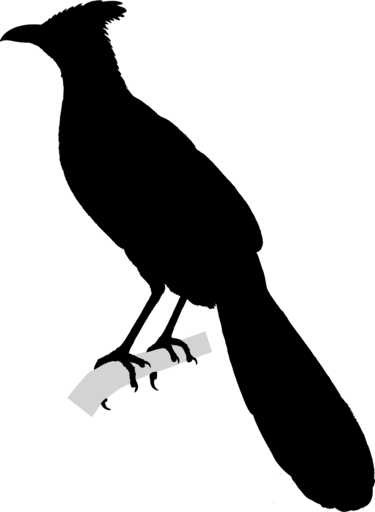
Silhouette: Nicolas Huet le Jeune and Jean-Gabriel Prêtre (vectorized by T. Michael Keesey) · PhyloPic

LCLeast ConcernNTVUENCR
Daily sighting probability <5% · Rare
at Tuen Mun

In 3 days <5% in a week ~10%

15 Verified sightings at Tuen Mun
2,198 In all 26 parks From 2019 to 2026
June Best month
🌅 Crepuscular When it's spotted

About the Lesser Coucal

The lesser coucal (Centropus bengalensis) is a species of cuckoo in the family Cuculidae. It has a wide distribution range that overlaps with several other similar species. The habitat in which it is found is often marshy land with grass and tree cover. It is distinguished by its smaller size, less prominent bill, pale shaft streaks on the feathers of the head and back. It has a much longer claw on its hind toe and a distinct call. It is also among the few coucals that show season plumage differences but like in other coucals, the sexes cannot be distinguished in the field.

The lesser coucal was formally described in 1788 by the German naturalist Johann Friedrich Gmelin in his revised and expanded edition of Carl Linnaeus's Systema Naturae. He placed it with all the other cuckoos in the genus Cuculus and coined the binomial name Cuculus bengalensis. Gmelin based his description on the "lark-heeled cuckoo" from Bengal that had been described and illustrated in 1776 by the English naturalist Peter Brown. The lesser coucal is now one of around 30 species placed in the genus Centropus that was introduced in 1811 by the German zoologist Johann Karl Wilhelm Illiger. The genus... Wikipedia →

Sounds

Call0:36

Indonesia · 2025

© Richard E. Webster · XC1075143 · CC BY-NC-SA 4.0

Song1:04

India · 2025

© Peter Boesman · XC1030491 · CC BY-NC-ND 4.0

Song0:34

China · 2025

© Penghui Lou · XC999588 · CC BY-NC-SA 4.0

Global Distribution

Parks Where Found

# Park Country Daily sighting probability
1 Chitwan National Park 🇳🇵 Nepal
~30%
2 Tangkoko Nature Reserve 🇮🇩 Indonesia
~30%
3 Manas National Park 🇮🇳 India
~20%
4 Cat Tien National Park 🇻🇳 Vietnam
~20%
5 Kaziranga National Park 🇮🇳 India
~10%
6 Way Kambas National Park 🇮🇩 Indonesia
~10%
7 Tanjung Puting National Park 🇮🇩 Indonesia
~10%
8 Royal Bardia National Park 🇳🇵 Nepal
~10%
9 Kerinci Seblat National Park 🇮🇩 Indonesia
~10%
10 Bali Barat National Park 🇮🇩 Indonesia
~10%
11 Royal Manas National Park 🇧🇹 Bhutan
<5%
12 Komodo National Park 🇮🇩 Indonesia
<5%
13 Gunung Leuser National Park 🇮🇩 Indonesia
<5%
14 Namdapha National Park 🇮🇳 India
<5%
15 Jim Corbett National Park 🇮🇳 India
<5%
16 Kaeng Krachan National Park 🇹🇭 Thailand
<5%
17 Kinabatangan Wildlife Sanctuary 🇲🇾 Malaysia
<5%
18 Khao Yai National Park 🇹🇭 Thailand
<5%
19 Taman Negara National Park 🇲🇾 Malaysia
<5%
20 Sepilok 🇲🇾 Malaysia
<5%
21 Danum Valley Conservation Area 🇲🇾 Malaysia
<5%
22 Sundarbans National Park 🇮🇳 India
<5%
23 Doi Inthanon National Park 🇹🇭 Thailand
<5%
24 Bandipur National Park 🇮🇳 India
<5%
25 Periyar National Park 🇮🇳 India
<5%
26 Kinabalu Park 🇲🇾 Malaysia
<5%

Cities Where Found

# City Country Daily sighting probability
1 Chattogram 🇧🇩 Bangladesh
~20%
2 Semarang 🇮🇩 Indonesia
~10%
3 Phnom Penh 🇰🇭 Cambodia
~10%
4 Thrissur 🇮🇳 India
~10%
5 Bandung 🇮🇩 Indonesia
~10%
6 Ho Chi Minh City 🇻🇳 Vietnam
~10%
7 Jakarta 🇮🇩 Indonesia
~10%
8 Hanoi 🇻🇳 Vietnam
~10%
9 Singapore 🇸🇬 Singapore
<5%
10 Tainan 🇹🇼 Taiwan
<5%

Before you go

What are the chances of seeing a Lesser Coucal in Tuen Mun?

Rare

Under 5% of wildlife watchers report a Lesser Coucal sighting in Tuen Mun on a given day, based on 15 verified sightings from GBIF citizen-science data. It is the 131st most-seen of the 183 birds we can rate there. Over three days the chance rises to under 5%, and over a week to about 10%, if each day is a fresh chance.

When is the best time to see a Lesser Coucal in Tuen Mun?

June

In that month about 10% of wildlife watchers report a Lesser Coucal in Tuen Mun on a given day, against under 5% in July to May, the lowest months. That is one of Tuen Mun's wettest months, with about 290 mm of rain against 20 mm in December.

What time of day is best to see a Lesser Coucal?

Between 1 and 4 am

Across all the parks we cover, that three-hour window holds the most Lesser Coucal sightings with a recorded time, and about 6 in 10 of them come between 6 pm and 6 am: it is most active around dawn and dusk.

Is Tuen Mun the best place to see a Lesser Coucal?

19th of 24

Of the 24 cities where we can rate Lesser Coucal sightings, Tuen Mun ranks 19th at under 5%. The best odds are in Chattogram (Bangladesh, about 20%), Semarang (Indonesia, about 10%) and Phnom Penh (Cambodia, about 10%).

Where does the Lesser Coucal sighting chance come from?

GBIF citizen-science records

It is estimated from how often the Lesser Coucal is recorded against all the birds logged in Tuen Mun (15 verified sightings), calibrated against known sighting rates. Figures are rounded to the nearest 10% because citizen-science data supports honest approximations, not decimals, and months with records from fewer than five people show "—". How it works.

← Back to Tuen Mun