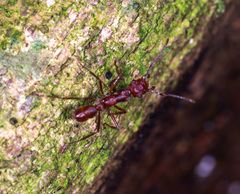
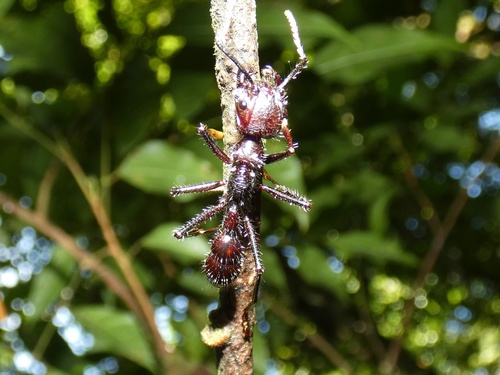

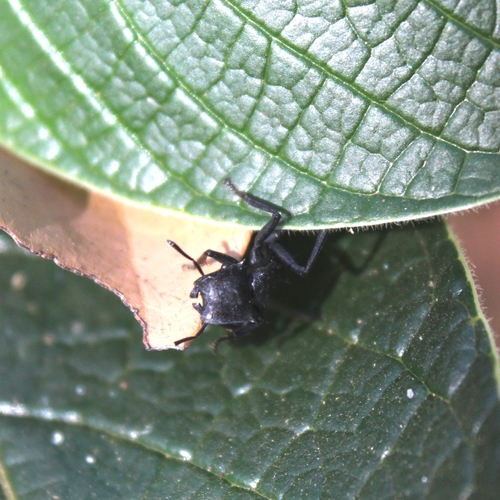
Ectatomma tuberculatum

Ectatomma tuberculatum

Ectatomma tuberculatum

Daily sighting probability ~20% · Possible
at Cuyabeno Wildlife Reserve

In 3 days ~60% in a week ~90%

15 Verified sightings at Cuyabeno Wildlife Reserve From 2019 to 2026
339 In all 19 parks
June Best month
☀️ Diurnal When it's spotted

About the Ectatomma tuberculatum

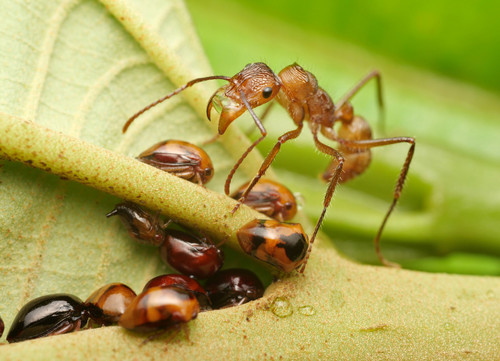
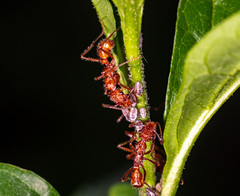
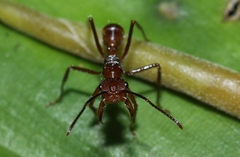
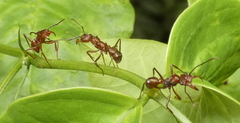
Ectatomma tuberculatum, known in Qʼeqchiʼ as the kelep, is a Neotropical species of ant in the subfamily Ectatomminae. Common in the Neotropics, the species is found from Mexico to Argentina. It is a host to the related social parasite Ectatomma parasiticum, the only known parasitic species in the subfamily Ectatomminae.

Ectatomin Media related to Ectatomma tuberculatum at Wikimedia Commons Wikipedia →

Global Distribution

Parks Where Found

# Park Country Daily sighting probability
1 Brownsberg Nature Park 🇸🇷 Suriname
~30%
2 Manu National Park 🇵🇪 Peru
~30%
3 Cuyabeno Wildlife Reserve 🇪🇨 Ecuador
~20%
4 Main Ridge Forest Reserve 🇹🇹 Trinidad and Tobago
~20%
5 Biotopo Cerro Cahuí 🇬🇹 Guatemala
~20%
6 Ría Lagartos Biosphere Reserve 🇲🇽 Mexico
~20%
7 Tayrona National Natural Park 🇨🇴 Colombia
~20%
8 Tambopata National Reserve 🇵🇪 Peru
~20%
9 Yasuní National Park 🇪🇨 Ecuador
~20%
10 Tenorio Volcano National Park 🇨🇷 Costa Rica
~10%
11 Bastimentos Island National Marine Park 🇵🇦 Panama
~10%
12 Gandoca-Manzanillo Wildlife Refuge 🇨🇷 Costa Rica
~10%
13 Tortuguero National Park 🇨🇷 Costa Rica
~10%
14 Arenal Volcano National Park 🇨🇷 Costa Rica
~10%
15 Corcovado National Park 🇨🇷 Costa Rica
~10%
16 Soberanía National Park 🇵🇦 Panama
~10%
17 Parque Natural Metropolitano 🇵🇦 Panama
~10%
18 Manuel Antonio National Park 🇨🇷 Costa Rica
~10%
19 La Amistad International Park (Panama) 🇵🇦 Panama
~10%

Cities Where Found

# City Country Daily sighting probability
1 Salvador 🇧🇷 Brazil
~20%
2 Belém 🇧🇷 Brazil
~20%
3 San Pedro Sula 🇭🇳 Honduras
~20%
4 Recife 🇧🇷 Brazil
~20%
5 Manaus 🇧🇷 Brazil
~10%
6 Maceió 🇧🇷 Brazil
~10%
7 São Luís 🇧🇷 Brazil
~10%
8 Niterói 🇧🇷 Brazil
~10%
9 Vitória 🇧🇷 Brazil
~10%
10 Panama City 🇵🇦 Panama
~10%

Before you go

What are the chances of seeing an Ectatomma tuberculatum in Cuyabeno Wildlife Reserve?

Possible

About 20% of wildlife watchers report an Ectatomma tuberculatum sighting in Cuyabeno Wildlife Reserve on a given day, based on 15 verified sightings from GBIF citizen-science data from 2019 to 2026. It is the 12th most-seen of the 45 insects we can rate there. Over three days the chance rises to about 60%, and over a week to about 90%, if each day is a fresh chance.

When is the best time to see an Ectatomma tuberculatum in Cuyabeno Wildlife Reserve?

June

In that month about 50% of wildlife watchers report an Ectatomma tuberculatum in Cuyabeno Wildlife Reserve on a given day, against under 5% in March–April, August and November–December, the lowest months.

What time of day is best to see an Ectatomma tuberculatum?

Between 9 am and noon

Across all the parks we cover, that three-hour window holds the most Ectatomma tuberculatum sightings with a recorded time, and about 8 in 10 of them come between 6 am and 6 pm: it is a daytime animal.

Is Cuyabeno Wildlife Reserve the best place to see an Ectatomma tuberculatum?

3rd of 19

Of the 19 parks where we can rate Ectatomma tuberculatum sightings, Cuyabeno Wildlife Reserve ranks 3rd at about 20%. The best odds are in Brownsberg Nature Park (Suriname, about 30%) and Manu National Park (Peru, about 30%).

Which relatives of the Ectatomma tuberculatum live in Cuyabeno Wildlife Reserve?

Same family: Formicidae

The closest relatives of the Ectatomma tuberculatum that you can see in Cuyabeno Wildlife Reserve (family Formicidae, Ants) are Bullet Ant (about 40%), Hairy-Headed Leafcutter Ant (about 20%) and Common Giant Turtle Ant (about 10%), with each one's daily chance of a sighting.

Where does the Ectatomma tuberculatum sighting chance come from?

GBIF citizen-science records

It is estimated from how often the Ectatomma tuberculatum is recorded against all the insects logged in Cuyabeno Wildlife Reserve (15 verified sightings from 2019 to 2026), calibrated against known sighting rates. Figures are rounded to the nearest 10% because citizen-science data supports honest approximations, not decimals, and months with records from fewer than five people show "—". How it works.

← Back to Cuyabeno Wildlife Reserve