Dunlin

Dunlin

Calidris alpina

Silhouette: Edwin Price · PhyloPic

LCNTNear ThreatenedVUENCR
Daily sighting probability ~50% · Likely
at Djoudj National Bird Sanctuary

In 3 days ~90% in a week >90%

73 Verified sightings at Djoudj National Bird Sanctuary From 2019 to 2026
13,103 In all 35 parks
January Best month
☀️ Diurnal When it's spotted

About the Dunlin

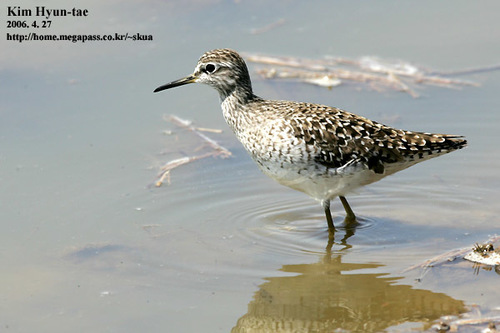
The dunlin (Calidris alpina) is a small wader in the genus Calidris. The English name is a dialect form of "dunling", first recorded in 1531–1532. It derives from dun, "dull brown", with the suffix -ling, meaning a person or thing with the given quality.

It is a circumpolar breeder in Arctic or subarctic regions. Birds that breed in western Europe are short-distance migrants largely staying on western and southern European and northwest African coasts; those breeding in far northern Europe and Asia are long-distance migrants, wintering south to Africa, southeast and west Asia. Birds that breed in Alaska and the Canadian Arctic migrate short distances to the Pacific and Atlantic coasts of North America, although those nesting in northern Alaska overwinter in Asia.

The dunlin was formally described by the Swedish naturalist Carl Linnaeus in 1758 in the tenth edition of his Systema Naturae under the binomial name Tringa alpina. Linnaeus specified the location as Lapland. This species was formerly placed (with the other "stints") by some American authors in the genus Erolia, but is now placed with 23 other sandpipers in the genus Calidris that was introduced in 1804 by the...

Wikipedia →

Sounds

Song0:10

United States · 2022

© AUDEVARD Aurélien · XC1045847 · CC BY-NC-SA 4.0

Call0:27

Spain · 2023

© Jacobo Ramil Millarengo · XC845733 · CC BY-NC-SA 4.0

Flight call0:37

Poland · 2021

© Jarek Matusiak · XC666529 · CC BY-NC-ND 4.0

Global Distribution

Parks Where Found

# Park Country Daily sighting probability
1 Djoudj National Bird Sanctuary 🇸🇳 Senegal
~50%
2 Wadden Sea National Park 🇩🇪 Germany
~40%
3 Doñana National Park 🇪🇸 Spain
~30%
4 Oosterschelde National Park 🇳🇱 Netherlands
~30%
5 Kiskunság National Park 🇭🇺 Hungary
~20%
6 Hortobágy National Park 🇭🇺 Hungary
~20%
7 Point Pelee National Park 🇨🇦 Canada
~20%
8 Camargue 🇫🇷 France
~20%
9 Pacific Rim National Park Reserve 🇨🇦 Canada
~20%
10 Merritt Island National Wildlife Refuge 🇺🇸 United States
~20%
11 Padre Island National Seashore 🇺🇸 United States
~20%
12 Snowdonia National Park 🇬🇧 United Kingdom
~20%
13 Vatnajokull National Park 🇮🇸 Iceland
~20%
14 El Vizcaíno Biosphere Reserve 🇲🇽 Mexico
~10%
15 Svalbard 🇳🇴 Norway
~10%
16 Fertő-Hanság National Park 🇭🇺 Hungary
~10%
17 Teno-Rasca Marine Strip (Tenerife) 🇪🇸 Spain
~10%
18 Everglades National Park 🇺🇸 United States
~10%
19 Ciénaga de Zapata 🇨🇺 Cuba
~10%
20 Great Bear Rainforest 🇨🇦 Canada
<5%
21 Białowieża National Park 🇵🇱 Poland
<5%
22 Ría Lagartos Biosphere Reserve 🇲🇽 Mexico
<5%
23 Biebrza National Park 🇵🇱 Poland
<5%
24 Sierra de Guadarrama National Park 🇪🇸 Spain
<5%
25 Redwood National Park 🇺🇸 United States
<5%
26 Olympic National Park 🇺🇸 United States
<5%
27 Big Cypress National Preserve 🇺🇸 United States
<5%
28 Channel Islands National Park 🇺🇸 United States
<5%
29 Gros Morne National Park 🇨🇦 Canada
<5%
30 Ranthambore National Park 🇮🇳 India
<5%
31 Cairngorms National Park 🇬🇧 United Kingdom
<5%
32 Celestún Biosphere Reserve 🇲🇽 Mexico
<5%
33 Acadia National Park 🇺🇸 United States
<5%
34 Shenandoah National Park 🇺🇸 United States
<5%
35 Monfragüe National Park 🇪🇸 Spain
<5%

Cities Where Found

# City Country Daily sighting probability
1 Liverpool 🇬🇧 United Kingdom
~40%
2 Kuwait City 🇰🇼 Kuwait
~30%
3 Manama 🇧🇭 Bahrain
~30%
4 Quanzhou 🇨🇳 China
~20%
5 Dublin 🇮🇪 Ireland
~10%
6 Dammam 🇸🇦 Saudi Arabia
~10%
7 Porto 🇵🇹 Portugal
~10%
8 Helsinki 🇫🇮 Finland
~10%
9 San Francisco 🇺🇸 United States
~10%
10 Karachi 🇵🇰 Pakistan
~10%

Zoos & Centres Where Found

# Zoo / Centre Country
1 National Zoological Park 🇺🇸 United States In captivity
2 Zoo Pilsen 🇨🇿 Czechia In captivity
3 Monterey Bay Aquarium 🇺🇸 United States In captivity
4 Ralph Perkins II Wildlife Center and Woods Garden 🇺🇸 United States In captivity

Before you go

What are the chances of seeing a Dunlin in Djoudj National Bird Sanctuary?

Likely

About 50% of wildlife watchers report a Dunlin sighting in Djoudj National Bird Sanctuary on a given day, based on 73 verified sightings from GBIF citizen-science data from 2019 to 2026. It is the 53rd most-seen of the 173 birds we can rate there. Over three days the chance rises to about 90%, and over a week to over 90%, if each day is a fresh chance.

When is the best time to see a Dunlin in Djoudj National Bird Sanctuary?

January

In that month about 60% of wildlife watchers report a Dunlin in Djoudj National Bird Sanctuary on a given day, against about 30% in November, the lowest month. That is one of Djoudj National Bird Sanctuary's driest months, with almost no rain against 55 mm in August. May to October have too few records to rate.

What time of day is best to see a Dunlin?

Between 1 and 4 pm

Across all the parks we cover, that three-hour window holds the most Dunlin sightings with a recorded time, and about 8 in 10 of them come between 6 am and 6 pm: it is a daytime animal.

Is Djoudj National Bird Sanctuary the best place to see a Dunlin?

Yes

Of the 35 parks where we can rate Dunlin sightings, Djoudj National Bird Sanctuary has the highest daily chance: about 50%. Next come Wadden Sea National Park (Germany, about 40%) and Doñana National Park (Spain, about 30%). All parks ranked.

Which relatives of the Dunlin live in Djoudj National Bird Sanctuary?

Same genus: Calidris

The closest relatives of the Dunlin that you can see in Djoudj National Bird Sanctuary (genus Calidris, Calidris Sandpipers) are Little Stint (about 70%), Ruff (about 60%) and Curlew Sandpiper (about 30%), with each one's daily chance of a sighting.

Where does the Dunlin sighting chance come from?

GBIF citizen-science records

It is estimated from how often the Dunlin is recorded against all the birds logged in Djoudj National Bird Sanctuary (73 verified sightings from 2019 to 2026), calibrated against known sighting rates. Figures are rounded to the nearest 10% because citizen-science data supports honest approximations, not decimals, and months with records from fewer than five people show "—". How it works.

← Back to Djoudj National Bird Sanctuary