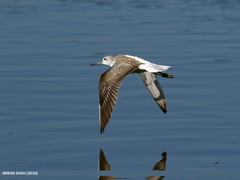
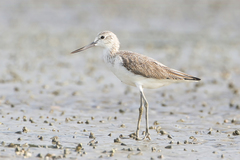
Common Greenshank

Common Greenshank

Tringa nebularia

Silhouette: Andy Wilson · PhyloPic

LCLeast ConcernNTVUENCR
Daily sighting probability ~40% · Likely
at Djoudj National Bird Sanctuary

In 3 days ~80% in a week >90%

69 Verified sightings at Djoudj National Bird Sanctuary From 2019 to 2026
13,509 In all 86 parks
January Best month
☀️ Diurnal When it's spotted

About the Common Greenshank

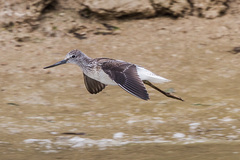
The common greenshank (Tringa nebularia) is a wader in the large family Scolopacidae, the typical waders. The genus name Tringa is the Neo-Latin name given to the green sandpiper by Aldrovandus in 1599 based on Ancient Greek trungas, a thrush-sized, white-rumped, tail-bobbing wading bird mentioned by Aristotle. The specific nebularia is from Latin nebula "mist". Like the Norwegian Skoddefoll, this refers to the greenshank's damp marshy habitat.

Its closest relative is the greater yellowlegs, which together with the spotted redshank form a close-knit group. Among them, these three species show all the basic leg and foot colours found in the shanks, demonstrating that this character is paraphyletic. They are also the largest shanks apart from the willet, which is altogether more robustly built. The greater yellowlegs and the common greenshank share a coarse, dark, and fairly crisp breast pattern as well as much black on the shoulders and back in breeding plumage.

This is a subarctic bird, breeding from northern Scotland eastwards across northern Europe and east across the Palearctic. It is a migratory species, wintering in Africa, the Indian subcontinent...

Wikipedia →

Sounds

Nocturnal flight call0:31

Finland · 2026

© Eetu Paljakka · XC1177658 · CC BY-NC-SA 4.0

Dawn song0:40

Australia · 2026

© Khristos Nizamis · XC1154770 · CC BY-NC-ND 4.0

Alarm call0:17

Sweden · 2026

© Lars Edenius · XC1145248 · CC BY-NC-SA 4.0

Global Distribution

Parks Where Found

# Park Country Daily sighting probability
1 West Coast National Park 🇿🇦 South Africa
~60%
2 Djoudj National Bird Sanctuary 🇸🇳 Senegal
~40%
3 Saloum Delta National Park 🇸🇳 Senegal
~40%
4 Gonarezhou National Park 🇿🇼 Zimbabwe
~40%
5 Kaziranga National Park 🇮🇳 India
~40%
6 Royal Bardia National Park 🇳🇵 Nepal
~30%
7 Lake Nakuru National Park 🇰🇪 Kenya
~30%
8 Chitwan National Park 🇳🇵 Nepal
~30%
9 Lower Zambezi National Park 🇿🇲 Zambia
~30%
10 Liwonde National Park 🇲🇼 Malawi
~30%
11 Camargue 🇫🇷 France
~30%
12 Keoladeo National Park 🇮🇳 India
~30%
13 Yala National Park 🇱🇰 Sri Lanka
~20%
14 South Luangwa National Park 🇿🇲 Zambia
~20%
15 Ranthambore National Park 🇮🇳 India
~20%
16 Lake Manyara National Park 🇹🇿 Tanzania
~20%
17 Tarangire National Park 🇹🇿 Tanzania
~20%
18 Amboseli National Park 🇰🇪 Kenya
~20%
19 Wadden Sea National Park 🇩🇪 Germany
~20%
20 Mana Pools National Park 🇿🇼 Zimbabwe
~20%
21 Oosterschelde National Park 🇳🇱 Netherlands
~20%
22 Doñana National Park 🇪🇸 Spain
~20%
23 Murchison Falls National Park 🇺🇬 Uganda
~20%
24 Queen Elizabeth National Park 🇺🇬 Uganda
~20%
25 Kruger National Park 🇿🇦 South Africa
~10%
26 Tsavo East National Park 🇰🇪 Kenya
~10%
27 iSimangaliso Wetland Park 🇿🇦 South Africa
~10%
28 Wilpattu National Park 🇱🇰 Sri Lanka
~10%
29 Hortobágy National Park 🇭🇺 Hungary
~10%
30 Ngorongoro Conservation Area 🇹🇿 Tanzania
~10%
31 Nairobi National Park 🇰🇪 Kenya
~10%
32 Niokolo-Koba National Park 🇸🇳 Senegal
~10%
33 Hwange National Park 🇿🇼 Zimbabwe
~10%
34 Moremi Game Reserve 🇧🇼 Botswana
~10%
35 Kiskunság National Park 🇭🇺 Hungary
~10%
36 Cape Range 🇦🇺 Australia
~10%
37 Bali Barat National Park 🇮🇩 Indonesia
~10%
38 Bako National Park 🇲🇾 Malaysia
~10%
39 Garden Route National Park 🇿🇦 South Africa
~10%
40 Fertő-Hanság National Park 🇭🇺 Hungary
~10%
41 Awash National Park 🇪🇹 Ethiopia
~10%
42 Kafue National Park 🇿🇲 Zambia
~10%
43 Snowdonia National Park 🇬🇧 United Kingdom
~10%
44 Etosha National Park 🇳🇦 Namibia
~10%
45 Ruaha National Park 🇹🇿 Tanzania
~10%
46 Jim Corbett National Park 🇮🇳 India
~10%
47 Biebrza National Park 🇵🇱 Poland
~10%
48 Akagera National Park 🇷🇼 Rwanda
~10%
49 Chobe National Park 🇧🇼 Botswana
~10%
50 Udawalawe National Park 🇱🇰 Sri Lanka
~10%
51 Nagarhole National Park 🇮🇳 India
~10%
52 Satpura National Park 🇮🇳 India
~10%
53 Bavarian Forest National Park 🇩🇪 Germany
~10%
54 Serengeti National Park 🇹🇿 Tanzania
~10%
55 Addo Elephant National Park 🇿🇦 South Africa
~10%
56 Berenty Reserve 🇲🇬 Madagascar
~10%
57 De Hoop Nature Reserve 🇿🇦 South Africa
~10%
58 Arusha National Park 🇹🇿 Tanzania
~10%
59 Gorongosa National Park 🇲🇿 Mozambique
~10%
60 Tsavo West National Park 🇰🇪 Kenya
<5%
61 Sundarbans National Park 🇮🇳 India
<5%
62 Samburu National Reserve 🇰🇪 Kenya
<5%
63 Teno-Rasca Marine Strip (Tenerife) 🇪🇸 Spain
<5%
64 Masai Mara National Reserve 🇰🇪 Kenya
<5%
65 Bale Mountains National Park 🇪🇹 Ethiopia
<5%
66 Białowieża National Park 🇵🇱 Poland
<5%
67 Monfragüe National Park 🇪🇸 Spain
<5%
68 Gir National Park 🇮🇳 India
<5%
69 Phillip Island Nature Park 🇦🇺 Australia
<5%
70 Sierra de Guadarrama National Park 🇪🇸 Spain
<5%
71 Semuliki National Park 🇺🇬 Uganda
<5%
72 Rottnest Island 🇦🇺 Australia
<5%
73 Pilanesberg National Park 🇿🇦 South Africa
<5%
74 Pico Island Natural Park (Azores) 🇵🇹 Portugal
<5%
75 Bandhavgarh National Park 🇮🇳 India
<5%
76 Kidepo Valley National Park 🇺🇬 Uganda
<5%
77 Kanha National Park 🇮🇳 India
<5%
78 Manas National Park 🇮🇳 India
<5%
79 Aberdare National Park 🇰🇪 Kenya
<5%
80 Virunga National Park 🇨🇩 Democratic Republic of the Congo
<5%
81 Kakadu National Park 🇦🇺 Australia
<5%
82 Table Mountain National Park 🇿🇦 South Africa
<5%
83 Lake Mburo National Park 🇺🇬 Uganda
<5%
84 Raja Ampat 🇮🇩 Indonesia
<5%
85 Daintree National Park 🇦🇺 Australia
<5%
86 Cairngorms National Park 🇬🇧 United Kingdom
<5%

Cities Where Found

# City Country Daily sighting probability
1 Naha 🇯🇵 Japan
~60%
2 Zanzibar City 🇹🇿 Tanzania
~60%
3 Manama 🇧🇭 Bahrain
~40%
4 Tuen Mun 🇨🇳 China
~40%
5 Quanzhou 🇨🇳 China
~40%
6 Serrekunda 🇬🇲 Gambia
~30%
7 Agra 🇮🇳 India
~30%
8 Mombasa 🇰🇪 Kenya
~20%
9 Makassar 🇮🇩 Indonesia
~20%
10 Maputo 🇲🇿 Mozambique
~20%

Before you go

What are the chances of seeing a Common Greenshank in Djoudj National Bird Sanctuary?

Likely

About 40% of wildlife watchers report a Common Greenshank sighting in Djoudj National Bird Sanctuary on a given day, based on 69 verified sightings from GBIF citizen-science data from 2019 to 2026. It is the 59th most-seen of the 173 birds we can rate there. Over three days the chance rises to about 80%, and over a week to over 90%, if each day is a fresh chance.

When is the best time to see a Common Greenshank in Djoudj National Bird Sanctuary?

January and February

In those months about 50% of wildlife watchers report a Common Greenshank in Djoudj National Bird Sanctuary on a given day, against about 40% in March–April and November–December, the lowest months. Those are among Djoudj National Bird Sanctuary's driest months, with almost no rain against 55 mm in August. May to October have too few records to rate.

What time of day is best to see a Common Greenshank?

Between noon and 3 pm

Across all the parks we cover, that three-hour window holds the most Common Greenshank sightings with a recorded time, and about 9 in 10 of them come between 6 am and 6 pm: it is a daytime animal.

Is Djoudj National Bird Sanctuary the best place to see a Common Greenshank?

2nd of 86

Of the 86 parks where we can rate Common Greenshank sightings, Djoudj National Bird Sanctuary ranks 2nd at about 40%. The best odds are in West Coast National Park (South Africa, about 60%). All parks ranked.

Which relatives of the Common Greenshank live in Djoudj National Bird Sanctuary?

Same genus: Tringa

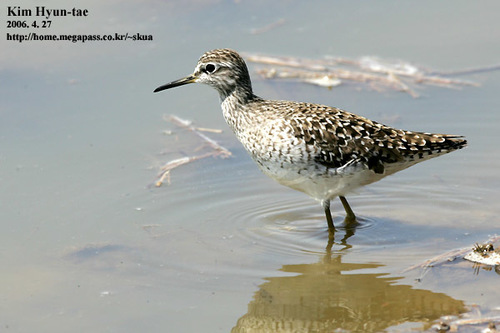
The closest relatives of the Common Greenshank that you can see in Djoudj National Bird Sanctuary (genus Tringa, Shanks, Tattlers, and Allies) are Common Redshank (about 60%), Wood Sandpiper (about 40%) and Marsh Sandpiper (about 40%), with each one's daily chance of a sighting.

Where does the Common Greenshank sighting chance come from?

GBIF citizen-science records

It is estimated from how often the Common Greenshank is recorded against all the birds logged in Djoudj National Bird Sanctuary (69 verified sightings from 2019 to 2026), calibrated against known sighting rates. Figures are rounded to the nearest 10% because citizen-science data supports honest approximations, not decimals, and months with records from fewer than five people show "—". How it works.

← Back to Djoudj National Bird Sanctuary