Indian Pond Heron

Indian Pond Heron

Ardeola grayii

Silhouette: Andy Wilson · PhyloPic

LCLeast ConcernNTVUENCR
Daily sighting probability ~20% · Possible
at Jim Corbett National Park

In 3 days ~40% in a week ~70%

375 Verified sightings at Jim Corbett National Park From 2019 to 2026
19,946 In all 26 parks
October Best month
🌅 Crepuscular When it's spotted

About the Indian Pond Heron

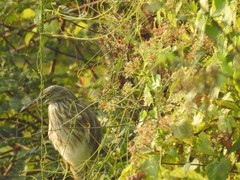
The Indian pond heron or paddybird (Ardeola grayii) is a small heron. It is of Old World origins, breeding in southern Iran and east to the Indian subcontinent, Burma, and Sri Lanka. They are widespread and common but can be easily missed when they stalk prey at the edge of small water-bodies or even when they roost close to human habitations.

They are distinctive when they take off, with bright white wings flashing in contrast to the cryptic streaked olive and brown colours of the body. Their camouflage is so excellent that they can be approached closely before they take to flight, a behaviour which has resulted in folk names and beliefs that the birds are short-sighted or blind.

Indian pond herons are stocky with short necks, short thick bills and buff-brown backs. In summer, adults have long neck feathers. Their appearance is transformed from dull colours when they take to flight and the white of the wings makes them very prominent. They are very similar to the squacco herons, Ardeola ralloides, but darker backed. To the east of their range, they are replaced by the Chinese pond herons, Ardeola bacchus.

During the breeding season, there are records of individuals... Wikipedia →

Sounds

Nocturnal flight call0:05

Oman · 2024

© Stanislas Wroza · XC959997 · CC BY-NC-SA 4.0

Call0:07

Sri Lanka · 2015

© Simon Elliott · XC595418 · CC BY-NC-ND 4.0

Alarm call0:05

India · 2013

© Sudipto Roy · XC133551 · CC BY-SA 3.0

Global Distribution

Parks Where Found

# Park Country Daily sighting probability
1 Keoladeo National Park 🇮🇳 India
~80%
2 Kaziranga National Park 🇮🇳 India
~80%
3 Yala National Park 🇱🇰 Sri Lanka
~70%
4 Sundarbans National Park 🇮🇳 India
~70%
5 Wilpattu National Park 🇱🇰 Sri Lanka
~60%
6 Chitwan National Park 🇳🇵 Nepal
~60%
7 Ranthambore National Park 🇮🇳 India
~60%
8 Udawalawe National Park 🇱🇰 Sri Lanka
~60%
9 Bandhavgarh National Park 🇮🇳 India
~50%
10 Kanha National Park 🇮🇳 India
~50%
11 Minneriya National Park 🇱🇰 Sri Lanka
~50%
12 Bandipur National Park 🇮🇳 India
~50%
13 Periyar National Park 🇮🇳 India
~50%
14 Nagarhole National Park 🇮🇳 India
~50%
15 Satpura National Park 🇮🇳 India
~40%
16 Royal Bardia National Park 🇳🇵 Nepal
~40%
17 Gir National Park 🇮🇳 India
~40%
18 Manas National Park 🇮🇳 India
~40%
19 Mudumalai National Park 🇮🇳 India
~40%
20 Jim Corbett National Park 🇮🇳 India
~20%
21 Eravikulam National Park 🇮🇳 India
~10%
22 Sinharaja Forest Reserve 🇱🇰 Sri Lanka
~10%
23 Horton Plains National Park 🇱🇰 Sri Lanka
<5%
24 Royal Manas National Park 🇧🇹 Bhutan
<5%
25 Namdapha National Park 🇮🇳 India
<5%
26 Akagera National Park 🇷🇼 Rwanda
<5%

Cities Where Found

# City Country Daily sighting probability
1 Hajipur 🇮🇳 India
~90%
2 Savar 🇧🇩 Bangladesh
~80%
3 Madurai 🇮🇳 India
~80%
4 Kollam 🇮🇳 India
~80%
5 Thiruvananthapuram 🇮🇳 India
~70%
6 Ponnani 🇮🇳 India
~70%
7 Vijayawada 🇮🇳 India
~70%
8 Colachel 🇮🇳 India
~70%
9 Kochi 🇮🇳 India
~70%
10 Vasai-Virar 🇮🇳 India
~70%

Zoos & Centres Where Found

# Zoo / Centre Country
1 Prague Zoo 🇨🇿 Czechia In captivity
2 Tierpark Berlin 🇩🇪 Germany In captivity
3 Berlin Zoological Garden 🇩🇪 Germany In captivity
4 Aquarium Berlin 🇩🇪 Germany In captivity
5 Rákosův pavilon 🇨🇿 Czechia In captivity
6 Velemlokárium 🇨🇿 Czechia In captivity

Before you go

What are the chances of seeing an Indian Pond Heron in Jim Corbett National Park?

Possible

About 20% of wildlife watchers report an Indian Pond Heron sighting in Jim Corbett National Park on a given day, based on 375 verified sightings from GBIF citizen-science data from 2019 to 2026. It is the 78th most-seen of the 368 birds we can rate there. Over three days the chance rises to about 40%, and over a week to about 70%, if each day is a fresh chance.

When is the best time to see an Indian Pond Heron in Jim Corbett National Park?

October

In that month about 40% of wildlife watchers report an Indian Pond Heron in Jim Corbett National Park on a given day, against under 5% in August, the lowest month. That is one of Jim Corbett National Park's driest months, with about 45 mm of rain against 360 mm in July.

What time of day is best to see an Indian Pond Heron?

Between 3 and 6 am

Across all the parks we cover, that three-hour window holds the most Indian Pond Heron sightings with a recorded time, and about 6 in 10 of them come between 6 am and 6 pm: it is most active around dawn and dusk.

Which relatives of the Indian Pond Heron live in Jim Corbett National Park?

Same family: Ardeidae

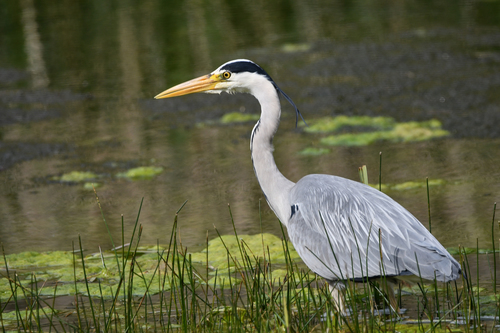
The closest relatives of the Indian Pond Heron that you can see in Jim Corbett National Park (family Ardeidae, Herons, Egrets, and Bitterns) are Little Egret (about 20%), Grey Heron (about 10%) and Great Egret (about 10%), with each one's daily chance of a sighting.

Where does the Indian Pond Heron sighting chance come from?

GBIF citizen-science records

It is estimated from how often the Indian Pond Heron is recorded against all the birds logged in Jim Corbett National Park (375 verified sightings from 2019 to 2026), calibrated against known sighting rates. Figures are rounded to the nearest 10% because citizen-science data supports honest approximations, not decimals, and months with records from fewer than five people show "—". How it works.

← Back to Jim Corbett National Park