


Completed


Central American Spider Monkey
Ateles geoffroyi
Silhouette: Andy Wilson · PhyloPic
- KingdomAnimalia (Animals)
- PhylumChordata (Chordates)
- ClassMammalia (Mammals)
- OrderPrimates
- FamilyAtelidae (Spider, Howler, and Woolly Monkeys)
- GenusAteles (Spider Monkeys)
- SpeciesAteles geoffroyi (Central American Spider Monkey)
In 3 days ~30% in a week ~50%
60 Verified sightings at Monteverde Cloud Forest Reserve From 2019 to 2026
3,584 In all 28 parks
May Best month
☀️ Diurnal When it's spotted
About the Central American Spider Monkey
Geoffroy's spider monkey (Ateles geoffroyi), also known as the black-handed spider monkey or the Central American spider monkey, is a species of spider monkey, a type of New World monkey, from Central America, parts of Mexico and possibly a small portion of Colombia. There are at least five subspecies. Some primatologists classify the black-headed spider monkey (A. fusciceps), found in Panama, Colombia, and Ecuador as the same species as Geoffroy's spider monkey.
It is one of the largest New World monkeys, often weighing as much as 9 kg (20 lb). Its arms are significantly longer than its legs, and its prehensile tail can support the entire weight of the monkey and is used as an extra limb. Its hands have only a vestigial thumb, but long, strong, hook-like fingers. These adaptations allow the monkey to move by swinging by its arms beneath the tree branches.
Geoffroy's spider monkey lives in fission–fusion societies that contain between 20 and 42 members. Its diet consists primarily of ripe fruit and it requires large tracts of forest to survive. As a result of habitat loss, hunting and capture for the pet trade, it is considered to be endangered by the IUCN.
Geoffroy's... Wikipedia →
Sounds
Recording0:32
Guatemala · 2025
© marcosmc · iNaturalist · CC BY-NC 4.0
Recording0:10
Panama · 2022
© keesgroenendijk · iNaturalist · CC BY 4.0
Recording0:17
Mexico · 2024
© Maksymilian Wojtkiewicz · iNaturalist · CC BY-NC 4.0
Recent sightings of Central American Spider Monkey in Monteverde Cloud Forest Reserve
LIVEiNaturalistGlobal Distribution
Parks Where Found
Zoos & Centres Where Found
| # | Zoo / Centre | Country | |
|---|---|---|---|
| 1 | Zoo d'Amiens | 🇫🇷 France | |
| 2 | Belize Zoo | 🇧🇿 Belize | |
| 3 | Parque Temático Hacienda Nápoles | 🇨🇴 Colombia | |
| 4 | Bioparque Estrella | 🇲🇽 Mexico | |
| 5 | Toronto Zoo | 🇨🇦 Canada | |
| 6 | Yumka' | 🇲🇽 Mexico | |
| 7 | Brookfield Zoo | 🇺🇸 United States | |
| 8 | Ecological Center of Sonora | 🇲🇽 Mexico | |
| 9 | Givskud Zoo | 🇩🇰 Denmark | |
| 10 | Nashville Zoo at Grassmere | 🇺🇸 United States | |
| 11 | Omaha’s Henry Doorly Zoo and Aquarium | 🇺🇸 United States | |
| 12 | Milwaukee County Zoo | 🇺🇸 United States | |
| 13 | Toledo Zoo | 🇺🇸 United States | |
| 14 | Wildlife World Zoo | 🇺🇸 United States | |
| 15 | Parque Municipal Summit | 🇵🇦 Panama | |
| 16 | Central Florida Zoo and Botanical Gardens | 🇺🇸 United States | |
| 17 | Birmingham Zoo | 🇺🇸 United States | |
| 18 | Africam Safari | 🇲🇽 Mexico | |
| 19 | Tuzoofari | 🇲🇽 Mexico | |
| 20 | Xcaret | 🇲🇽 Mexico | |
| 21 | Guadalajara Zoo | 🇲🇽 Mexico | |
| 22 | Nanning Zoo | 🇨🇳 China | |
| 23 | Zoológico de San Juan de Aragón | 🇲🇽 Mexico | |
| 24 | Ukumarí Biopark | 🇨🇴 Colombia | |
| 25 | Granby Zoo | 🇨🇦 Canada | |
| 26 | Oklahoma City Zoo and Botanical Garden | 🇺🇸 United States | |
| 27 | Saint Louis Zoo | 🇺🇸 United States | |
| 28 | Brevard Zoo | 🇺🇸 United States | |
| 29 | Catoctin Wildlife Preserve and Zoo | 🇺🇸 United States | |
| 30 | Dickerson Park Zoo | 🇺🇸 United States | |
| 31 | Montgomery Zoo | 🇺🇸 United States | |
| 32 | Zoológico Benito Juárez | 🇲🇽 Mexico | |
| 33 | Hamilton Zoo | 🇳🇿 New Zealand | |
| 34 | Vallazoo | 🇲🇽 Mexico | |
| 35 | Zoológico la pastroa | 🇲🇽 Mexico | |
| 36 | Melbourne Zoo | 🇦🇺 Australia | |
| 37 | Monkey World | 🇬🇧 United Kingdom | |
| 38 | Parque Zoológico y Botánico Baradida | 🇻🇪 Venezuela | |
| 39 | Gulf Breeze Zoo | 🇺🇸 United States | |
| 40 | Chapultepec Zoo | 🇲🇽 Mexico | |
| 41 | The Wild Safari | 🇺🇸 United States | |
| 42 | Auckland Zoo | 🇳🇿 New Zealand | |
| 43 | Connecticut's Beardsley Zoo | 🇺🇸 United States | |
| 44 | Asahiyama Zoo | 🇯🇵 Japan | |
| 45 | El Paso Zoo | 🇺🇸 United States | |
| 46 | Zoológico del Altiplano | 🇲🇽 Mexico | |
| 47 | La Paz Waterfall Gardens | 🇨🇷 Costa Rica | |
| 48 | The Abilene Zoo | 🇺🇸 United States | |
| 49 | Buin Zoo | 🇨🇱 Chile | |
| 50 | Erie Zoo | 🇺🇸 United States |
Closest Relatives at Monteverde Cloud Forest Reserve


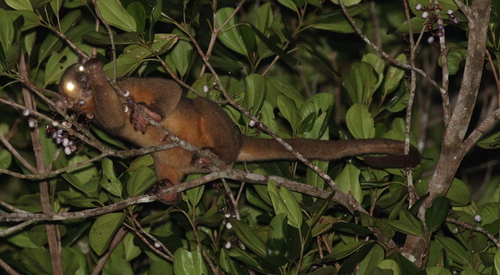


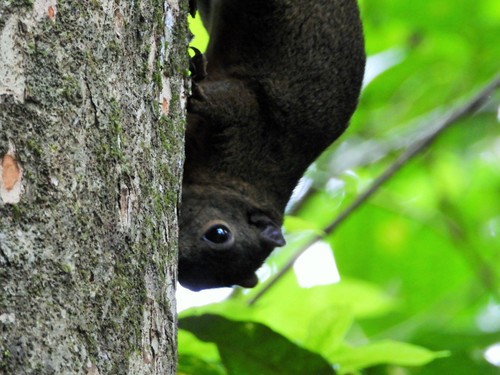

Before you go
What are the chances of seeing a Central American Spider Monkey in Monteverde Cloud Forest Reserve?
With luck
About 10% of wildlife watchers report a Central American Spider Monkey sighting in Monteverde Cloud Forest Reserve on a given day, based on 60 verified sightings from GBIF citizen-science data from 2019 to 2026. It is the 12th most-seen of the 28 mammals we can rate there. Over three days the chance rises to about 30%, and over a week to about 50%, if each day is a fresh chance.
When is the best time to see a Central American Spider Monkey in Monteverde Cloud Forest Reserve?
May
In that month about 20% of wildlife watchers report a Central American Spider Monkey in Monteverde Cloud Forest Reserve on a given day, against under 5% in July, September and November, the lowest months.
What time of day is best to see a Central American Spider Monkey?
Between 11 am and 2 pm
Across all the parks we cover, that three-hour window holds the most Central American Spider Monkey sightings with a recorded time, and about 9 in 10 of them come between 6 am and 6 pm: it is a daytime animal.
Is Monteverde Cloud Forest Reserve the best place to see a Central American Spider Monkey?
21st of 28
Of the 28 parks where we can rate Central American Spider Monkey sightings, Monteverde Cloud Forest Reserve ranks 21st at about 10%. The best odds are in Tikal National Park (Guatemala, about 80%), Tortuguero National Park (Costa Rica, about 70%) and Corcovado National Park (Costa Rica, about 70%). All parks ranked.
Where does the Central American Spider Monkey sighting chance come from?
GBIF citizen-science records
It is estimated from how often the Central American Spider Monkey is recorded against all the mammals logged in Monteverde Cloud Forest Reserve (60 verified sightings from 2019 to 2026), calibrated against known sighting rates. Figures are rounded to the nearest 10% because citizen-science data supports honest approximations, not decimals, and months with records from fewer than five people show "—". How it works.
