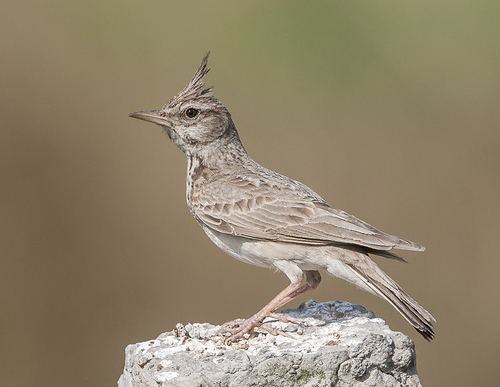
The tawny-flanked prinia (Prinia subflava) is a small passerine bird belonging to the genus Prinia in the family Cisticolidae, a family of Old World warblers. It is widespread and common in most parts of Africa south of the Sahara. The plain prinia (P. inornata) of southern Asia was formerly included in this species but is now usually considered to be a separate species.
The tawny-flanked prinia was formally described in 1789 by the German naturalist Johann Friedrich Gmelin in his revised and expanded edition of Carl Linnaeus's Systema Naturae. He placed it with the wagtails in the genus Motacilla and coined the binomial name Motacilla subflava. The specific epithet combines the Latin sub meaning "beneath" or "somewhat" with flavus meaning "yellow". Gmelin based his account on a hand coloured engraving by François-Nicolas Martinet that was published to accompany the Comte de Buffon's multi-volume work, the Histoire Naturelle des Oiseaux. The tawny-flanked prinia is now one of 30 species placed in the genus Prinia that was introduced by the American naturalist Thomas Horsfield in 1821.
Ten subspecies are recognised: