Completed
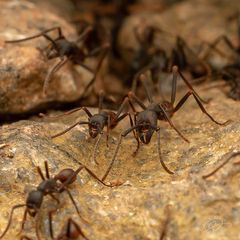
Burchell's Army Ant
Eciton burchellii
- KingdomAnimalia (Animals)
- PhylumArthropoda (Arthropods)
- ClassInsecta (Insects)
- OrderHymenoptera (Ants, Bees, Wasps, and Sawflies)
- FamilyFormicidae (Ants)
- GenusEciton (Eciton Army Ants)
- SpeciesEciton burchellii (Burchell's Army Ant)
In 3 days ~20% in a week ~40%
5 Verified sightings at Tambopata National Reserve From 2019 to 2026
314 In all 21 parks
August Best month
☀️ Diurnal When it's spotted
About the Burchell's Army Ant
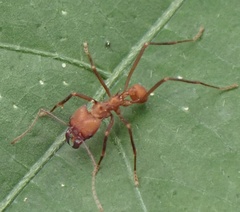
Eciton burchellii is a species of New World army ant in the genus Eciton. This species performs expansive, organized swarm raids that give it the informal name, Eciton army ant. This species displays a high degree of worker polymorphism.
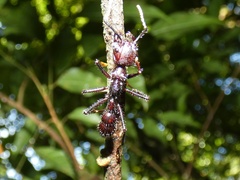
Sterile workers are of four discrete size-castes: minors, medias, porters (sub-majors), and soldiers (majors). Soldiers have much larger heads and specialized mandibles for defense. In lieu of underground excavated nests, colonies of E. burchellii form temporary living nests known as bivouacs, which are composed of hanging live worker bodies and which can be disassembled and relocated during colony emigrations. Eciton burchellii colonies cycle between stationary phases and nomadic phases when the colony emigrates nightly. These alternating phases of emigration frequency are governed by coinciding brood developmental stages.
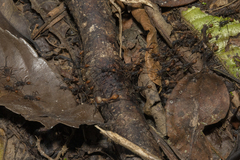
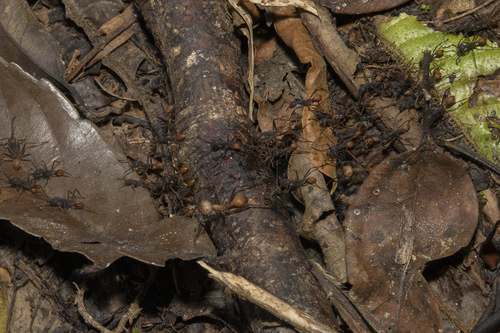
Group foraging efforts known as "raids" are maintained by the use of pheromones, can be 200 metres (660 ft) long, and employ up to 200,000 ants. Workers are also adept at making living structures out of their own bodies to improve efficiency of moving as a group... Wikipedia →
Recent sightings of Burchell's Army Ant in Tambopata National Reserve
LIVEiNaturalistGlobal Distribution
Parks Where Found
| # | Park | Country | Daily sighting probability |
|---|---|---|---|
| 1 | Santa Rosa National Park | 🇨🇷 Costa Rica | |
| 2 | Rincón de la Vieja National Park | 🇨🇷 Costa Rica | |
| 3 | Braulio Carrillo National Park | 🇨🇷 Costa Rica | |
| 4 | Tikal National Park | 🇬🇹 Guatemala | |
| 5 | Palo Verde National Park | 🇨🇷 Costa Rica | |
| 6 | Ostional Wildlife Refuge | 🇨🇷 Costa Rica | |
| 7 | Ría Lagartos Biosphere Reserve | 🇲🇽 Mexico | |
| 8 | Piedras Blancas National Park | 🇨🇷 Costa Rica | |
| 9 | Itatiaia National Park | 🇧🇷 Brazil | |
| 10 | Arenal Volcano National Park | 🇨🇷 Costa Rica | |
| 11 | Soberanía National Park | 🇵🇦 Panama | |
| 12 | Corcovado National Park | 🇨🇷 Costa Rica | |
| 13 | Calakmul Biosphere Reserve | 🇲🇽 Mexico | |
| 14 | Gandoca-Manzanillo Wildlife Refuge | 🇨🇷 Costa Rica | |
| 15 | Monteverde Cloud Forest Reserve | 🇨🇷 Costa Rica | |
| 16 | Manu National Park | 🇵🇪 Peru | |
| 17 | Carara National Park | 🇨🇷 Costa Rica | |
| 18 | Yasuní National Park | 🇪🇨 Ecuador | |
| 19 | Tortuguero National Park | 🇨🇷 Costa Rica | |
| 20 | Cahuita National Park | 🇨🇷 Costa Rica | |
| 21 | Tambopata National Reserve | 🇵🇪 Peru |
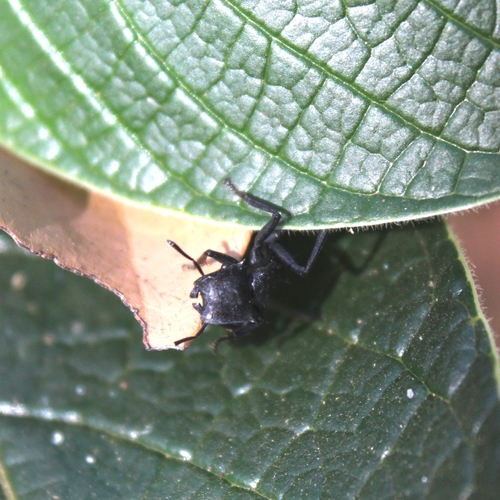
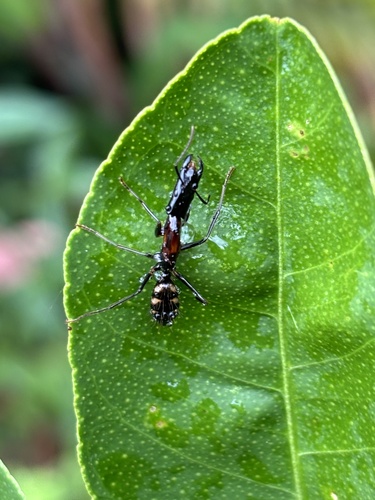
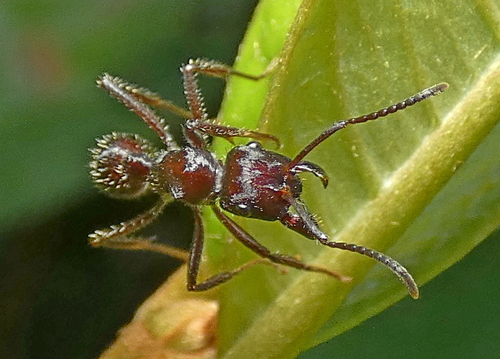
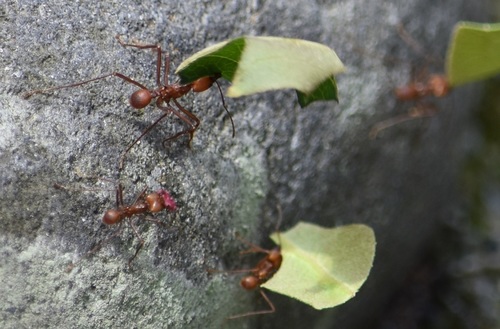
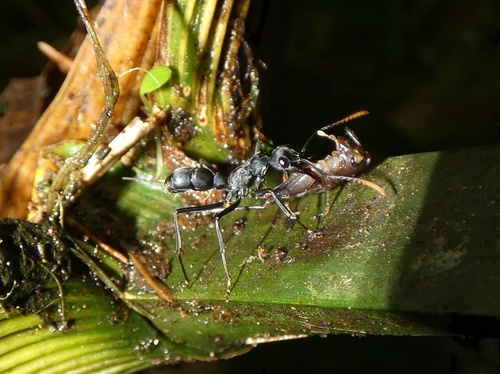
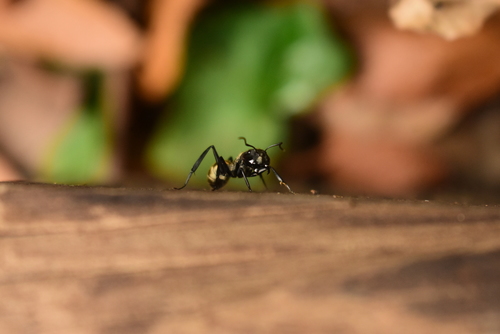
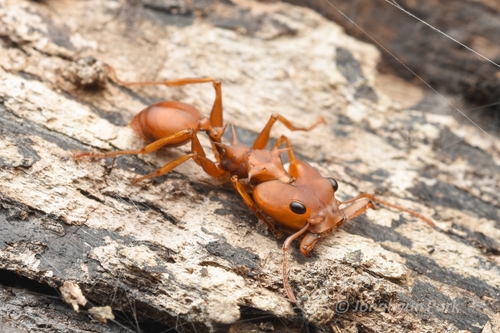
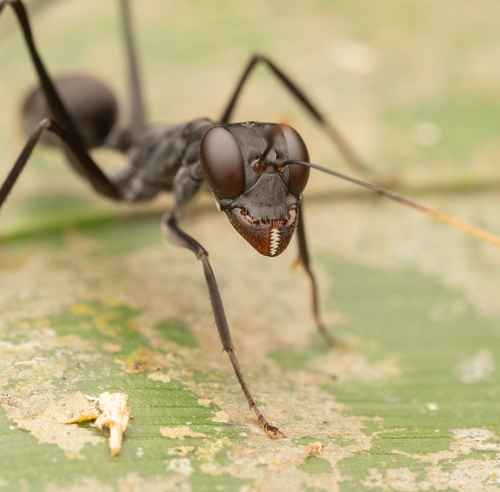
Closest Relatives at Tambopata National Reserve


Before you go
What are the chances of seeing a Burchell's Army Ant in Tambopata National Reserve?
With luck
About 10% of wildlife watchers report a Burchell's Army Ant sighting in Tambopata National Reserve on a given day, based on 5 verified sightings from GBIF citizen-science data from 2019 to 2026. It is the 111th most-seen of the 141 insects we can rate there. Over three days the chance rises to about 20%, and over a week to about 40%, if each day is a fresh chance.
When is the best time to see a Burchell's Army Ant in Tambopata National Reserve?
February, July–August and October
In those months about 10% of wildlife watchers report a Burchell's Army Ant in Tambopata National Reserve on a given day, against under 5% in March–June, September and November–January, the lowest months.
What time of day is best to see a Burchell's Army Ant?
Between 9 am and noon
Across all the parks we cover, that three-hour window holds the most Burchell's Army Ant sightings with a recorded time, and about 8 in 10 of them come between 6 am and 6 pm: it is a daytime animal.
Is Tambopata National Reserve the best place to see a Burchell's Army Ant?
21st of 21
Of the 21 parks where we can rate Burchell's Army Ant sightings, Tambopata National Reserve ranks 21st at about 10%. The best odds are in Santa Rosa National Park (Costa Rica, about 30%), Rincón de la Vieja National Park (Costa Rica, about 20%) and Braulio Carrillo National Park (Costa Rica, about 20%).
Where does the Burchell's Army Ant sighting chance come from?
GBIF citizen-science records
It is estimated from how often the Burchell's Army Ant is recorded against all the insects logged in Tambopata National Reserve (5 verified sightings from 2019 to 2026), calibrated against known sighting rates. Figures are rounded to the nearest 10% because citizen-science data supports honest approximations, not decimals, and months with records from fewer than five people show "—". How it works.
