Completed
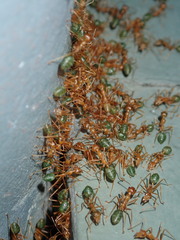

Asian Weaver Ant
Oecophylla smaragdina
- KingdomAnimalia (Animals)
- PhylumArthropoda (Arthropods)
- ClassInsecta (Insects)
- OrderHymenoptera (Ants, Bees, Wasps, and Sawflies)
- FamilyFormicidae (Ants)
- GenusOecophylla (Typical Weaver Ants)
- SpeciesOecophylla smaragdina (Asian Weaver Ant)
In 3 days ~70% in a week ~90%
209 Verified sightings at Hyderabad
985 In all 29 parks From 2019 to 2026
April Best month
☀️ Diurnal When it's spotted
About the Asian Weaver Ant
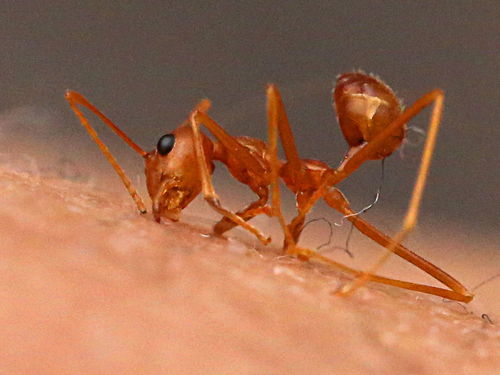
Oecophylla smaragdina (common names include Asian weaver ant, weaver ant, green ant, green tree ant, and orange gaster) is a species of arboreal ant found in tropical Asia and Australia. These ants form colonies with multiple nests in trees, each nest being made of leaves stitched together using the silk produced by the ant larvae, hence the specific name oecophylla (Greek for "leaf-house").
Workers and major workers are mostly coloured orange. Workers are 5–7 mm (0.20–0.28 in) long; they look after larvae and farm scale bugs for honeydew. Major workers are 8–10 mm (0.3–0.4 in) long, with long, strong legs and large mandibles. They forage, assemble, and expand the nest. Queens are typically 20–25 mm (0.8–1.0 in) long, and normally greenish-brown, giving the species its specific name smaragdina (Latin: emerald).
Oecophylla smaragdina has a widespread distribution in tropical Asia and Australia, with its range extending from India through Indonesia and the Philippines to Northern Territory and Queensland in Australia. It is an arboreal species, making its nests among the foliage of trees. Nests are constructed during the night, with major... Wikipedia →
Recent sightings of Asian Weaver Ant in Hyderabad
LIVEiNaturalistGlobal Distribution
Parks Where Found
Cities Where Found
| # | City | Country | Daily sighting probability |
|---|---|---|---|
| 1 | Coimbatore | 🇮🇳 India | |
| 2 | Thiruvananthapuram | 🇮🇳 India | |
| 3 | Johor Bahru | 🇲🇾 Malaysia | |
| 4 | Manila | 🇵🇭 Philippines | |
| 5 | Semarang | 🇮🇩 Indonesia | |
| 6 | Yogyakarta | 🇮🇩 Indonesia | |
| 7 | Nagpur | 🇮🇳 India | |
| 8 | Ho Chi Minh City | 🇻🇳 Vietnam | |
| 9 | Colombo [Sri Jayawardenepura Kotte] | 🇱🇰 Sri Lanka | |
| 10 | Jakarta | 🇮🇩 Indonesia |
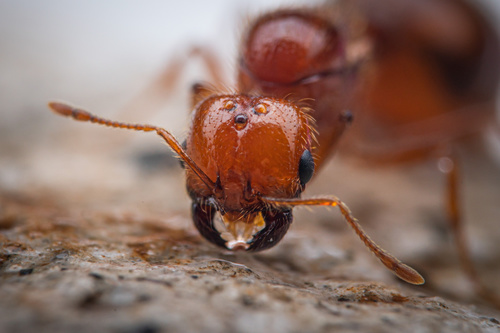
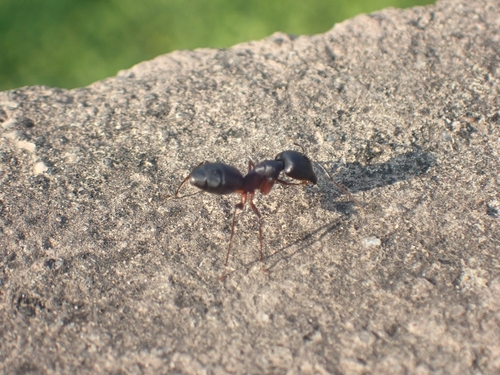
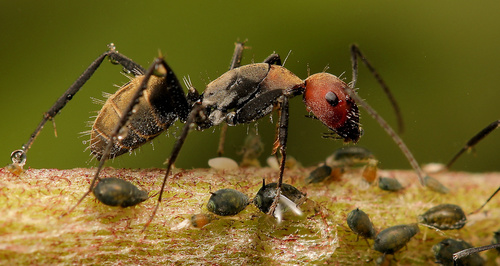
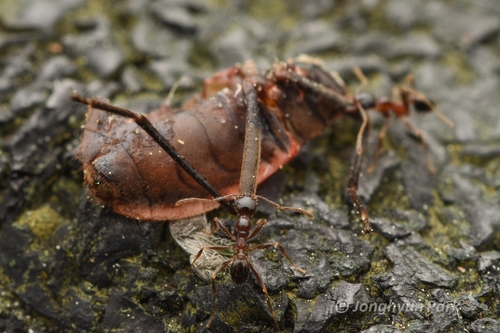
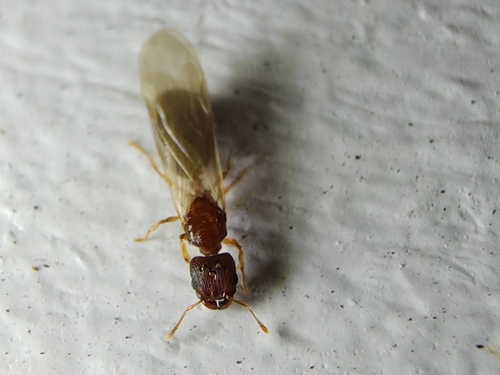
Closest Relatives at Hyderabad


Before you go
What are the chances of seeing an Asian Weaver Ant in Hyderabad?
Possible
About 30% of wildlife watchers report an Asian Weaver Ant sighting in Hyderabad on a given day, based on 209 verified sightings from GBIF citizen-science data. It is the 9th most-seen of the 318 insects we can rate there. Over three days the chance rises to about 70%, and over a week to about 90%, if each day is a fresh chance.
When is the best time to see an Asian Weaver Ant in Hyderabad?
April
In that month about 60% of wildlife watchers report an Asian Weaver Ant in Hyderabad on a given day, against about 10% in November, the lowest month. That is one of Hyderabad's driest months, with about 25 mm of rain against 190 mm in August.
What time of day is best to see an Asian Weaver Ant?
Between 9 am and noon
Across all the parks we cover, that three-hour window holds the most Asian Weaver Ant sightings with a recorded time, and about 8 in 10 of them come between 6 am and 6 pm: it is a daytime animal.
Is Hyderabad the best place to see an Asian Weaver Ant?
23rd of 55
Of the 55 cities where we can rate Asian Weaver Ant sightings, Hyderabad ranks 23rd at about 30%. The best odds are in Coimbatore (India, about 60%), Thiruvananthapuram (India, about 60%) and Johor Bahru (Malaysia, about 60%).
Which relatives of the Asian Weaver Ant live in Hyderabad?
Same family: Formicidae
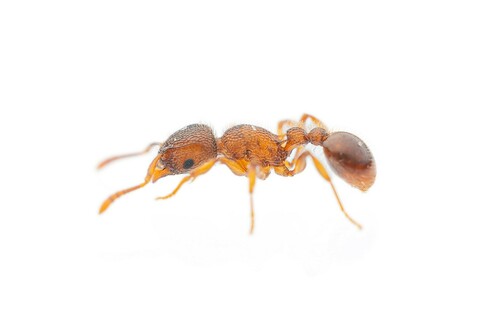
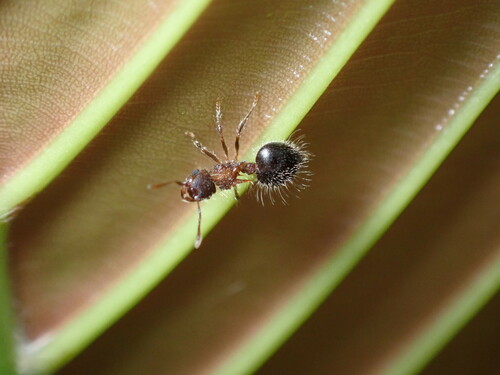
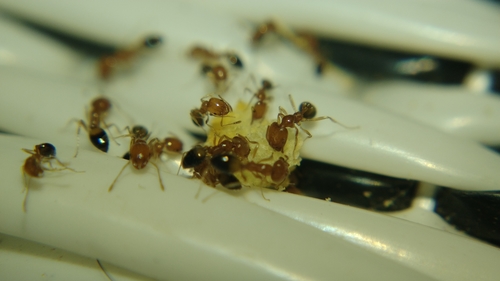
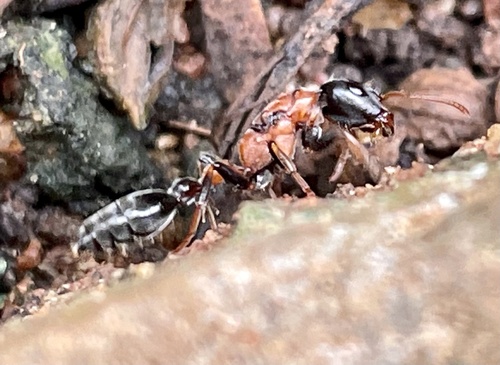
The closest relatives of the Asian Weaver Ant that you can see in Hyderabad (family Formicidae, Ants) are Tropical Fire Ant (about 30%), Indian Black Ant (about 30%) and Longhorn Crazy Ant (about 20%), with each one's daily chance of a sighting.
Where does the Asian Weaver Ant sighting chance come from?
GBIF citizen-science records
It is estimated from how often the Asian Weaver Ant is recorded against all the insects logged in Hyderabad (209 verified sightings), calibrated against known sighting rates. Figures are rounded to the nearest 10% because citizen-science data supports honest approximations, not decimals, and months with records from fewer than five people show "—". How it works.
