Red Crossbill

Red Crossbill

Loxia curvirostra

Silhouette: Emma Hughes · PhyloPic

LCLeast ConcernNTVUENCR
Daily sighting probability <5% · Rare
at Madrid

In 3 days ~10% in a week ~20%

440 Verified sightings at Madrid
14,420 In all 53 parks From 2019 to 2026
November Best month
☀️ Diurnal When it's spotted

About the Red Crossbill

The red crossbill or common crossbill (Loxia curvirostra) is a small passerine bird in the finch family Fringillidae. Crossbills have distinctive mandibles, crossed at the tips, which enable them to extract seeds from conifer cones and other fruits.

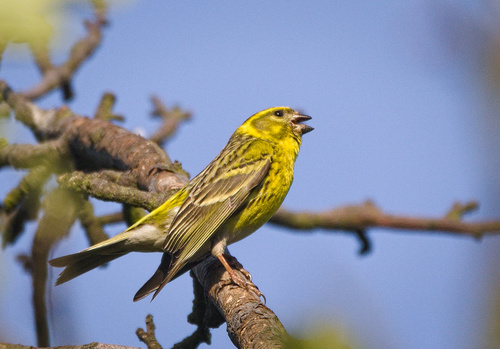
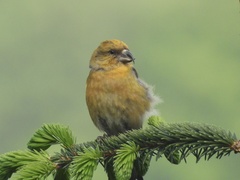
Adults are often brightly coloured, with red or orange males and green or yellow females, but there is wide variation in beak size and shape, and call types, leading to different classifications of variants, some of which have been named as subspecies. The species is known as "red crossbill" in North America and "common crossbill" in Europe.

Crossbills are distinguished by the mandibles crossing at their tips, which gives the group its English name. Using their crossed mandibles for leverage, crossbills are able to efficiently separate the scales of conifer cones and extract the seeds on which they feed. Adult males tend to be red or orange in colour, and females green or yellow, but there is much variation; juveniles are greyish-green and streaked.

The distinctive crossed mandibles eliminate most other species, but this feature is shared by the similar two-barred crossbill, with which it overlaps considerably... Wikipedia →

Sounds

Begging call1:02

France · 2026

© Lucien Hueber · XC1174542 · CC BY-NC-SA 4.0

Flight call0:15

Sweden · 2026

© Lars Edenius · XC1172462 · CC BY-NC-SA 4.0

Call0:36

United States · 2026

© Greg Irving · XC1097579 · CC BY-NC-SA 4.0

Global Distribution

Parks Where Found

# Park Country Daily sighting probability
1 Tatra National Park 🇸🇰 Slovakia
~40%
2 Pacific Rim National Park Reserve 🇨🇦 Canada
~40%
3 Aigüestortes National Park 🇪🇸 Spain
~30%
4 Rocky Mountain National Park 🇺🇸 United States
~20%
5 Great Bear Rainforest 🇨🇦 Canada
~20%
6 Ecrins National Park 🇫🇷 France
~20%
7 Mercantour National Park 🇫🇷 France
~20%
8 Vanoise National Park 🇫🇷 France
~20%
9 Redwood National Park 🇺🇸 United States
~20%
10 Olympic National Park 🇺🇸 United States
~20%
11 Cairngorms National Park 🇬🇧 United Kingdom
~20%
12 Grand Canyon National Park 🇺🇸 United States
~20%
13 Hohe Tauern National Park 🇦🇹 Austria
~20%
14 Glacier National Park 🇺🇸 United States
~20%
15 Bavarian Forest National Park 🇩🇪 Germany
~10%
16 Triglav National Park 🇸🇮 Slovenia
~10%
17 Jiuzhaigou National Park 🇨🇳 China
~10%
18 Guadalupe Mountains National Park 🇺🇸 United States
~10%
19 Grand Teton National Park 🇺🇸 United States
~10%
20 Yellowstone National Park 🇺🇸 United States
~10%
21 Pyrénées National Park 🇫🇷 France
~10%
22 Jasper National Park 🇨🇦 Canada
~10%
23 Sierra Nevada National Park 🇪🇸 Spain
~10%
24 Yosemite National Park 🇺🇸 United States
~10%
25 Acadia National Park 🇺🇸 United States
~10%
26 Sierra de Guadarrama National Park 🇪🇸 Spain
~10%
27 Banff National Park 🇨🇦 Canada
~10%
28 Gauja National Park 🇱🇻 Latvia
~10%
29 Reserva de la Biosfera Mariposa Monarca 🇲🇽 Mexico
~10%
30 Biebrza National Park 🇵🇱 Poland
~10%
31 Langtang National Park 🇳🇵 Nepal
~10%
32 Great Smoky Mountains National Park 🇺🇸 United States
~10%
33 Sequoia and Kings Canyon National Parks 🇺🇸 United States
<5%
34 Ordesa y Monte Perdido National Park 🇪🇸 Spain
<5%
35 Białowieża National Park 🇵🇱 Poland
<5%
36 Riding Mountain National Park 🇨🇦 Canada
<5%
37 Cévennes National Park 🇫🇷 France
<5%
38 Celaque National Park 🇭🇳 Honduras
<5%
39 Zion National Park 🇺🇸 United States
<5%
40 Cape Breton Highlands National Park 🇨🇦 Canada
<5%
41 Voyageurs National Park 🇺🇸 United States
<5%
42 Gros Morne National Park 🇨🇦 Canada
<5%
43 Isle Royale National Park 🇺🇸 United States
<5%
44 Kenai Fjords National Park 🇺🇸 United States
<5%
45 Wadden Sea National Park 🇩🇪 Germany
<5%
46 Picos de Europa National Park 🇪🇸 Spain
<5%
47 Snowdonia National Park 🇬🇧 United Kingdom
<5%
48 Badlands National Park 🇺🇸 United States
<5%
49 Elk Island National Park 🇨🇦 Canada
<5%
50 Saguaro National Park 🇺🇸 United States
<5%
51 Big Bend National Park 🇺🇸 United States
<5%
52 Channel Islands National Park 🇺🇸 United States
<5%
53 Shenandoah National Park 🇺🇸 United States
<5%

Cities Where Found

# City Country Daily sighting probability
1 Toluca 🇲🇽 México
~20%
2 Novosibirsk 🇷🇺 Russia
~10%
3 Nizhny Novgorod 🇷🇺 Russia
~10%
4 Helsinki 🇫🇮 Finland
~10%
5 Busan 🇰🇷 South Korea
~10%
6 Kharkiv 🇺🇦 Ukraine
<5%
7 Ulaanbaatar 🇲🇳 Mongolia
<5%
8 Minsk 🇧🇾 Belarus
<5%
9 Moscow 🇷🇺 Russia
<5%
10 Madrid 🇪🇸 Spain
<5%

Zoos & Centres Where Found

# Zoo / Centre Country
1 Zoo Pilsen 🇨🇿 Czechia In captivity
2 Zoopark Limpopo 🇷🇺 Russia In captivity
3 Alpenzoo Innsbruck 🇦🇹 Austria In captivity

Before you go

What are the chances of seeing a Red Crossbill in Madrid?

Rare

Under 5% of wildlife watchers report a Red Crossbill sighting in Madrid on a given day, based on 440 verified sightings from GBIF citizen-science data. It is the 82nd most-seen of the 196 birds we can rate there. Over three days the chance rises to about 10%, and over a week to about 20%, if each day is a fresh chance.

When is the best time to see a Red Crossbill in Madrid?

October to December

In those months about 10% of wildlife watchers report a Red Crossbill in Madrid on a given day, against under 5% in January to September, the lowest months. Those are among Madrid's wettest months, with about 55 mm of rain a month against 10 mm in July.

What time of day is best to see a Red Crossbill?

Between 9 am and noon

Across all the parks we cover, that three-hour window holds the most Red Crossbill sightings with a recorded time, and about 9 in 10 of them come between 6 am and 6 pm: it is a daytime animal.

Is Madrid the best place to see a Red Crossbill?

10th of 51

Of the 51 cities where we can rate Red Crossbill sightings, Madrid ranks 10th at under 5%. The best odds are in Toluca (México, about 20%), Novosibirsk (Russia, about 10%) and Nizhny Novgorod (Russia, about 10%).

Which relatives of the Red Crossbill live in Madrid?

Same family: Fringillidae

The closest relatives of the Red Crossbill that you can see in Madrid (family Fringillidae, Finches, Euphonias, and Allies) are European Serin (about 60%), Eurasian Goldfinch (about 50%) and European Greenfinch (about 40%), with each one's daily chance of a sighting.

Where does the Red Crossbill sighting chance come from?

GBIF citizen-science records

It is estimated from how often the Red Crossbill is recorded against all the birds logged in Madrid (440 verified sightings), calibrated against known sighting rates. Figures are rounded to the nearest 10% because citizen-science data supports honest approximations, not decimals, and months with records from fewer than five people show "—". How it works.

← Back to Madrid