





Completed

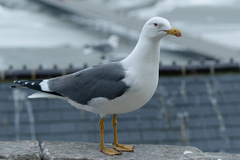
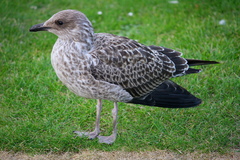


Lesser Black-backed Gull
Larus fuscus
Silhouette: Sharon Wegner-Larsen · PhyloPic
- KingdomAnimalia (Animals)
- PhylumChordata (Chordates)
- ClassAves (Birds)
- OrderCharadriiformes (Shorebirds and Allies)
- FamilyLaridae (Gulls, Terns, and Skimmers)
- GenusLarus (Large White-headed Gulls)
- SpeciesLarus fuscus (Lesser Black-backed Gull)
In 3 days ~60% in a week ~90%
49 Verified sightings at Manama
10,059 In all 33 parks From 2019 to 2026
October Best month
☀️ Diurnal When it's spotted
About the Lesser Black-backed Gull
The lesser black-backed gull (Larus fuscus) is a large gull that breeds on the Atlantic and Arctic coasts of Europe. It is migratory, wintering from the British Isles south to West Africa. However, it has increased dramatically in North America, especially along the east coast. Formerly just a winter visitor to North America, it now occurs in large numbers some winters and birds are recorded year-round. However, there is serious concern about decline in many parts of its range. The species is on the UK Amber List because the UK is home to 40 per cent of the European population and more than half of these are found at fewer than ten breeding sites.
The lesser black-backed gull was one of the many species originally described by Carl Linnaeus in his 1758 10th edition of Systema Naturae, and it still bears its original name Larus fuscus. The scientific name is from Latin. Larus appears to have referred to a gull or other large seabird, and fuscus meant black or brown.
Five subspecies are accepted: The lesser black-backed gull is smaller than the European herring gull. The taxonomy of the herring gull / lesser black-backed gull complex is... Wikipedia →
Recent sightings of Lesser Black-backed Gull in Manama
LIVEiNaturalistGlobal Distribution
Parks Where Found
Cities Where Found
| # | City | Country | Daily sighting probability |
|---|---|---|---|
| 1 | Liverpool | 🇬🇧 United Kingdom | |
| 2 | Manchester | 🇬🇧 United Kingdom | |
| 3 | Birmingham | 🇬🇧 United Kingdom | |
| 4 | Tangier | 🇲🇦 Morocco | |
| 5 | Casablanca | 🇲🇦 Morocco | |
| 6 | Rabat | 🇲🇦 Morocco | |
| 7 | London | 🇬🇧 United Kingdom | |
| 8 | Lisbon | 🇵🇹 Portugal | |
| 9 | Kuwait City | 🇰🇼 Kuwait | |
| 10 | Amsterdam | 🇳🇱 Netherlands |
Zoos & Centres Where Found
| # | Zoo / Centre | Country | |
|---|---|---|---|
| 1 | Copenhagen Zoo | 🇩🇰 Denmark | |
| 2 | Rio de Janeiro Zoological Garden | 🇧🇷 Brazil | |
| 3 | Le Marais aux Oiseaux | 🇫🇷 France | |
| 4 | Zoo Koki (Parque zoológico y botánico) | 🇪🇸 Spain | |
| 5 | Ecomare | 🇳🇱 Netherlands | |
| 6 | Ogród Zoologiczny w Katowicach | 🇵🇱 Poland |
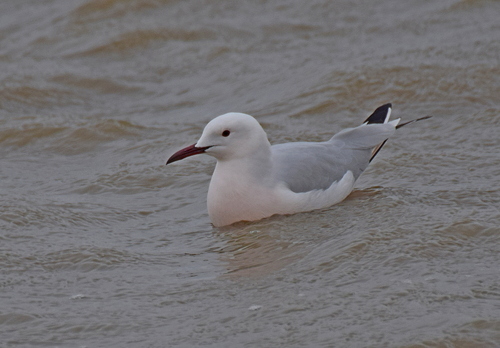
Closest Relatives at Manama


Before you go
What are the chances of seeing a Lesser Black-backed Gull in Manama?
Possible
About 30% of wildlife watchers report a Lesser Black-backed Gull sighting in Manama on a given day, based on 49 verified sightings from GBIF citizen-science data. It is the 21st most-seen of the 85 birds we can rate there. Over three days the chance rises to about 60%, and over a week to about 90%, if each day is a fresh chance.
When is the best time to see a Lesser Black-backed Gull in Manama?
October
In that month about 50% of wildlife watchers report a Lesser Black-backed Gull in Manama on a given day, against about 10% in April, the lowest month. July has too few records to rate.
What time of day is best to see a Lesser Black-backed Gull?
Between 10 am and 1 pm
Across all the parks we cover, that three-hour window holds the most Lesser Black-backed Gull sightings with a recorded time, and about 9 in 10 of them come between 6 am and 6 pm: it is a daytime animal.
Is Manama the best place to see a Lesser Black-backed Gull?
18th of 103
Of the 103 cities where we can rate Lesser Black-backed Gull sightings, Manama ranks 18th at about 30%. The best odds are in Liverpool (United Kingdom, about 80%), Manchester (United Kingdom, about 60%) and Birmingham (United Kingdom, about 60%).
Which relatives of the Lesser Black-backed Gull live in Manama?
Same family: Laridae
The closest relatives of the Lesser Black-backed Gull that you can see in Manama (family Laridae, Gulls, Terns, and Skimmers) are Slender-billed Gull (about 60%), Black-headed Gull (about 40%) and Gull-billed Tern (about 30%), with each one's daily chance of a sighting.
Where does the Lesser Black-backed Gull sighting chance come from?
GBIF citizen-science records
It is estimated from how often the Lesser Black-backed Gull is recorded against all the birds logged in Manama (49 verified sightings), calibrated against known sighting rates. Figures are rounded to the nearest 10% because citizen-science data supports honest approximations, not decimals, and months with records from fewer than five people show "—". How it works.
