





Completed


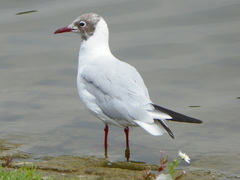


Black-headed Gull
Chroicocephalus ridibundus
Silhouette: Hans Hillewaert · PhyloPic
- KingdomAnimalia (Animals)
- PhylumChordata (Chordates)
- ClassAves (Birds)
- OrderCharadriiformes (Shorebirds and Allies)
- FamilyLaridae (Gulls, Terns, and Skimmers)
- GenusChroicocephalus (Masked Gulls and allies)
- SpeciesChroicocephalus ridibundus (Black-headed Gull)
In 3 days ~70% in a week >90%
980 Verified sightings at Stockholm
19,925 In all 26 parks From 2019 to 2026
April Best month
☀️ Diurnal When it's spotted
About the Black-headed Gull
The black-headed gull (Chroicocephalus ridibundus) is a small gull that breeds in much of the Palearctic in Europe and Asia, and also locally in smaller numbers in coastal eastern Canada. Most of the population is migratory and winters further south, but many also remain in the milder areas of northwestern Europe. It was formerly sometimes cited as "common black-headed gull" to distinguish it from "great black-headed gull" (an old name for Pallas's gull).
The genus name Chroicocephalus is from the Ancient Greek words khroizo, "to colour", and kephale, "head". The specific name ridibundus is Latin for "laughing". The black-headed gull was formally described in 1766 by the Swedish naturalist Carl Linnaeus in the twelfth edition of his Systema Naturae. He placed it with the other gulls in the genus Larus and coined the binomial name Larus ridibundus. Linnaeus specified the locality as Mari Europaeo or European seas.
Genetic studies published early in the 21st century showed that the genus Larus was paraphyletic with respect to other gull genera, and extensive changes to the taxonomy of gulls were made with many species of gull removed from Larus and transferred to other... Wikipedia →
Recent sightings of Black-headed Gull in Stockholm
LIVEiNaturalistGlobal Distribution
Parks Where Found
Cities Where Found
| # | City | Country | Daily sighting probability |
|---|---|---|---|
| 1 | Liverpool | 🇬🇧 United Kingdom | |
| 2 | Copenhagen | 🇩🇰 Denmark | |
| 3 | Manchester | 🇬🇧 United Kingdom | |
| 4 | London | 🇬🇧 United Kingdom | |
| 5 | Leeds | 🇬🇧 United Kingdom | |
| 6 | Amsterdam | 🇳🇱 Netherlands | |
| 7 | Kyiv | 🇺🇦 Ukraine | |
| 8 | Warsaw | 🇵🇱 Poland | |
| 9 | Birmingham | 🇬🇧 United Kingdom | |
| 10 | Belgrade | 🇷🇸 Serbia |
Zoos & Centres Where Found
| # | Zoo / Centre | Country | |
|---|---|---|---|
| 1 | Zoo Pilsen | 🇨🇿 Czechia | |
| 2 | Ramat Gan Safari | 🇮🇱 Israel | |
| 3 | London Zoo | 🇬🇧 United Kingdom | |
| 4 | Pyrénées Animal Park | 🇫🇷 France | |
| 5 | Odesa Zoo | 🇺🇦 Ukraine | |
| 6 | Lake Biwa Museum | 🇯🇵 Japan |
Closest Relatives at Stockholm




Before you go
What are the chances of seeing a Black-headed Gull in Stockholm?
Likely
About 40% of wildlife watchers report a Black-headed Gull sighting in Stockholm on a given day, based on 980 verified sightings from GBIF citizen-science data. It is the 15th most-seen of the 128 birds we can rate there. Over three days the chance rises to about 70%, and over a week to over 90%, if each day is a fresh chance.
When is the best time to see a Black-headed Gull in Stockholm?
April
In that month about 60% of wildlife watchers report a Black-headed Gull in Stockholm on a given day, against about 10% in September and November, the lowest months.
What time of day is best to see a Black-headed Gull?
Between noon and 3 pm
Across all the parks we cover, that three-hour window holds the most Black-headed Gull sightings with a recorded time, and about 9 in 10 of them come between 6 am and 6 pm: it is a daytime animal.
Is Stockholm the best place to see a Black-headed Gull?
27th of 130
Of the 130 cities where we can rate Black-headed Gull sightings, Stockholm ranks 27th at about 40%. The best odds are in Liverpool (United Kingdom, about 80%), Copenhagen (Denmark, about 70%) and Manchester (United Kingdom, about 70%).
Which relatives of the Black-headed Gull live in Stockholm?
Same family: Laridae
The closest relatives of the Black-headed Gull that you can see in Stockholm (family Laridae, Gulls, Terns, and Skimmers) are Common Gull (about 50%), Lesser Black-backed Gull (about 30%) and European Herring Gull (about 30%), with each one's daily chance of a sighting.
Where does the Black-headed Gull sighting chance come from?
GBIF citizen-science records
It is estimated from how often the Black-headed Gull is recorded against all the birds logged in Stockholm (980 verified sightings), calibrated against known sighting rates. Figures are rounded to the nearest 10% because citizen-science data supports honest approximations, not decimals, and months with records from fewer than five people show "—". How it works.
