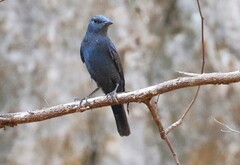
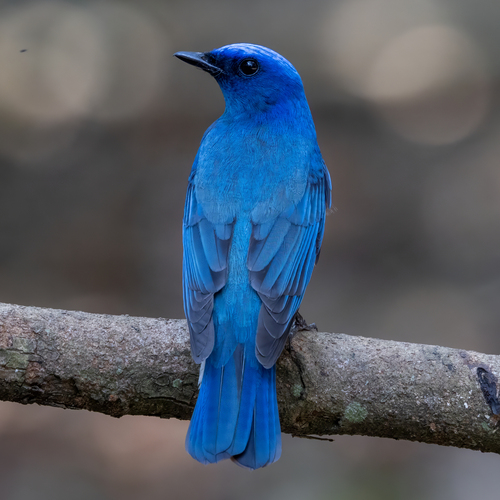
Blue Rock-Thrush

Blue Rock-Thrush

Monticola solitarius

Silhouette: Martin Bulla, based on François Desbordes' illustration · PhyloPic

LCLeast ConcernNTVUENCR
Daily sighting probability <5% · Rare
at Khao Sok National Park

In 3 days ~10% in a week ~30%

37 Verified sightings at Khao Sok National Park From 2019 to 2026
3,912 In all 27 parks
July Best month
☀️ Diurnal When it's spotted

About the Blue Rock-Thrush

The blue rock thrush (Monticola solitarius) is a species of chat. This thrush-like Old World flycatcher was formerly placed in the family Turdidae. It breeds in southern Europe, northwest Africa, and from Central Asia to northern China and Malaysia. The blue rock thrush is the official national bird of Malta.

The blue rock thrush was described by Carl Linnaeus in 1758 in the 10th edition of his Systema Naturae under the binomial name Turdus solitarius. The type locality is Italy. The scientific name is from Latin. Monticola is from mons, montis "mountain", and colere, "to dwell", and the specific epithet solitarius means "solitary".

The rock thrush genus Monticola was formerly placed in the family Turdidae but molecular phylogenetic studies have shown that the species in the genus are more closely related to members of the Old World flycatcher family Muscicapidae.

There are five recognised subspecies: Wikipedia →

Sounds

Begging call0:28

Malaysia · 2026

© Lim Ying Hien 林勇贤 · XC1085120 · CC BY-NC-ND 4.0

Song0:44

Italy · 2025

© Michael John O Mahony · XC1048138 · CC BY-NC-SA 4.0

Call0:19

China · 2023

© Bo Shunqi 薄顺奇 · XC842217 · CC BY-NC-SA 4.0

Global Distribution

Parks Where Found

# Park Country Daily sighting probability
1 Monfragüe National Park 🇪🇸 Spain
~30%
2 Khao Yai National Park 🇹🇭 Thailand
~30%
3 Royal Manas National Park 🇧🇹 Bhutan
~10%
4 Jiuzhaigou National Park 🇨🇳 China
~10%
5 Sierra Nevada National Park 🇪🇸 Spain
~10%
6 Doi Inthanon National Park 🇹🇭 Thailand
~10%
7 Hemis National Park 🇮🇳 India
~10%
8 Manas National Park 🇮🇳 India
~10%
9 Awash National Park 🇪🇹 Ethiopia
~10%
10 Namdapha National Park 🇮🇳 India
<5%
11 Khao Sok National Park 🇹🇭 Thailand
<5%
12 Sierra de Guadarrama National Park 🇪🇸 Spain
<5%
13 Picos de Europa National Park 🇪🇸 Spain
<5%
14 Mudumalai National Park 🇮🇳 India
<5%
15 Tangkoko Nature Reserve 🇮🇩 Indonesia
<5%
16 Taroko National Park 🇹🇼 Taiwan
<5%
17 Satpura National Park 🇮🇳 India
<5%
18 Bandhavgarh National Park 🇮🇳 India
<5%
19 Cévennes National Park 🇫🇷 France
<5%
20 Jim Corbett National Park 🇮🇳 India
<5%
21 Periyar National Park 🇮🇳 India
<5%
22 Kaziranga National Park 🇮🇳 India
<5%
23 Keoladeo National Park 🇮🇳 India
<5%
24 Pyrénées National Park 🇫🇷 France
<5%
25 Sundarbans National Park 🇮🇳 India
<5%
26 Kanha National Park 🇮🇳 India
<5%
27 Kaeng Krachan National Park 🇹🇭 Thailand
<5%

Cities Where Found

# City Country Daily sighting probability
1 Naha 🇯🇵 Japan
~50%
2 Busan 🇰🇷 South Korea
~20%
3 Algiers 🇩🇿 Algeria
~20%
4 Osaka 🇯🇵 Japan
~20%
5 Naples 🇮🇹 Italy
~20%
6 Hiroshima 🇯🇵 Japan
~10%
7 Kitakyushu 🇯🇵 Japan
~10%
8 Davao City 🇵🇭 Philippines
~10%
9 Đà Nẵng 🇻🇳 Vietnam
~10%
10 Kaohsiung 🇹🇼 Taiwan
~10%

Zoos & Centres Where Found

# Zoo / Centre Country
1 Ueno Zoo 🇯🇵 Japan In captivity
2 Zoopark Limpopo 🇷🇺 Russia In captivity

Before you go

What are the chances of seeing a Blue Rock-Thrush in Khao Sok National Park?

Rare

Under 5% of wildlife watchers report a Blue Rock-Thrush sighting in Khao Sok National Park on a given day, based on 37 verified sightings from GBIF citizen-science data from 2019 to 2026. It is the 130th most-seen of the 213 birds we can rate there. Over three days the chance rises to about 10%, and over a week to about 30%, if each day is a fresh chance.

When is the best time to see a Blue Rock-Thrush in Khao Sok National Park?

July

In that month about 20% of wildlife watchers report a Blue Rock-Thrush in Khao Sok National Park on a given day, against under 5% in August–September and December–May, the lowest months.

What time of day is best to see a Blue Rock-Thrush?

Between 7 and 10 am

Across all the parks we cover, that three-hour window holds the most Blue Rock-Thrush sightings with a recorded time, and about 9 in 10 of them come between 6 am and 6 pm: it is a daytime animal.

Which relatives of the Blue Rock-Thrush live in Khao Sok National Park?

Same family: Muscicapidae

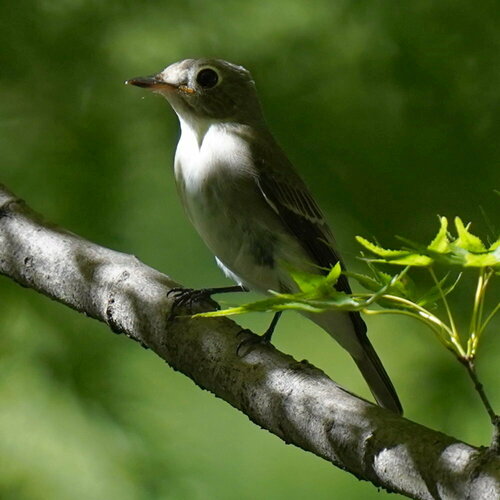
The closest relatives of the Blue Rock-Thrush that you can see in Khao Sok National Park (family Muscicapidae, Old World Flycatchers, Robins, and Chats) are White-rumped Shama (about 60%), Asian Brown Flycatcher (about 40%) and Oriental Magpie-Robin (about 40%), with each one's daily chance of a sighting.

Where does the Blue Rock-Thrush sighting chance come from?

GBIF citizen-science records

It is estimated from how often the Blue Rock-Thrush is recorded against all the birds logged in Khao Sok National Park (37 verified sightings from 2019 to 2026), calibrated against known sighting rates. Figures are rounded to the nearest 10% because citizen-science data supports honest approximations, not decimals, and months with records from fewer than five people show "—". How it works.

← Back to Khao Sok National Park