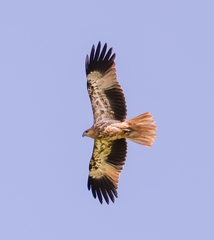

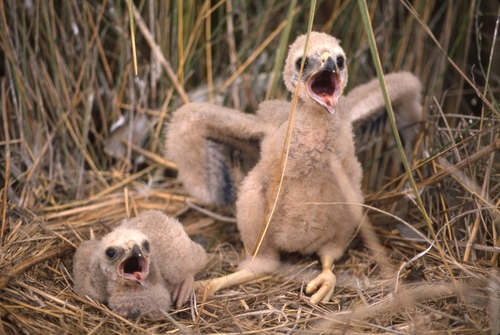
Whistling Kite

Whistling Kite

Haliastur sphenurus

Silhouette: Sheatherius · PhyloPic

LCLeast ConcernNTVUENCR
Daily sighting probability <5% · Rare
at Wilsons Promontory National Park

In 3 days <5% in a week ~10%

7 Verified sightings at Wilsons Promontory National Park From 2019 to 2026
4,075 In all 20 parks
October Best month
☀️ Diurnal When it's spotted

About the Whistling Kite

The whistling kite (Haliastur sphenurus) is a medium-sized diurnal raptor found throughout Australia (including coastal islands), New Caledonia and much of New Guinea (excluding the central mountains and the northwest). Also called the whistling eagle or whistling hawk, it is named for its loud whistling call, which it often gives in flight. Some authorities put this species in the genus Milvus, despite marked differences in behaviour, voice and plumage between this species and other members of that genus.

It is one of three birds that intentionally sets or spreads fires to catch prey. The other two are the black kite and brown falcon. The whistling kite ranges in size from 50 to 60 cm (20 to 24 in), with a wingspan between 123 and 146 cm (4 ft 0 in and 4 ft 9 in). Weights range from 380 to 1,050 g (0.84 to 2.31 lb) an average of 600 to 750 g (1.32 to 1.65 lb) for males and 750 to 1,000 g (1.65 to 2.20 lb) for females. As with most raptors, females are larger and heavier than males; though there is considerable overlap between the sexes, females can be up to 21% larger and 42% heavier.

Southern birds are also larger than those found in the tropics. Male and female... Wikipedia →

Sounds

Call0:08

Australia · 2023

© James Lambert · XC842793 · CC BY-NC-ND 4.0

Song0:38

Australia · 2022

© Marc Anderson · XC816345 · CC BY-NC-ND 4.0

Recording0:16

Australia · 2023

© Drew Davison · XC782675 · CC BY-NC-ND 4.0

Global Distribution

Parks Where Found

# Park Country Daily sighting probability
1 Kakadu National Park 🇦🇺 Australia
~80%
2 Hattah-Kulkyne National Park 🇦🇺 Australia
~50%
3 Litchfield National Park 🇦🇺 Australia
~50%
4 Nitmiluk National Park 🇦🇺 Australia
~40%
5 Booderee National Park 🇦🇺 Australia
~20%
6 Ningaloo Marine Park 🇦🇺 Australia
~20%
7 Daintree National Park 🇦🇺 Australia
~20%
8 Flinders Ranges National Park 🇦🇺 Australia
~10%
9 Noosa National Park 🇦🇺 Australia
~10%
10 Cape Range 🇦🇺 Australia
~10%
11 Grampians National Park 🇦🇺 Australia
~10%
12 Uluru-Kata Tjuta National Park 🇦🇺 Australia
<5%
13 Rottnest Island 🇦🇺 Australia
<5%
14 Kosciuszko National Park 🇦🇺 Australia
<5%
15 Springbrook National Park 🇦🇺 Australia
<5%
16 Great Otway National Park 🇦🇺 Australia
<5%
17 Wilsons Promontory National Park 🇦🇺 Australia
<5%
18 Royal National Park 🇦🇺 Australia
<5%
19 Blue Mountains National Park 🇦🇺 Australia
<5%
20 Lamington National Park 🇦🇺 Australia
<5%

Cities Where Found

# City Country Daily sighting probability
1 Perth 🇦🇺 Australia
~10%
2 Brisbane 🇦🇺 Australia
<5%
3 Melbourne 🇦🇺 Australia
<5%
4 Sydney 🇦🇺 Australia
<5%

Zoos & Centres Where Found

# Zoo / Centre Country
1 Alice Springs Desert Park 🇦🇺 Australia In captivity
2 Taronga Zoo 🇦🇺 Australia In captivity
3 Billabong Sanctuary 🇦🇺 Australia In captivity
4 Australian Reptile Park 🇦🇺 Australia In captivity
5 Featherdale Sydney Wildlife Park 🇦🇺 Australia In captivity

Before you go

What are the chances of seeing a Whistling Kite in Wilsons Promontory National Park?

Rare

Under 5% of wildlife watchers report a Whistling Kite sighting in Wilsons Promontory National Park on a given day, based on 7 verified sightings from GBIF citizen-science data from 2019 to 2026. It is the 132nd most-seen of the 138 birds we can rate there. Over three days the chance rises to under 5%, and over a week to about 10%, if each day is a fresh chance.

When is the best time to see a Whistling Kite in Wilsons Promontory National Park?

October

In that month about 10% of wildlife watchers report a Whistling Kite in Wilsons Promontory National Park on a given day, against under 5% in November to September, the lowest months.

What time of day is best to see a Whistling Kite?

Between 9 am and noon

Across all the parks we cover, that three-hour window holds the most Whistling Kite sightings with a recorded time, and nearly all of them come between 6 am and 6 pm: it is a daytime animal.

Which relatives of the Whistling Kite live in Wilsons Promontory National Park?

Same family: Accipitridae

The closest relatives of the Whistling Kite that you can see in Wilsons Promontory National Park (family Accipitridae, Hawks, Eagles, and Kites) are White-Bellied Sea-Eagle (about 10%), Wedge-tailed Eagle (about 10%) and Swamp Harrier (about 10%), with each one's daily chance of a sighting.

Where does the Whistling Kite sighting chance come from?

GBIF citizen-science records

It is estimated from how often the Whistling Kite is recorded against all the birds logged in Wilsons Promontory National Park (7 verified sightings from 2019 to 2026), calibrated against known sighting rates. Figures are rounded to the nearest 10% because citizen-science data supports honest approximations, not decimals, and months with records from fewer than five people show "—". How it works.

← Back to Wilsons Promontory National Park