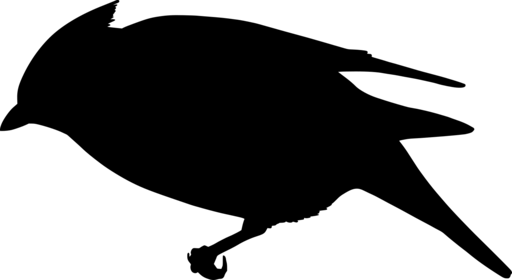
Cedar Waxwing

Cedar Waxwing

Bombycilla cedrorum

Silhouette: Andy Wilson · PhyloPic

LCLeast ConcernNTVUENCR
Daily sighting probability <5% · Rare
at Biotopo Cerro Cahuí

In 3 days ~10%

7 Verified sightings at Biotopo Cerro Cahuí From 2019 to 2026
21,485 In all 56 parks
March Best month
☀️ Diurnal When it's spotted

About the Cedar Waxwing

The cedar waxwing (Bombycilla cedrorum) is a member of the family Bombycillidae or waxwing family of passerine birds. It is a medium-sized bird that is mainly brown, gray, and yellow. Some of the wing feathers have red tips, which resemble sealing wax, giving the bird its common name. It is a native of North and Central America, breeding in open wooded areas in southern Canada and wintering in the southern half of the United States, Central America, and the far northwest of South America. Its diet includes cedar cones, fruit, holly berries, and insects. The cedar waxwing is listed as least concern on the IUCN Red List.

The three species of waxwings were moved to their own genus, Bombycilla, by Louis Pierre Vieillot in 1808. Bombycilla is Vieillot's attempt at Latin for "silktail", translating the German name Seidenschwänze. Vieillot thought that motacilla, Latin for wagtails, was derived from mota for "move" and cilla, which he thought meant "tail"; however, Motacilla actually combines motacis, a mover, with the diminutive suffix -illa. He then combined this "cilla" with the Latin bombyx, meaning silk. The specific epithet cedrorum is Latin for "of the cedars".

��2�... Wikipedia →

Sounds

Begging call0:21

United States · 2026

© Greg Irving · XC1177761 · CC BY-NC-SA 4.0

Call0:19

United States · 2026

© Rory Nefdt · XC1142128 · CC BY-NC-SA 4.0

Uncertain0:55

United States · 2020

© Brian Hendrix · XC610058 · CC BY-NC-SA 4.0

Global Distribution

Parks Where Found

# Park Country Daily sighting probability
1 Glacier National Park 🇺🇸 United States
~50%
2 Elk Island National Park 🇨🇦 Canada
~40%
3 Isle Royale National Park 🇺🇸 United States
~40%
4 Riding Mountain National Park 🇨🇦 Canada
~40%
5 Point Pelee National Park 🇨🇦 Canada
~40%
6 Cape Breton Highlands National Park 🇨🇦 Canada
~30%
7 Shenandoah National Park 🇺🇸 United States
~30%
8 Voyageurs National Park 🇺🇸 United States
~30%
9 Acadia National Park 🇺🇸 United States
~20%
10 Jasper National Park 🇨🇦 Canada
~20%
11 Grand Teton National Park 🇺🇸 United States
~20%
12 Great Smoky Mountains National Park 🇺🇸 United States
~20%
13 Death Valley National Park 🇺🇸 United States
~20%
14 Banff National Park 🇨🇦 Canada
~20%
15 Pacific Rim National Park Reserve 🇨🇦 Canada
~20%
16 Olympic National Park 🇺🇸 United States
~20%
17 Redwood National Park 🇺🇸 United States
~10%
18 Great Bear Rainforest 🇨🇦 Canada
~10%
19 Gros Morne National Park 🇨🇦 Canada
~10%
20 Wood Buffalo National Park 🇨🇦 Canada
~10%
21 Cumbres de Monterrey National Park 🇲🇽 Mexico
~10%
22 Congaree National Park 🇺🇸 United States
~10%
23 Guadalupe Mountains National Park 🇺🇸 United States
~10%
24 Badlands National Park 🇺🇸 United States
~10%
25 Rocky Mountain National Park 🇺🇸 United States
~10%
26 El Vizcaíno Biosphere Reserve 🇲🇽 Mexico
~10%
27 Yellowstone National Park 🇺🇸 United States
<5%
28 Sequoia and Kings Canyon National Parks 🇺🇸 United States
<5%
29 Reserva de la Biosfera Mariposa Monarca 🇲🇽 Mexico
<5%
30 El Triunfo 🇲🇽 Mexico
<5%
31 Joshua Tree National Park 🇺🇸 United States
<5%
32 Zion National Park 🇺🇸 United States
<5%
33 Big Bend National Park 🇺🇸 United States
<5%
34 Biotopo Cerro Cahuí 🇬🇹 Guatemala
<5%
35 Cañón del Sumidero National Park 🇲🇽 Mexico
<5%
36 Bahía de Loreto National Park 🇲🇽 Mexico
<5%
37 Channel Islands National Park 🇺🇸 United States
<5%
38 Everglades National Park 🇺🇸 United States
<5%
39 Grand Canyon National Park 🇺🇸 United States
<5%
40 Saguaro National Park 🇺🇸 United States
<5%
41 Merritt Island National Wildlife Refuge 🇺🇸 United States
<5%
42 Big Cypress National Preserve 🇺🇸 United States
<5%
43 Arrecifes de Cozumel National Park 🇲🇽 Mexico
<5%
44 Celestún Biosphere Reserve 🇲🇽 Mexico
<5%
45 Cerro Azul Meámbar National Park 🇭🇳 Honduras
<5%
46 Kluane National Park 🇨🇦 Canada
<5%
47 Yosemite National Park 🇺🇸 United States
<5%
48 Los Quetzales National Park 🇨🇷 Costa Rica
<5%
49 Las Baulas Marine National Park 🇨🇷 Costa Rica
<5%
50 Cusuco National Park 🇭🇳 Honduras
<5%
51 Tapantí-Macizo de la Muerte National Park 🇨🇷 Costa Rica
<5%
52 Tikal National Park 🇬🇹 Guatemala
<5%
53 Tortuguero National Park 🇨🇷 Costa Rica
<5%
54 Soberanía National Park 🇵🇦 Panama
<5%
55 Arenal Volcano National Park 🇨🇷 Costa Rica
<5%
56 La Amistad International Park (Panama) 🇵🇦 Panama
<5%

Cities Where Found

# City Country Daily sighting probability
1 Sacramento 🇺🇸 United States
~30%
2 Austin 🇺🇸 United States
~30%
3 Dallas 🇺🇸 United States
~20%
4 Portland 🇺🇸 United States
~20%
5 Calgary 🇨🇦 Canada
~20%
6 Montreal 🇨🇦 Canada
~20%
7 Salt Lake City 🇺🇸 United States
~20%
8 Houston 🇺🇸 United States
~20%
9 Tijuana 🇲🇽 México
~20%
10 Edmonton 🇨🇦 Canada
~20%

Zoos & Centres Where Found

# Zoo / Centre Country
1 National Zoological Park 🇺🇸 United States In captivity
2 Columbus Zoo and Aquarium 🇺🇸 United States In captivity
3 Xcaret 🇲🇽 Mexico In captivity
4 Selwo Marina 🇪🇸 Spain In captivity
5 Wildlife Center of Virginia 🇺🇸 United States In captivity

Before you go

What are the chances of seeing a Cedar Waxwing in Biotopo Cerro Cahuí?

Rare

Under 5% of wildlife watchers report a Cedar Waxwing sighting in Biotopo Cerro Cahuí on a given day, based on 7 verified sightings from GBIF citizen-science data from 2019 to 2026. It is the 168th most-seen of the 191 birds we can rate there. Over three days the chance rises to about 10%, if each day is a fresh chance.

When is the best time to see a Cedar Waxwing in Biotopo Cerro Cahuí?

March

In that month about 10% of wildlife watchers report a Cedar Waxwing in Biotopo Cerro Cahuí on a given day, against under 5% in April to February, the lowest months. That is one of Biotopo Cerro Cahuí's driest months, with about 25 mm of rain against 210 mm in October.

What time of day is best to see a Cedar Waxwing?

Between 8 and 11 am

Across all the parks we cover, that three-hour window holds the most Cedar Waxwing sightings with a recorded time, and about 9 in 10 of them come between 6 am and 6 pm: it is a daytime animal.

Which relatives of the Cedar Waxwing live in Biotopo Cerro Cahuí?

Same order: Passeriformes

The closest relatives of the Cedar Waxwing that you can see in Biotopo Cerro Cahuí (order Passeriformes, Perching Birds) are Great-tailed Grackle (about 50%), Social Flycatcher (about 50%) and Magnolia Warbler (about 40%), with each one's daily chance of a sighting.

Where does the Cedar Waxwing sighting chance come from?

GBIF citizen-science records

It is estimated from how often the Cedar Waxwing is recorded against all the birds logged in Biotopo Cerro Cahuí (7 verified sightings from 2019 to 2026), calibrated against known sighting rates. Figures are rounded to the nearest 10% because citizen-science data supports honest approximations, not decimals, and months with records from fewer than five people show "—". How it works.

← Back to Biotopo Cerro Cahuí