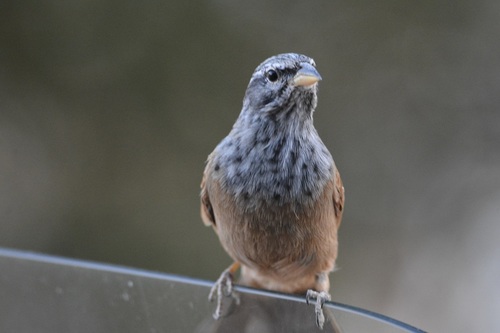
Alpine Swift

Alpine Swift

Tachymarptis melba

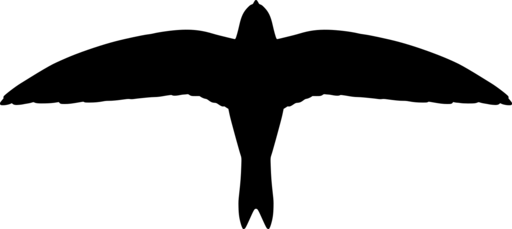
Silhouette: Andy Wilson · PhyloPic

LCLeast ConcernNTVUENCR
Daily sighting probability ~70% · Very likely
at Fez

In 3 days >90%

148 Verified sightings at Fez
2,965 In all 53 parks From 2019 to 2026
April Best month
🌅 Crepuscular When it's spotted

About the Alpine Swift

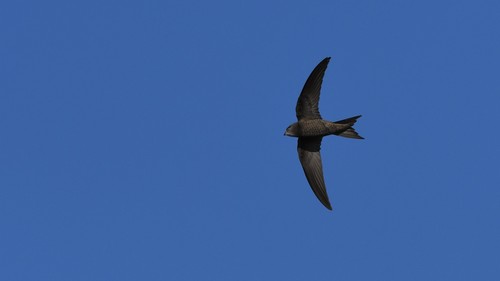
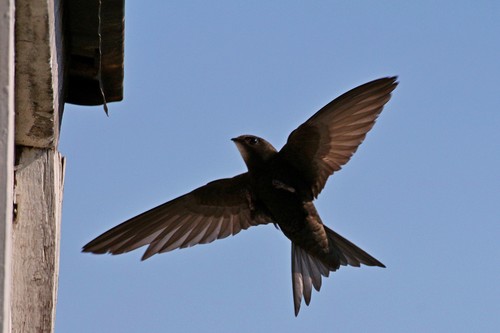
The alpine swift (Tachymarptis melba) is a species of swift found in Africa, southern Europe, and Asia. They breed in mountains from southern Europe to the Himalayas. Like common swifts, they are migratory; the southern European population winters further south in southern Africa. They have very short legs which are used for clinging to vertical surfaces. Like most swifts, they never settle voluntarily on the ground, spending most of their lives in the air living on the insects they catch in their beaks.

The alpine swift was formally described in 1758 by the Swedish naturalist Carl Linnaeus in the tenth edition of his Systema Naturae. He placed it with the swifts in the genus Hirundo and coined the binomial name Hirundo melba. Linnaeus specified the type locality as Gibraltar. Linnaeus based his account on "The greatest martin or swift" that had been described and illustrated in 1743 by the English naturalist George Edwards in his book A Natural History of Uncommon Birds. Edwards's specimen had been shot on the rock of Gibraltar. The alpine swift is now placed together with the mottled swift in the genus Tachymarptis that was introduced in 1922 by the South African zoologist... Wikipedia →

Sounds

Nocturnal flight call0:23

Italy · 2025

© Francesco Sottile · XC1052507 · CC BY-NC-SA 4.0

Flight call1:22

Cyprus · 2025

© Alain Verneau · XC1049008 · CC BY-NC-SA 4.0

Call0:05

Italy · 2025

© Gianluca Congi · XC1048778 · CC BY-NC-SA 4.0

Global Distribution

Parks Where Found

# Park Country Daily sighting probability
1 Waterberg Plateau Park 🇳🇦 Namibia
~40%
2 Hohe Tauern National Park 🇦🇹 Austria
~20%
3 Cévennes National Park 🇫🇷 France
~20%
4 Golden Gate Highlands National Park 🇿🇦 South Africa
~20%
5 De Hoop Nature Reserve 🇿🇦 South Africa
~10%
6 Monfragüe National Park 🇪🇸 Spain
~10%
7 Kibale National Park 🇺🇬 Uganda
~10%
8 Ordesa y Monte Perdido National Park 🇪🇸 Spain
~10%
9 Bandipur National Park 🇮🇳 India
~10%
10 Mudumalai National Park 🇮🇳 India
~10%
11 Table Mountain National Park 🇿🇦 South Africa
~10%
12 Triglav National Park 🇸🇮 Slovenia
~10%
13 Garden Route National Park 🇿🇦 South Africa
~10%
14 Horton Plains National Park 🇱🇰 Sri Lanka
~10%
15 Udawalawe National Park 🇱🇰 Sri Lanka
~10%
16 Semuliki National Park 🇺🇬 Uganda
~10%
17 Nagarhole National Park 🇮🇳 India
~10%
18 Arusha National Park 🇹🇿 Tanzania
~10%
19 Bale Mountains National Park 🇪🇹 Ethiopia
<5%
20 Vanoise National Park 🇫🇷 France
<5%
21 Tsavo West National Park 🇰🇪 Kenya
<5%
22 West Coast National Park 🇿🇦 South Africa
<5%
23 Picos de Europa National Park 🇪🇸 Spain
<5%
24 Royal Bardia National Park 🇳🇵 Nepal
<5%
25 Periyar National Park 🇮🇳 India
<5%
26 Niokolo-Koba National Park 🇸🇳 Senegal
<5%
27 Ruaha National Park 🇹🇿 Tanzania
<5%
28 Sierra Nevada National Park 🇪🇸 Spain
<5%
29 Amboseli National Park 🇰🇪 Kenya
<5%
30 Aberdare National Park 🇰🇪 Kenya
<5%
31 Pyrénées National Park 🇫🇷 France
<5%
32 Queen Elizabeth National Park 🇺🇬 Uganda
<5%
33 Tarangire National Park 🇹🇿 Tanzania
<5%
34 South Luangwa National Park 🇿🇲 Zambia
<5%
35 Kidepo Valley National Park 🇺🇬 Uganda
<5%
36 Langtang National Park 🇳🇵 Nepal
<5%
37 Namib-Naukluft National Park 🇳🇦 Namibia
<5%
38 Jim Corbett National Park 🇮🇳 India
<5%
39 Volcanoes National Park 🇷🇼 Rwanda
<5%
40 Kruger National Park 🇿🇦 South Africa
<5%
41 Lake Mburo National Park 🇺🇬 Uganda
<5%
42 Minneriya National Park 🇱🇰 Sri Lanka
<5%
43 Bandhavgarh National Park 🇮🇳 India
<5%
44 Ranomafana National Park 🇲🇬 Madagascar
<5%
45 Aigüestortes National Park 🇪🇸 Spain
<5%
46 Nyungwe National Park 🇷🇼 Rwanda
<5%
47 Yala National Park 🇱🇰 Sri Lanka
<5%
48 Sinharaja Forest Reserve 🇱🇰 Sri Lanka
<5%
49 Chitwan National Park 🇳🇵 Nepal
<5%
50 Samburu National Reserve 🇰🇪 Kenya
<5%
51 Bwindi Impenetrable National Park 🇺🇬 Uganda
<5%
52 Kanha National Park 🇮🇳 India
<5%
53 Doñana National Park 🇪🇸 Spain
<5%

Cities Where Found

# City Country Daily sighting probability
1 Fez 🇲🇦 Morocco
~70%
2 Istanbul 🇹🇷 Turkey
~40%
3 Athens 🇬🇷 Greece
~30%
4 Sofia 🇧🇬 Bulgaria
~30%
5 Bishkek 🇰🇬 Kyrgyzstan
~30%
6 Turin 🇮🇹 Italy
~30%
7 Barcelona 🇪🇸 Spain
~30%
8 Ramallah 🇵🇸 Palestine
~20%
9 Jerusalem 🇮🇱 Israel
~20%
10 Naples 🇮🇹 Italy
~20%

Before you go

What are the chances of seeing an Alpine Swift in Fez?

Very likely

About 70% of wildlife watchers report an Alpine Swift sighting in Fez on a given day, based on 148 verified sightings from GBIF citizen-science data. It is the 8th most-seen of the 39 birds we can rate there. Over three days the chance rises to over 90%, if each day is a fresh chance.

When is the best time to see an Alpine Swift in Fez?

March–April and July

In those months about 80% of wildlife watchers report an Alpine Swift in Fez on a given day, against about 30% in November, the lowest month. August has too few records to rate.

What time of day is best to see an Alpine Swift?

Between 8 and 11 am

Across all the parks we cover, that three-hour window holds the most Alpine Swift sightings with a recorded time, and about 7 in 10 of them come between 6 am and 6 pm: it is most active around dawn and dusk.

Is Fez the best place to see an Alpine Swift?

Yes

Of the 40 cities where we can rate Alpine Swift sightings, Fez has the highest daily chance: about 70%. Next come Istanbul (Turkey, about 40%) and Athens (Greece, about 30%).

Which relatives of the Alpine Swift live in Fez?

Same family: Apodidae

The closest relatives of the Alpine Swift that you can see in Fez (family Apodidae, Swifts) are Pallid Swift (about 30%), Common Swift (about 20%) and Little Swift (about 10%), with each one's daily chance of a sighting.

Where does the Alpine Swift sighting chance come from?

GBIF citizen-science records

It is estimated from how often the Alpine Swift is recorded against all the birds logged in Fez (148 verified sightings), calibrated against known sighting rates. Figures are rounded to the nearest 10% because citizen-science data supports honest approximations, not decimals, and months with records from fewer than five people show "—". How it works.

← Back to Fez