



Completed



Australian Magpie
Gymnorhina tibicen
Silhouette: Sheatherius · PhyloPic
- KingdomAnimalia (Animals)
- PhylumChordata (Chordates)
- ClassAves (Birds)
- OrderPasseriformes (Perching Birds)
- FamilyCracticidae
- GenusGymnorhina (Australian Magpies)
- SpeciesGymnorhina tibicen (Australian Magpie)
In 3 days ~10% in a week ~20%
15 Verified sightings at Ningaloo Marine Park From 2019 to 2026
15,067 In all 24 parks
March Best month
☀️ Diurnal When it's spotted


Completed
About the Australian Magpie
The Australian magpie (Gymnorhina tibicen) is a black and white passerine bird native to Australia and southern New Guinea, and introduced to New Zealand, and the Fijian island of Taveuni. Although once considered to be three separate species, it is now considered to be one, with nine recognised subspecies. A member of the Artamidae, the Australian magpie is placed in its own genus Gymnorhina and is most closely related to the black butcherbird (Melloria quoyi). It is not closely related to the Eurasian magpie (Pica pica) or any other birds known as magpies, which are corvids.
The adult Australian magpie is a fairly robust bird ranging from 37 to 43 cm (14.5 to 17 in) in length, with black and white plumage, gold brown eyes and a solid wedge-shaped bluish-white and black bill. The male and female are similar in appearance, but can be distinguished by differences in back markings. The male has pure white feathers on the back of the head where the female has white blending to grey feathers. With its long legs, the Australian magpie walks rather than waddles or hops and spends much time on the ground.
Described as one of Australia's most accomplished songbirds, the Australian magpie has an array of complex vocalisations. It is omnivorous, with the bulk of its varied diet made up of invertebrates. It is generally sedentary and territorial throughout its range. Common and widespread, it has adapted well to human habitation and is a familiar bird of parks, gardens and farmland in Australia and New Guinea. This species is commonly fed by households around Australia, but in spring (and occasionally in autumn) a small minority of breeding magpies (almost always males) become aggressive, swooping and attacking those who approach their nests. Research has shown that magpies can recognise at least 100 different people, and may be less likely to swoop individuals they have befriended.
Over 1,000 Australian magpies were introduced into New Zealand from 1864 to 1874, but were subsequently deemed to be displacing native birds and are now treated as a pest species. Introductions also occurred in the Solomon Islands and Fiji, where the birds are not considered an invasive species. The Australian magpie is the mascot of several Australian and New Zealand sporting teams, including the Collingwood Magpies, the Western Suburbs Magpies, Port Adelaide Magpies and, in New Zealand, the Hawke's Bay Magpies. Wikipedia →
Recent sightings of Australian Magpie in Ningaloo Marine Park
LIVEiNaturalistGlobal Distribution
Parks Where Found
Zoos & Centres Where Found
| # | Zoo / Centre | Country | |
|---|---|---|---|
| 1 | Prague Zoo | 🇨🇿 Czechia | |
| 2 | Copenhagen Zoo | 🇩🇰 Denmark | |
| 3 | Zoo Pilsen | 🇨🇿 Czechia | |
| 4 | Jihlava Zoo | 🇨🇿 Czechia | |
| 5 | Parc des oiseaux | 🇫🇷 France | |
| 6 | Bronx Zoo | 🇺🇸 United States | |
| 7 | Alice Springs Desert Park | 🇦🇺 Australia | |
| 8 | Featherdale Sydney Wildlife Park | 🇦🇺 Australia | |
| 9 | Millcreek Bird Park | 🇳🇿 New Zealand | |
| 10 | Rákosův pavilon | 🇨🇿 Czechia | |
| 11 | Velemlokárium | 🇨🇿 Czechia | |
| 12 | Trowunna Wildlife Park | 🇦🇺 Australia | |
| 13 | Wing's Wildlife Park | 🇦🇺 Australia |
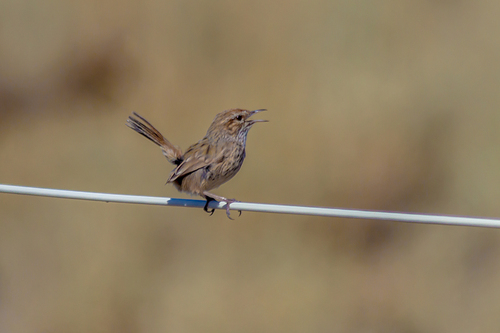
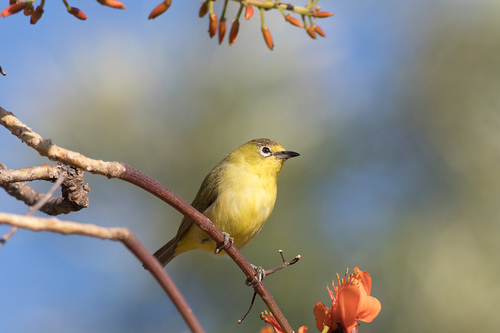
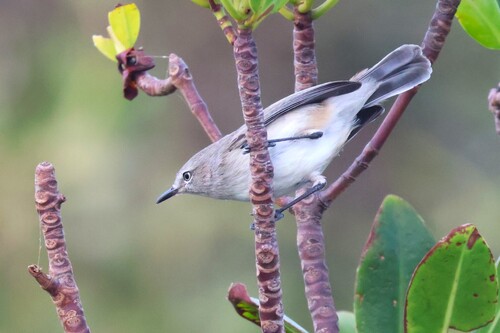
Closest Relatives at Ningaloo Marine Park






Before you go
What are the chances of seeing an Australian Magpie in Ningaloo Marine Park?
Rare
Under 5% of wildlife watchers report an Australian Magpie sighting in Ningaloo Marine Park on a given day, based on 15 verified sightings from GBIF citizen-science data from 2019 to 2026. It is the 82nd most-seen of the 102 birds we can rate there. Over three days the chance rises to about 10%, and over a week to about 20%, if each day is a fresh chance.
When is the best time to see an Australian Magpie in Ningaloo Marine Park?
March–April, July, October and December
In those months about 10% of wildlife watchers report an Australian Magpie in Ningaloo Marine Park on a given day, against under 5% in January–February, May–June, August–September and November, the lowest months.
What time of day is best to see an Australian Magpie?
Between noon and 3 pm
Across all the parks we cover, that three-hour window holds the most Australian Magpie sightings with a recorded time, and nearly all of them come between 6 am and 6 pm: it is a daytime animal.
Is Ningaloo Marine Park the best place to see an Australian Magpie?
22nd of 24
Of the 24 parks where we can rate Australian Magpie sightings, Ningaloo Marine Park ranks 22nd at under 5%. The best odds are in Maria Island National Park (Australia, about 80%), Flinders Ranges National Park (Australia, about 80%) and Grampians National Park (Australia, about 70%). All parks ranked.
Where does the Australian Magpie sighting chance come from?
GBIF citizen-science records
It is estimated from how often the Australian Magpie is recorded against all the birds logged in Ningaloo Marine Park (15 verified sightings from 2019 to 2026), calibrated against known sighting rates. Figures are rounded to the nearest 10% because citizen-science data supports honest approximations, not decimals, and months with records from fewer than five people show "—". How it works.
