


Completed


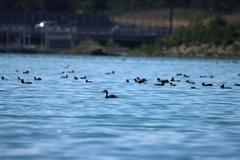



Great Crested Grebe
Podiceps cristatus
Silhouette: Ferran Sayol · PhyloPic
- KingdomAnimalia (Animals)
- PhylumChordata (Chordates)
- ClassAves (Birds)
- OrderPodicipediformes (Grebes)
- FamilyPodicipedidae (Grebes)
- GenusPodiceps (Typical Grebes)
- SpeciesPodiceps cristatus (Great Crested Grebe)
In 3 days <5% in a week ~10%
134 Verified sightings at Table Mountain National Park From 2019 to 2026
8,637 In all 27 parks
May Best month
☀️ Diurnal When it's spotted
About the Great Crested Grebe
The great crested grebe (Podiceps cristatus) is a member of the grebe family of water birds. The bird is characterised by its distinctive appearance, featuring striking black, orange-brown, and white plumage, and elaborate courtship display that involves synchronised dances and displays.
The great crested grebe was formally described by the Swedish naturalist Carl Linnaeus in 1758 in the tenth edition of his Systema Naturae under the binomial name Colymbus cristatus. It is now the type species of the genus Podiceps that was erected by the English naturalist John Latham in 1787. The type locality is Sweden. The scientific name comes from Latin: the genus name Podiceps is from podicis, "vent" and pes, "foot", and is a reference to the placement of a grebe's legs towards the rear of its body; the specific name, cristatus, means "crested".
Three subspecies are currently accepted: The great crested grebe is the largest species of grebe in the Old World, though some larger species occur in the Americas. They measure 46–51 cm (18–20 in) long with a 59–73 cm (23–29 in) wingspan and weigh 0.9 to 1.5 kg (2.0 to 3.3 lb). It is an excellent swimmer... Wikipedia →
Recent sightings of Great Crested Grebe in Table Mountain National Park
LIVEiNaturalistGlobal Distribution
Parks Where Found
Cities Where Found
| # | City | Country | Daily sighting probability |
|---|---|---|---|
| 1 | Turin | 🇮🇹 Italy | |
| 2 | Rotterdam [The Hague] | 🇳🇱 Netherlands | |
| 3 | Sincan | 🇹🇷 Turkey | |
| 4 | Luoyang | 🇨🇳 China | |
| 5 | Nanchang | 🇨🇳 China | |
| 6 | Yerevan | 🇦🇲 Armenia | |
| 7 | Birmingham | 🇬🇧 United Kingdom | |
| 8 | Amsterdam | 🇳🇱 Netherlands | |
| 9 | Manchester | 🇬🇧 United Kingdom | |
| 10 | Helsinki | 🇫🇮 Finland |
Zoos & Centres Where Found
| # | Zoo / Centre | Country | |
|---|---|---|---|
| 1 | Zoo Pilsen | 🇨🇿 Czechia | |
| 2 | Oasi Naturalistica di Sant'Alessio | 🇮🇹 Italy | |
| 3 | L'Oceanogràfic | 🇪🇸 Spain | |
| 4 | Universeum | 🇸🇪 Sweden |
Closest Relatives at Table Mountain National Park




Before you go
What are the chances of seeing a Great Crested Grebe in Table Mountain National Park?
Rare
Under 5% of wildlife watchers report a Great Crested Grebe sighting in Table Mountain National Park on a given day, based on 134 verified sightings from GBIF citizen-science data from 2019 to 2026. It is the 148th most-seen of the 223 birds we can rate there. Over three days the chance rises to under 5%, and over a week to about 10%, if each day is a fresh chance.
When is the best time to see a Great Crested Grebe in Table Mountain National Park?
Any time of year
In every month with enough records, under 5% of wildlife watchers report a Great Crested Grebe in Table Mountain National Park on a given day, so our monthly data shows no clear season.
What time of day is best to see a Great Crested Grebe?
Between 10 am and 1 pm
Across all the parks we cover, that three-hour window holds the most Great Crested Grebe sightings with a recorded time, and about 9 in 10 of them come between 6 am and 6 pm: it is a daytime animal.
Is Table Mountain National Park the best place to see a Great Crested Grebe?
25th of 27
Of the 27 parks where we can rate Great Crested Grebe sightings, Table Mountain National Park ranks 25th at under 5%. The best odds are in De Hoop Nature Reserve (South Africa, about 50%), Hortobágy National Park (Hungary, about 40%) and Camargue (France, about 40%). All parks ranked.
Where does the Great Crested Grebe sighting chance come from?
GBIF citizen-science records
It is estimated from how often the Great Crested Grebe is recorded against all the birds logged in Table Mountain National Park (134 verified sightings from 2019 to 2026), calibrated against known sighting rates. Figures are rounded to the nearest 10% because citizen-science data supports honest approximations, not decimals, and months with records from fewer than five people show "—". How it works.
