Common Ground-Dove

Common Ground-Dove

Columbina passerina

Silhouette: Sheatherius · PhyloPic

LCLeast ConcernNTVUENCR
Daily sighting probability ~30% · Possible
at Jaragua National Park

In 3 days ~70% in a week ~90%

58 Verified sightings at Jaragua National Park From 2019 to 2026
9,596 In all 41 parks
November Best month
☀️ Diurnal When it's spotted

About the Common Ground-Dove

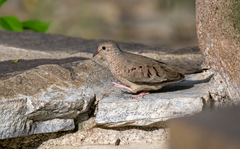
The common ground dove (Columbina passerina) is a small bird that inhabits the southern United States, parts of Central America, the Caribbean and northern South America. It is considered to be the smallest dove that inhabits the United States. As its name suggests, the bird spends the majority of its time on the ground, but can still fly.

The common ground dove was formally described by the Swedish naturalist Carl Linnaeus in 1758, in the tenth edition of his Systema Naturae. He placed it with all the other pigeons in the genus Columba and coined the binomial name Columba passerina. The specific name passerina is from the Latin passerinus meaning "sparrow-like". The species is now placed with other New World ground-doves in the genus Columbina that was introduced in 1825, by the German naturalist Johann Baptist von Spix. There are nine species in this genus including the Inca dove (Columbina inca) and the scaled dove (Columbina squammata).

There are 17 recognised subspecies: Males are paler and females have more white on their... Wikipedia →

Sounds

Song0:27

Brazil · 2025

© JAYRSON ARAUJO DE OLIVEIRA · XC1035553 · CC BY-NC-SA 4.0

Wing noise0:11

United States · 2014

© Paul Marvin · XC169166 · CC BY-NC-SA 3.0

Song0:07

Mexico · 2022

© Manuel Grosselet · XC740454 · CC BY-NC-SA 4.0

Global Distribution

Parks Where Found

# Park Country Daily sighting probability
1 Cabo Pulmo National Park 🇲🇽 Mexico
~40%
2 Blue and John Crow Mountains National Park 🇯🇲 Jamaica
~40%
3 Bahía de Loreto National Park 🇲🇽 Mexico
~30%
4 Palo Verde National Park 🇨🇷 Costa Rica
~30%
5 Jaragua National Park 🇩🇴 Dominican Republic
~30%
6 Ciénaga de Zapata 🇨🇺 Cuba
~30%
7 Celestún Biosphere Reserve 🇲🇽 Mexico
~20%
8 Everglades National Park 🇺🇸 United States
~20%
9 Merritt Island National Wildlife Refuge 🇺🇸 United States
~20%
10 Los Haitises National Park 🇩🇴 Dominican Republic
~20%
11 Santa Rosa National Park 🇨🇷 Costa Rica
~20%
12 Big Cypress National Preserve 🇺🇸 United States
~10%
13 Anavilhanas National Park 🇧🇷 Brazil
~10%
14 Las Baulas Marine National Park 🇨🇷 Costa Rica
~10%
15 El Vizcaíno Biosphere Reserve 🇲🇽 Mexico
~10%
16 Ría Lagartos Biosphere Reserve 🇲🇽 Mexico
~10%
17 Rincón de la Vieja National Park 🇨🇷 Costa Rica
~10%
18 Big Bend National Park 🇺🇸 United States
~10%
19 Arrecifes de Cozumel National Park 🇲🇽 Mexico
~10%
20 Carara National Park 🇨🇷 Costa Rica
~10%
21 Celaque National Park 🇭🇳 Honduras
<5%
22 Cerro Azul Meámbar National Park 🇭🇳 Honduras
<5%
23 Cabo Blanco Absolute Nature Reserve 🇨🇷 Costa Rica
<5%
24 Calakmul Biosphere Reserve 🇲🇽 Mexico
<5%
25 Ostional Wildlife Refuge 🇨🇷 Costa Rica
<5%
26 Henri Pittier National Park 🇻🇪 Venezuela
<5%
27 Sian Ka'an Biosphere Reserve 🇲🇽 Mexico
<5%
28 Cumbres de Monterrey National Park 🇲🇽 Mexico
<5%
29 Tayrona National Natural Park 🇨🇴 Colombia
<5%
30 Caroni Swamp 🇹🇹 Trinidad and Tobago
<5%
31 Lago de Yojoa 🇭🇳 Honduras
<5%
32 Manuel Antonio National Park 🇨🇷 Costa Rica
<5%
33 Pico Bonito National Park 🇭🇳 Honduras
<5%
34 Saguaro National Park 🇺🇸 United States
<5%
35 Tenorio Volcano National Park 🇨🇷 Costa Rica
<5%
36 Cañón del Sumidero National Park 🇲🇽 Mexico
<5%
37 Marino Ballena National Park 🇨🇷 Costa Rica
<5%
38 Masaya Volcano National Park 🇳🇮 Nicaragua
<5%
39 Piedras Blancas National Park 🇨🇷 Costa Rica
<5%
40 Corcovado National Park 🇨🇷 Costa Rica
<5%
41 Parque Estadual Encontro das Águas 🇧🇷 Brazil
<5%

Cities Where Found

# City Country Daily sighting probability
1 Havana 🇨🇺 Cuba
~70%
2 Santo Domingo 🇩🇴 Dominican Republic
~60%
3 São Luís 🇧🇷 Brazil
~50%
4 Recife 🇧🇷 Brazil
~40%
5 Belém 🇧🇷 Brazil
~30%
6 Barranquilla 🇨🇴 Colombia
~30%
7 Manaus 🇧🇷 Brazil
~30%
8 Guatemala City 🇬🇹 Guatemala
~10%
9 Orlando 🇺🇸 United States
~10%
10 San José 🇨🇷 Costa Rica
<5%

Zoos & Centres Where Found

# Zoo / Centre Country
1 San Diego Zoo 🇺🇸 United States In captivity
2 Burgers' Ocean 🇳🇱 Netherlands In captivity
3 Royal Burgers' Zoo 🇳🇱 Netherlands In captivity
4 Arizona-Sonora Desert Museum 🇺🇸 United States In captivity

Before you go

What are the chances of seeing a Common Ground-Dove in Jaragua National Park?

Possible

About 30% of wildlife watchers report a Common Ground-Dove sighting in Jaragua National Park on a given day, based on 58 verified sightings from GBIF citizen-science data from 2019 to 2026. It is the 17th most-seen of the 92 birds we can rate there. Over three days the chance rises to about 70%, and over a week to about 90%, if each day is a fresh chance.

When is the best time to see a Common Ground-Dove in Jaragua National Park?

May and November

In those months about 40% of wildlife watchers report a Common Ground-Dove in Jaragua National Park on a given day, against about 20% in October, the lowest month. June to September have too few records to rate.

What time of day is best to see a Common Ground-Dove?

Between 7 and 10 am

Across all the parks we cover, that three-hour window holds the most Common Ground-Dove sightings with a recorded time, and about 9 in 10 of them come between 6 am and 6 pm: it is a daytime animal.

Which relatives of the Common Ground-Dove live in Jaragua National Park?

Same family: Columbidae

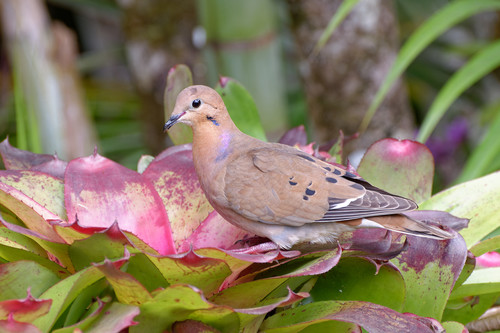
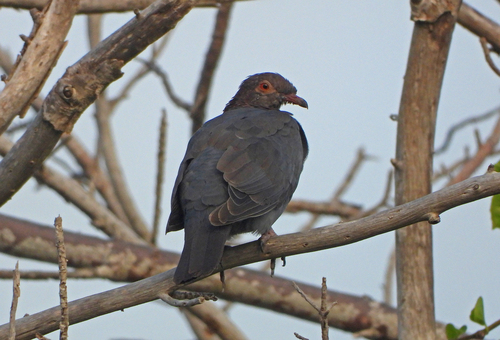
The closest relatives of the Common Ground-Dove that you can see in Jaragua National Park (family Columbidae, Pigeons and Doves) are Mourning Dove (about 20%), Zenaida Dove (about 20%) and White-crowned Pigeon (about 10%), with each one's daily chance of a sighting.

Where does the Common Ground-Dove sighting chance come from?

GBIF citizen-science records

It is estimated from how often the Common Ground-Dove is recorded against all the birds logged in Jaragua National Park (58 verified sightings from 2019 to 2026), calibrated against known sighting rates. Figures are rounded to the nearest 10% because citizen-science data supports honest approximations, not decimals, and months with records from fewer than five people show "—". How it works.

← Back to Jaragua National Park