
Cape Turtle Dove

Cape Turtle Dove

Streptopelia capicola

Silhouette: Andy Wilson · PhyloPic

LCLeast ConcernNTVUENCR
Daily sighting probability ~20% · Possible
at Murchison Falls National Park

In 3 days ~40% in a week ~70%

159 Verified sightings at Murchison Falls National Park From 2019 to 2026
35,818 In all 54 parks
March Best month
☀️ Diurnal When it's spotted

About the Cape Turtle Dove

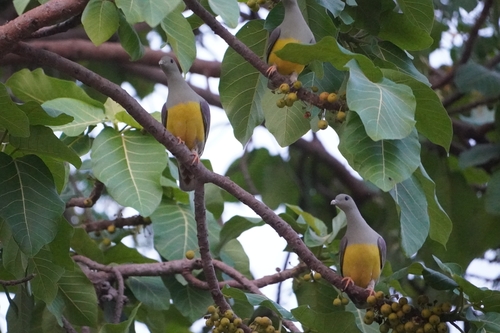
The ring-necked dove (Streptopelia capicola), also known as the Cape turtle dove, half-collared dove, or the Cape Lager is a widespread and often abundant dove species in East and southern Africa. It is a mostly sedentary bird, found in a variety of open habitats. Within range, its penetrating and rhythmic, three-syllabled crooning is a familiar sound at any time of the year. Its name is derived from the semi-collar of black feathers on the lower nape, a feature shared with a number of Streptopelia species. Like all doves, they depend on surface water. They congregate in large flocks at waterholes in dry regions to drink and bathe.

Their body feathers are darkest on the upper side, where they are coloured in dull tones of grey and brown, with shades of lavender on the nape. It is paler below, where a tint of pinkish lavender is usually present. The lower belly and crissum (the undertail coverts surrounding the cloaca) is white. As with related species, they have white fringes and conspicuous white tips to the otherwise slate grey tail feathers. The tail pattern is particularly noticeable during the display flight.

Individual plumage variation is high, with some light... Wikipedia →

Sounds

Call0:26

Kenya · 2026

© Ding Li Yong · XC1179933 · CC BY-NC-ND 4.0

Song0:16

Uganda · 2025

© Bernard BOUSQUET · XC1052416 · CC BY-NC-SA 4.0

Recording0:23

South Africa · 2023

© Drew Davison · XC862369 · CC BY-NC-ND 4.0

Global Distribution

Parks Where Found

# Park Country Daily sighting probability
1 Etosha National Park 🇳🇦 Namibia
~80%
2 Kgalagadi Transfrontier Park 🇿🇦 South Africa
~80%
3 Gonarezhou National Park 🇿🇼 Zimbabwe
~70%
4 Ruaha National Park 🇹🇿 Tanzania
~70%
5 Tarangire National Park 🇹🇿 Tanzania
~70%
6 South Luangwa National Park 🇿🇲 Zambia
~70%
7 Mana Pools National Park 🇿🇼 Zimbabwe
~70%
8 uMkhuze Game Reserve 🇿🇦 South Africa
~70%
9 Akagera National Park 🇷🇼 Rwanda
~70%
10 Lower Zambezi National Park 🇿🇲 Zambia
~70%
11 Moremi Game Reserve 🇧🇼 Botswana
~70%
12 Lake Mburo National Park 🇺🇬 Uganda
~70%
13 Mikumi National Park 🇹🇿 Tanzania
~70%
14 Hwange National Park 🇿🇼 Zimbabwe
~70%
15 Kafue National Park 🇿🇲 Zambia
~60%
16 Tsavo West National Park 🇰🇪 Kenya
~60%
17 Serengeti National Park 🇹🇿 Tanzania
~60%
18 Liwonde National Park 🇲🇼 Malawi
~60%
19 Queen Elizabeth National Park 🇺🇬 Uganda
~60%
20 Kruger National Park 🇿🇦 South Africa
~60%
21 Chobe National Park 🇧🇼 Botswana
~60%
22 Lake Nakuru National Park 🇰🇪 Kenya
~60%
23 Pilanesberg National Park 🇿🇦 South Africa
~60%
24 Tsavo East National Park 🇰🇪 Kenya
~60%
25 Nairobi National Park 🇰🇪 Kenya
~60%
26 Meru National Park 🇰🇪 Kenya
~60%
27 Masai Mara National Reserve 🇰🇪 Kenya
~60%
28 Samburu National Reserve 🇰🇪 Kenya
~60%
29 Addo Elephant National Park 🇿🇦 South Africa
~50%
30 Waterberg Plateau Park 🇳🇦 Namibia
~50%
31 Hluhluwe-Imfolozi Park 🇿🇦 South Africa
~50%
32 De Hoop Nature Reserve 🇿🇦 South Africa
~50%
33 Golden Gate Highlands National Park 🇿🇦 South Africa
~50%
34 Namib-Naukluft National Park 🇳🇦 Namibia
~50%
35 West Coast National Park 🇿🇦 South Africa
~50%
36 Gorongosa National Park 🇲🇿 Mozambique
~50%
37 Mkomazi National Park 🇹🇿 Tanzania
~50%
38 Lake Manyara National Park 🇹🇿 Tanzania
~40%
39 Ngorongoro Conservation Area 🇹🇿 Tanzania
~40%
40 Amboseli National Park 🇰🇪 Kenya
~40%
41 Garden Route National Park 🇿🇦 South Africa
~40%
42 Selous Game Reserve 🇹🇿 Tanzania
~40%
43 Virunga National Park 🇨🇩 Democratic Republic of the Congo
~20%
44 Table Mountain National Park 🇿🇦 South Africa
~20%
45 Kidepo Valley National Park 🇺🇬 Uganda
~20%
46 Awash National Park 🇪🇹 Ethiopia
~20%
47 Murchison Falls National Park 🇺🇬 Uganda
~20%
48 Volcanoes National Park 🇷🇼 Rwanda
~10%
49 Arusha National Park 🇹🇿 Tanzania
~10%
50 Nyungwe National Park 🇷🇼 Rwanda
~10%
51 Aberdare National Park 🇰🇪 Kenya
~10%
52 iSimangaliso Wetland Park 🇿🇦 South Africa
~10%
53 Kibale National Park 🇺🇬 Uganda
<5%
54 Bwindi Impenetrable National Park 🇺🇬 Uganda
<5%

Cities Where Found

# City Country Daily sighting probability
1 Johannesburg 🇿🇦 South Africa
~50%
2 Pretoria 🇿🇦 South Africa
~40%
3 Harare 🇿🇼 Zimbabwe
~40%
4 Brazzaville 🇨🇬 Republic of the Congo
~40%
5 Lusaka 🇿🇲 Zambia
~30%
6 Cape Town 🇿🇦 South Africa
~20%
7 Lubango 🇦🇴 Angola
~20%
8 Kampala 🇺🇬 Uganda
~10%
9 Lilongwe 🇲🇼 Malawi
~10%
10 Mombasa 🇰🇪 Kenya
~10%

Zoos & Centres Where Found

# Zoo / Centre Country
1 Toledo Zoo 🇺🇸 United States In captivity
2 Saint Louis Zoo 🇺🇸 United States In captivity
3 Ōmiya Park Zoo 🇯🇵 Japan In captivity
4 Cologne Zoo Aquarium 🇩🇪 Germany In captivity

Before you go

What are the chances of seeing a Cape Turtle Dove in Murchison Falls National Park?

Possible

About 20% of wildlife watchers report a Cape Turtle Dove sighting in Murchison Falls National Park on a given day, based on 159 verified sightings from GBIF citizen-science data from 2019 to 2026. It is the 124th most-seen of the 424 birds we can rate there. Over three days the chance rises to about 40%, and over a week to about 70%, if each day is a fresh chance.

When is the best time to see a Cape Turtle Dove in Murchison Falls National Park?

March and October

In those months about 30% of wildlife watchers report a Cape Turtle Dove in Murchison Falls National Park on a given day, against about 10% in January–February, May–June and August, the lowest months.

What time of day is best to see a Cape Turtle Dove?

Between 8 and 11 am

Across all the parks we cover, that three-hour window holds the most Cape Turtle Dove sightings with a recorded time, and about 9 in 10 of them come between 6 am and 6 pm: it is a daytime animal.

Which relatives of the Cape Turtle Dove live in Murchison Falls National Park?

Same genus: Streptopelia

The closest relatives of the Cape Turtle Dove that you can see in Murchison Falls National Park (genus Streptopelia, Turtle-Doves and Collared-Doves) are Vinaceous Dove (about 30%), African Mourning Dove (about 30%) and Red-eyed Dove (about 30%), with each one's daily chance of a sighting.

Where does the Cape Turtle Dove sighting chance come from?

GBIF citizen-science records

It is estimated from how often the Cape Turtle Dove is recorded against all the birds logged in Murchison Falls National Park (159 verified sightings from 2019 to 2026), calibrated against known sighting rates. Figures are rounded to the nearest 10% because citizen-science data supports honest approximations, not decimals, and months with records from fewer than five people show "—". How it works.

← Back to Murchison Falls National Park