


Completed


Scarlet Macaw
Ara macao
Silhouette: Myriam_Ramirez · PhyloPic
- KingdomAnimalia (Animals)
- PhylumChordata (Chordates)
- ClassAves (Birds)
- OrderPsittaciformes (Parrots)
- FamilyPsittacidae (New World and African Parrots)
- GenusAra
- SpeciesAra macao (Scarlet Macaw)
In 3 days ~20% in a week ~40%
31 Verified sightings at Tapantí-Macizo de la Muerte National Park From 2019 to 2026
23,138 In all 26 parks
March Best month
☀️ Diurnal When it's spotted


Completed
About the Scarlet Macaw
The scarlet macaw (Ara macao) also called the red-and-yellow macaw, red-and-blue macaw or red-breasted macaw, is a large yellow, green, red and blue Neotropical parrot native to humid evergreen forests of the Americas. Its range extends from southeastern Mexico to Peru, Ecuador, Colombia, Bolivia, Venezuela, Honduras, and Brazil in lowlands of 500 m (1,600 ft) (at least formerly) up to 1,000 m (3,300 ft), the Caribbean island of Trinidad, as well as the Pacific island of Coiba. Formerly, the northern extent of its range included southern Tamaulipas. In some areas, it has suffered local extinction because of habitat destruction, or capture for the parrot trade, but in other areas, it remains fairly common. It is the national bird of Honduras. Like its relative the blue-and-yellow macaw, the scarlet macaw is a popular bird in aviculture as a result of its striking plumage. It is the third most common macaw species in captivity after the blue-and-yellow and red-and-green macaw respectively. In recent years it has become much rarer in captivity and much more expensive due to stricter laws, its price being higher than even red-and-green macaws.
The scarlet macaw was formally... Wikipedia →
Recent sightings of Scarlet Macaw in Tapantí-Macizo de la Muerte National Park
LIVEiNaturalistGlobal Distribution
Parks Where Found
Zoos & Centres Where Found
| # | Zoo / Centre | Country | |
|---|---|---|---|
| 1 | Disney's Animal Kingdom | 🇺🇸 United States | |
| 2 | Busch Gardens Tampa | 🇺🇸 United States | |
| 3 | SeaWorld San Diego | 🇺🇸 United States | |
| 4 | San Diego Zoo | 🇺🇸 United States | |
| 5 | Pairi Daiza | 🇧🇪 Belgium | |
| 6 | National Zoological Park | 🇺🇸 United States | |
| 7 | ZooParc de Beauval | 🇫🇷 France | |
| 8 | Lisbon Oceanarium | 🇵🇹 Portugal | |
| 9 | Parque das Aves | 🇧🇷 Brazil | |
| 10 | Le Pal | 🇫🇷 France | |
| 11 | Australia Zoo | 🇦🇺 Australia | |
| 12 | Zlín-Lešná Zoo | 🇨🇿 Czechia | |
| 13 | Ostrava Zoo | 🇨🇿 Czechia | |
| 14 | Tulsa Zoo | 🇺🇸 United States | |
| 15 | Parc Phœnix | 🇫🇷 France | |
| 16 | Réserve africaine de Sigean | 🇫🇷 France | |
| 17 | Olomouc Zoo | 🇨🇿 Czechia | |
| 18 | Walsrode World Bird Park | 🇩🇪 Germany | |
| 19 | Parc des oiseaux | 🇫🇷 France | |
| 20 | Zoo de Doué | 🇫🇷 France | |
| 21 | Zoo de Maubeuge | 🇫🇷 France | |
| 22 | Kaliningrad Zoo | 🇷🇺 Russia | |
| 23 | Zoobotánico Jerez | 🇪🇸 Spain | |
| 24 | Rocamadour Monkey Forest | 🇫🇷 France | |
| 25 | La Tanière | 🇫🇷 France | |
| 26 | Belize Zoo | 🇧🇿 Belize | |
| 27 | Silver Springs | 🇺🇸 United States | |
| 28 | Arignar Anna Zoological Park | 🇮🇳 India | |
| 29 | Zoo Miami | 🇺🇸 United States | |
| 30 | Lion Country Safari | 🇺🇸 United States | |
| 31 | Al Qudra Lakes | 🇦🇪 United Arab Emirates | |
| 32 | African Lion Safari | 🇨🇦 Canada | |
| 33 | Toronto Zoo | 🇨🇦 Canada | |
| 34 | Parque Zoológico | 🇧🇷 Brazil | |
| 35 | Busch Gardens Williamsburg | 🇺🇸 United States | |
| 36 | Nehru Zoological Park | 🇮🇳 India | |
| 37 | Shanghai Wild Animal Park | 🇨🇳 China | |
| 38 | Tennessee Safari Park | 🇺🇸 United States | |
| 39 | Grant's Farm | 🇺🇸 United States | |
| 40 | Bronx Zoo | 🇺🇸 United States | |
| 41 | Yumka' | 🇲🇽 Mexico | |
| 42 | Kadoorie Farm and Botanic Garden | 🇭🇰 Hong Kong SAR China | |
| 43 | Zoological Garden of Belo Horizonte | 🇧🇷 Brazil | |
| 44 | Badoca Safari Park | 🇵🇹 Portugal | |
| 45 | Brookfield Zoo | 🇺🇸 United States | |
| 46 | Auto Safari Chapin | 🇬🇹 Guatemala | |
| 47 | Ecological Center of Sonora | 🇲🇽 Mexico | |
| 48 | Zoofari | 🇲🇽 Mexico | |
| 49 | Givskud Zoo | 🇩🇰 Denmark | |
| 50 | Curitiba Zoo | 🇧🇷 Brazil |
Closest Relatives at Tapantí-Macizo de la Muerte National Park
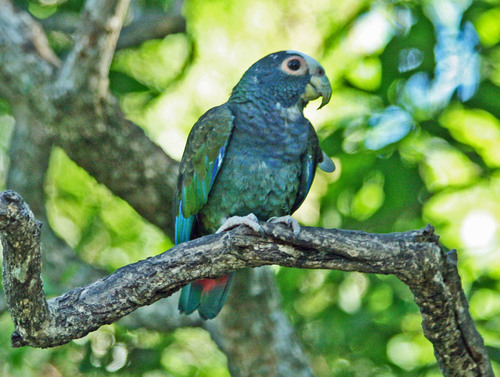

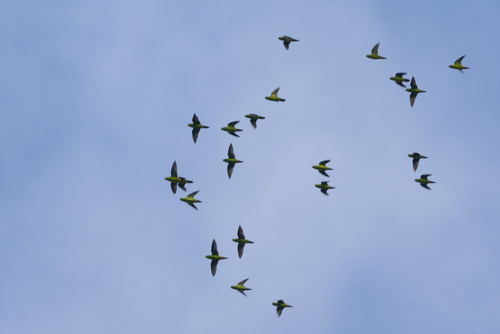
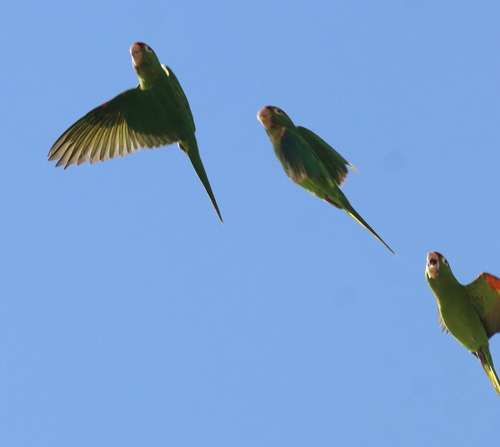


Before you go
What are the chances of seeing a Scarlet Macaw in Tapantí-Macizo de la Muerte National Park?
With luck
About 10% of wildlife watchers report a Scarlet Macaw sighting in Tapantí-Macizo de la Muerte National Park on a given day, based on 31 verified sightings from GBIF citizen-science data from 2019 to 2026. It is the 154th most-seen of the 467 birds we can rate there. Over three days the chance rises to about 20%, and over a week to about 40%, if each day is a fresh chance.
When is the best time to see a Scarlet Macaw in Tapantí-Macizo de la Muerte National Park?
July, September and November–May
In those months about 10% of wildlife watchers report a Scarlet Macaw in Tapantí-Macizo de la Muerte National Park on a given day, against under 5% in June, August and October, the lowest months.
What time of day is best to see a Scarlet Macaw?
Between 11 am and 2 pm
Across all the parks we cover, that three-hour window holds the most Scarlet Macaw sightings with a recorded time, and about 9 in 10 of them come between 6 am and 6 pm: it is a daytime animal.
Is Tapantí-Macizo de la Muerte National Park the best place to see a Scarlet Macaw?
20th of 26
Of the 26 parks where we can rate Scarlet Macaw sightings, Tapantí-Macizo de la Muerte National Park ranks 20th at about 10%. The best odds are in Carara National Park (Costa Rica, about 80%), Corcovado National Park (Costa Rica, about 70%) and Montes Azules Biosphere Reserve (Mexico, about 60%). All parks ranked.
Which relatives of the Scarlet Macaw live in Tapantí-Macizo de la Muerte National Park?
Same family: Psittacidae
The closest relatives of the Scarlet Macaw that you can see in Tapantí-Macizo de la Muerte National Park (family Psittacidae, New World and African Parrots) are White-crowned Parrot (about 10%), Barred Parakeet (about 10%) and Crimson-fronted Parakeet (about 10%), with each one's daily chance of a sighting.
Where does the Scarlet Macaw sighting chance come from?
GBIF citizen-science records
It is estimated from how often the Scarlet Macaw is recorded against all the birds logged in Tapantí-Macizo de la Muerte National Park (31 verified sightings from 2019 to 2026), calibrated against known sighting rates. Figures are rounded to the nearest 10% because citizen-science data supports honest approximations, not decimals, and months with records from fewer than five people show "—". How it works.
