Eurasian Wigeon

Eurasian Wigeon

Mareca penelope

Silhouette: Lauren McLean · PhyloPic

LCLeast ConcernNTVUENCR
Daily sighting probability <5% · Rare
at Berlin

In 3 days <5% in a week ~10%

44 Verified sightings at Berlin
8,103 In all 31 parks From 2019 to 2026
November Best month
☀️ Diurnal When it's spotted

About the Eurasian Wigeon

The Eurasian wigeon or European wigeon (Mareca penelope), also known as the widgeon or wigeon, is one of three extant species of wigeon in the dabbling duck genus Mareca. It is common and widespread within its Palearctic range.

The Eurasian wigeon was formally described by Carl Linnaeus in his landmark 1758 10th edition of Systema Naturae under the binomial name Anas penelope. Anas is the Latin word for "duck", and penelope refers to a duck said to have saved Penelope when she was thrown into the sea. Her name derives from Ancient Greek πήνη pene, "braid" and ὤψ ops "appearance", from the ruse she used to deter suitors while her husband Ulysses was away. Following a study in 2009, 5 species of Wigeon were transferred to the resurrected genus Mareca, so the current binomial name is now Mareca penelope.

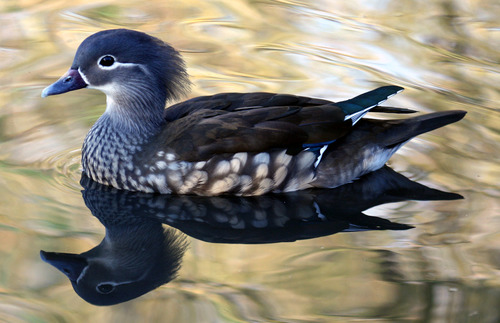
This dabbling duck is 42–52 cm (17–20 in) long with a 71–80 cm (28–31 in) wingspan, and a weight of 500–1,073 g (1–2 lb). The breeding male has grey flanks and back, with a black rear end, a dark green speculum and a brilliant white patch on upper wings, visible in flight or at rest. It has a pink breast, white belly, and a chestnut head with a creamy crown... Wikipedia →

Sounds

Song0:18

Sweden · 2022

© Lars Edenius · XC718662 · CC BY-NC-SA 4.0

Call0:30

Netherlands · 2022

© Susanne Kuijpers · XC709032 · CC BY-NC-SA 4.0

Nocturnal flight call0:54

Ireland · 2021

© Irish Wildlife Sounds · XC693190 · CC BY-NC-ND 4.0

Global Distribution

Parks Where Found

# Park Country Daily sighting probability
1 Kaziranga National Park 🇮🇳 India
~40%
2 Wadden Sea National Park 🇩🇪 Germany
~40%
3 Hortobágy National Park 🇭🇺 Hungary
~40%
4 Kiskunság National Park 🇭🇺 Hungary
~40%
5 Keoladeo National Park 🇮🇳 India
~30%
6 Biebrza National Park 🇵🇱 Poland
~20%
7 Snowdonia National Park 🇬🇧 United Kingdom
~20%
8 Cairngorms National Park 🇬🇧 United Kingdom
~10%
9 Nikko National Park 🇯🇵 Japan
~10%
10 Vatnajokull National Park 🇮🇸 Iceland
~10%
11 Białowieża National Park 🇵🇱 Poland
~10%
12 Bavarian Forest National Park 🇩🇪 Germany
~10%
13 Fertő-Hanság National Park 🇭🇺 Hungary
<5%
14 Doñana National Park 🇪🇸 Spain
<5%
15 Camargue 🇫🇷 France
<5%
16 Chitwan National Park 🇳🇵 Nepal
<5%
17 Kluane National Park 🇨🇦 Canada
<5%
18 Ranthambore National Park 🇮🇳 India
<5%
19 Merritt Island National Wildlife Refuge 🇺🇸 United States
<5%
20 Great Bear Rainforest 🇨🇦 Canada
<5%
21 Monfragüe National Park 🇪🇸 Spain
<5%
22 Sundarbans National Park 🇮🇳 India
<5%
23 Gauja National Park 🇱🇻 Latvia
<5%
24 Satpura National Park 🇮🇳 India
<5%
25 Pacific Rim National Park Reserve 🇨🇦 Canada
<5%
26 Bandipur National Park 🇮🇳 India
<5%
27 Redwood National Park 🇺🇸 United States
<5%
28 Namdapha National Park 🇮🇳 India
<5%
29 Sierra de Guadarrama National Park 🇪🇸 Spain
<5%
30 Olympic National Park 🇺🇸 United States
<5%
31 Kanha National Park 🇮🇳 India
<5%

Cities Where Found

# City Country Daily sighting probability
1 Fukuoka 🇯🇵 Japan
~50%
2 Osaka 🇯🇵 Japan
~40%
3 Helsinki 🇫🇮 Finland
~30%
4 Hiroshima 🇯🇵 Japan
~30%
5 Nagoya 🇯🇵 Japan
~30%
6 Tokyo 🇯🇵 Japan
~30%
7 Quanzhou 🇨🇳 China
~20%
8 Tuen Mun 🇨🇳 China
~20%
9 Kitakyushu 🇯🇵 Japan
~10%
10 Copenhagen 🇩🇰 Denmark
~10%

Zoos & Centres Where Found

# Zoo / Centre Country
1 Disney's Animal Kingdom 🇺🇸 United States In captivity
2 San Diego Zoo 🇺🇸 United States In captivity
3 ZooParc de Beauval 🇫🇷 France In captivity
4 Zoobotánico Jerez 🇪🇸 Spain In captivity
5 Parc animalier de Sainte-Croix 🇫🇷 France In captivity
6 Beijing Zoo 🇨🇳 China In captivity
7 Cotswold Wildlife Park 🇬🇧 United Kingdom In captivity
8 Slimbridge Wetland Centre 🇬🇧 United Kingdom In captivity
9 Körösvölgyi Állatpark 🇭🇺 Hungary In captivity
10 Fort Worth Zoo 🇺🇸 United States In captivity
11 Zoo Opole 🇵🇱 Poland In captivity
12 Centro Cicogne e Anatidi 🇮🇹 Italy In captivity
13 Tierpark Hagenbeck 🇩🇪 Germany In captivity
14 Cologne Zoological Garden 🇩🇪 Germany In captivity
15 Inokashira Park Zoo 🇯🇵 Japan In captivity
16 L'Oceanogràfic 🇪🇸 Spain In captivity
17 Odesa Zoo 🇺🇦 Ukraine In captivity
18 Kobe Animal Kingdom 🇯🇵 Japan In captivity
19 Cologne Zoo Aquarium 🇩🇪 Germany In captivity
20 Domaine des Oiseaux 🇫🇷 France In captivity
21 Margitszigeti Kisállatkert 🇭🇺 Hungary In captivity
22 Sea Life London Aquarium 🇬🇧 United Kingdom In captivity
23 Zooparque Itatiba 🇧🇷 Brazil In captivity

Before you go

What are the chances of seeing a Eurasian Wigeon in Berlin?

Rare

Under 5% of wildlife watchers report a Eurasian Wigeon sighting in Berlin on a given day, based on 44 verified sightings from GBIF citizen-science data. It is the 119th most-seen of the 160 birds we can rate there. Over three days the chance rises to under 5%, and over a week to about 10%, if each day is a fresh chance.

When is the best time to see a Eurasian Wigeon in Berlin?

November

In that month about 10% of wildlife watchers report a Eurasian Wigeon in Berlin on a given day, against under 5% in December to October, the lowest months.

What time of day is best to see a Eurasian Wigeon?

Between 10 am and 1 pm

Across all the parks we cover, that three-hour window holds the most Eurasian Wigeon sightings with a recorded time, and about 8 in 10 of them come between 6 am and 6 pm: it is a daytime animal.

Is Berlin the best place to see a Eurasian Wigeon?

56th of 86

Of the 86 cities where we can rate Eurasian Wigeon sightings, Berlin ranks 56th at under 5%. The best odds are in Fukuoka (Japan, about 50%), Osaka (Japan, about 40%) and Helsinki (Finland, about 30%).

Where does the Eurasian Wigeon sighting chance come from?

GBIF citizen-science records

It is estimated from how often the Eurasian Wigeon is recorded against all the birds logged in Berlin (44 verified sightings), calibrated against known sighting rates. Figures are rounded to the nearest 10% because citizen-science data supports honest approximations, not decimals, and months with records from fewer than five people show "—". How it works.

← Back to Berlin