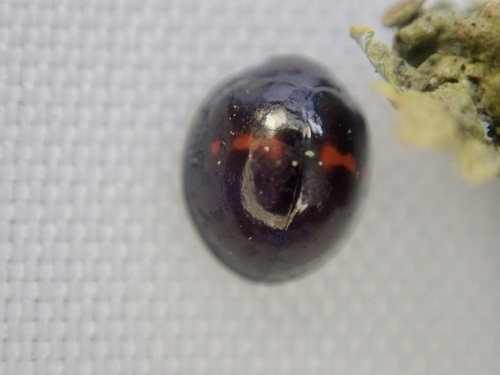
Seven-Spotted Lady Beetle

Seven-Spotted Lady Beetle

Coccinella septempunctata

Daily sighting probability ~10% · With luck
at Vancouver

In 3 days ~40% in a week ~60%

424 Verified sightings at Vancouver
2,463 In all 56 parks From 2019 to 2026
April Best month
☀️ Diurnal When it's spotted

About the Seven-Spotted Lady Beetle

Coccinella septempunctata, commonly known as the seven-spot ladybird (in North America, seven-spotted ladybug, seven-spotted lady beetle), often abbreviated C-7, is a carnivorous beetle native to Europe, most of Asia, and North Africa. It inhabits many regions with a temperate climate. The beetle has been introduced to several other areas, including North America as a biological pest control agent to combat aphid infestations. It is one of approximately 5,000 species of ladybird worldwide. Tatia Bauer states that C. septempunctata's ability to adapt to many different habitats makes it "one of the most successful aphidophagous insects".

C. septempunctata was first described and named in 1758 by the Swedish biologist Carl Linnaeus. Coccinella, the name of the genus, comes from the Latin coccineus for the colour "scarlet". The common name is reflected in the Latin name for the species, septem meaning "seven" and punctata meaning "spotted".

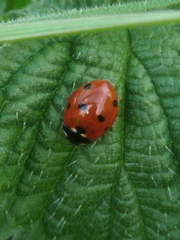
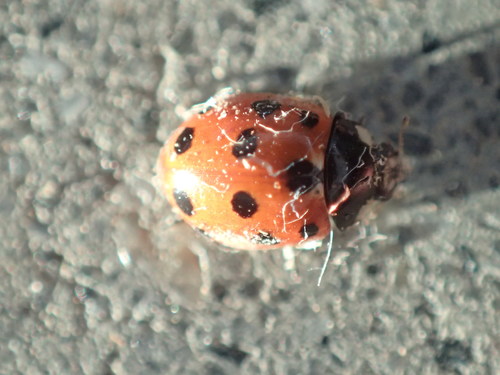
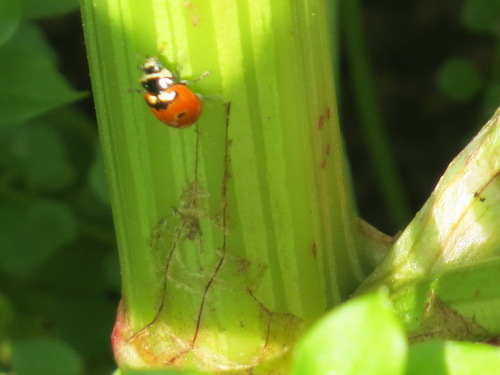
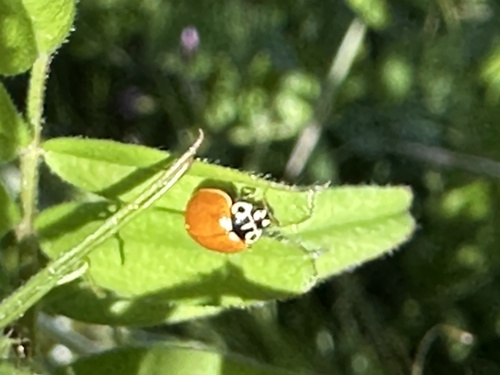
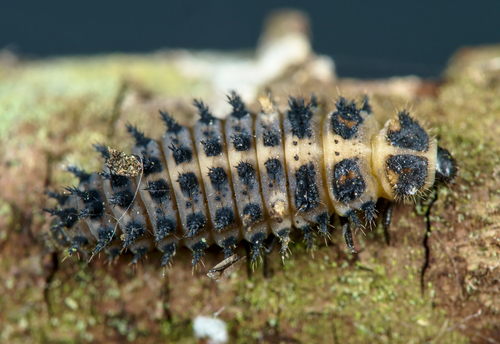
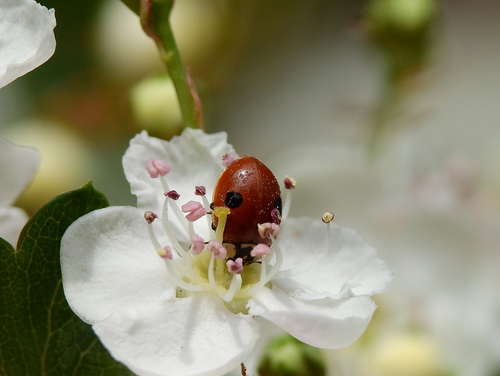
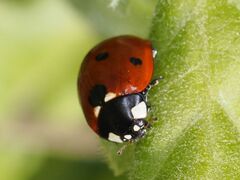
C. septempunctata's elytra is red in colour, with three black spots on each wing. A further spot appears where the two wings join, giving a total of seven black spots. Their principal diet is aphids, on which they also depend for development and reproduction. When aphids are scarce, seven-spot ladybirds will survive on alternative food sources such as pollen, nectar, thrips and whitefly, but they cannot reproduce during that time. Predators of C. septempunctata include birds, small mammals, spiders, and other Coccinellidae. Wikipedia →

Global Distribution

Parks Where Found

# Park Country Daily sighting probability
1 Kiskunság National Park 🇭🇺 Hungary
~40%
2 Death Valley National Park 🇺🇸 United States
~30%
3 Aigüestortes National Park 🇪🇸 Spain
~30%
4 Elk Island National Park 🇨🇦 Canada
~30%
5 Picos de Europa National Park 🇪🇸 Spain
~30%
6 Białowieża National Park 🇵🇱 Poland
~30%
7 Joshua Tree National Park 🇺🇸 United States
~30%
8 Hortobágy National Park 🇭🇺 Hungary
~30%
9 Mercantour National Park 🇫🇷 France
~30%
10 Ordesa y Monte Perdido National Park 🇪🇸 Spain
~30%
11 Sierra Nevada National Park 🇪🇸 Spain
~30%
12 Biebrza National Park 🇵🇱 Poland
~30%
13 Sierra de Guadarrama National Park 🇪🇸 Spain
~20%
14 Shenandoah National Park 🇺🇸 United States
~20%
15 Channel Islands National Park 🇺🇸 United States
~20%
16 Riding Mountain National Park 🇨🇦 Canada
~20%
17 Tatra National Park 🇸🇰 Slovakia
~20%
18 Pyrénées National Park 🇫🇷 France
~20%
19 Cévennes National Park 🇫🇷 France
~20%
20 Langtang National Park 🇳🇵 Nepal
~20%
21 Snowdonia National Park 🇬🇧 United Kingdom
~20%
22 Fertő-Hanság National Park 🇭🇺 Hungary
~20%
23 Wadden Sea National Park 🇩🇪 Germany
~20%
24 Bavarian Forest National Park 🇩🇪 Germany
~20%
25 Redwood National Park 🇺🇸 United States
~20%
26 Zion National Park 🇺🇸 United States
~20%
27 Vanoise National Park 🇫🇷 France
~20%
28 Jasper National Park 🇨🇦 Canada
~20%
29 Chitwan National Park 🇳🇵 Nepal
~20%
30 Cape Breton Highlands National Park 🇨🇦 Canada
~20%
31 Grand Canyon National Park 🇺🇸 United States
~20%
32 Triglav National Park 🇸🇮 Slovenia
~10%
33 Great Smoky Mountains National Park 🇺🇸 United States
~10%
34 Isle Royale National Park 🇺🇸 United States
~10%
35 Ecrins National Park 🇫🇷 France
~10%
36 Acadia National Park 🇺🇸 United States
~10%
37 Monfragüe National Park 🇪🇸 Spain
~10%
38 Camargue 🇫🇷 France
~10%
39 Yellowstone National Park 🇺🇸 United States
~10%
40 Rocky Mountain National Park 🇺🇸 United States
~10%
41 Olympic National Park 🇺🇸 United States
~10%
42 Hohe Tauern National Park 🇦🇹 Austria
~10%
43 Doñana National Park 🇪🇸 Spain
~10%
44 Badlands National Park 🇺🇸 United States
~10%
45 Cairngorms National Park 🇬🇧 United Kingdom
~10%
46 Banff National Park 🇨🇦 Canada
~10%
47 Point Pelee National Park 🇨🇦 Canada
~10%
48 Glacier National Park 🇺🇸 United States
~10%
49 Pacific Rim National Park Reserve 🇨🇦 Canada
~10%
50 Sequoia and Kings Canyon National Parks 🇺🇸 United States
~10%
51 Grand Teton National Park 🇺🇸 United States
~10%
52 Saguaro National Park 🇺🇸 United States
~10%
53 Great Bear Rainforest 🇨🇦 Canada
~10%
54 Yosemite National Park 🇺🇸 United States
~10%
55 Big Bend National Park 🇺🇸 United States
<5%
56 Cumbres de Monterrey National Park 🇲🇽 Mexico
<5%

Cities Where Found

# City Country Daily sighting probability
1 Mashhad 🇮🇷 Iran
~80%
2 Jammu 🇮🇳 India
~50%
3 Birmingham 🇬🇧 United Kingdom
~50%
4 London 🇬🇧 United Kingdom
~50%
5 Liverpool 🇬🇧 United Kingdom
~50%
6 Manchester 🇬🇧 United Kingdom
~50%
7 Ankara 🇹🇷 Turkey
~40%
8 Tijuana 🇲🇽 México
~40%
9 Dushanbe 🇹🇯 Tajikistan
~40%
10 Nagoya 🇯🇵 Japan
~40%

Before you go

What are the chances of seeing a Seven-Spotted Lady Beetle in Vancouver?

With luck

About 10% of wildlife watchers report a Seven-Spotted Lady Beetle sighting in Vancouver on a given day, based on 424 verified sightings from GBIF citizen-science data. It is the 13th most-seen of the 482 insects we can rate there. Over three days the chance rises to about 40%, and over a week to about 60%, if each day is a fresh chance.

When is the best time to see a Seven-Spotted Lady Beetle in Vancouver?

April to July

In those months about 20% of wildlife watchers report a Seven-Spotted Lady Beetle in Vancouver on a given day, against under 5% in December, the lowest month. Those are among Vancouver's driest months, with about 55 mm of rain a month against 210 mm in November.

What time of day is best to see a Seven-Spotted Lady Beetle?

Between 11 am and 2 pm

Across all the parks we cover, that three-hour window holds the most Seven-Spotted Lady Beetle sightings with a recorded time, and about 9 in 10 of them come between 6 am and 6 pm: it is a daytime animal.

Is Vancouver the best place to see a Seven-Spotted Lady Beetle?

89th of 123

Of the 123 cities where we can rate Seven-Spotted Lady Beetle sightings, Vancouver ranks 89th at about 10%. The best odds are in Mashhad (Iran, about 80%), Jammu (India, about 50%) and Birmingham (United Kingdom, about 50%).

Where does the Seven-Spotted Lady Beetle sighting chance come from?

GBIF citizen-science records

It is estimated from how often the Seven-Spotted Lady Beetle is recorded against all the insects logged in Vancouver (424 verified sightings), calibrated against known sighting rates. Figures are rounded to the nearest 10% because citizen-science data supports honest approximations, not decimals, and months with records from fewer than five people show "—". How it works.

← Back to Vancouver