White Ibis

White Ibis

Eudocimus albus

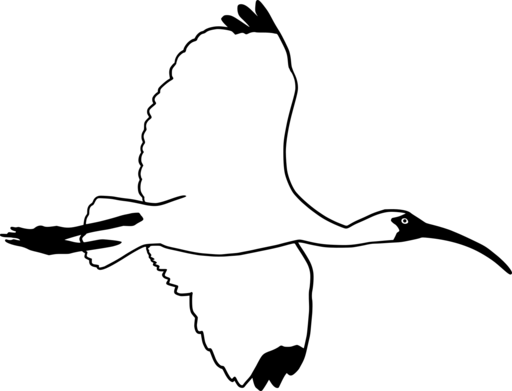
Silhouette: Andy Wilson · PhyloPic

LCLeast ConcernNTVUENCR
Daily sighting probability ~60% · Likely
at Everglades National Park

In 3 days ~90% in a week >90%

8,881 Verified sightings at Everglades National Park From 2019 to 2026
35,366 In all 34 parks
December Best month
☀️ Diurnal When it's spotted

About the White Ibis

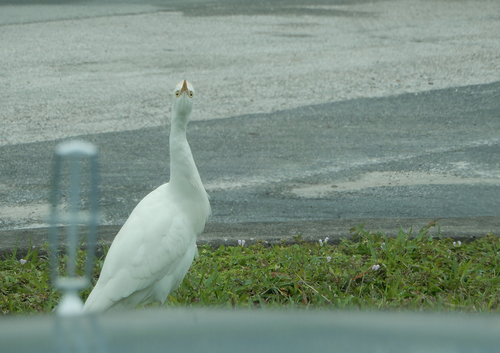
The American white ibis (Eudocimus albus) is a species of bird in the ibis family, Threskiornithidae. It is found from the southern half of the US East Coast (from southern New Jersey to Georgia), along the Gulf Coast states (Florida, Alabama, Mississippi, Louisiana and Texas) and south through most of the Caribbean coastal regions of Central America. This particular ibis species is a medium-sized wading bird, possessing an overall white plumage with black wing-tips (usually only visible in flight), and having the typical downward-curving bill of the ibises, though of a bright red-orange color, the same hue as its long legs. Males are larger and have longer bills than females. The breeding range runs along the Gulf and Atlantic Coast, and the coasts of Mexico and Central America. Outside the breeding period, the range extends further inland in North America and also includes the Caribbean. It is also found along the northwestern South American coastline in Colombia and Venezuela. Populations in central Venezuela overlap and interbreed with the scarlet ibis. The two have been classified by some authorities as a single species.

Their diet consists primarily of small aquatic prey, such as insects and small fishes. Crayfish are its preferred food in most regions, but it can adjust its diet according to the habitat and prey abundance. Its main foraging behavior is probing with its beak at the bottom of shallow water to feel for and capture its prey. It does not see the prey.

During the breeding season, the American white ibis gathers in huge colonies near water. Pairs are predominantly monogamous and both parents care for the young, although males tend to engage in extra-pair copulation with other females to increase their reproductive success. Males have also been found to pirate food from unmated females and juveniles during the breeding season.

Human pollution has affected the behavior of the American white ibis via an increase in the concentrations of methylmercury, which is released into the environment from untreated waste. Exposure to methylmercury alters the hormone levels of American white ibis, affecting their mating and nesting behavior and leading to lower reproduction rates. Wikipedia →

Sounds

Flight call0:10

United States · 2023

© PT xiao · XC829401 · CC BY-NC-SA 4.0

Call1:12

United States · 2016

© Paul Driver · XC780791 · CC BY-NC-SA 4.0

Alarm call0:05

Mexico · 2020

© Manuel Grosselet · XC571048 · CC BY-NC-SA 4.0

Global Distribution

Parks Where Found

# Park Country Daily sighting probability
1 Merritt Island National Wildlife Refuge 🇺🇸 United States
~80%
2 Big Cypress National Preserve 🇺🇸 United States
~70%
3 Everglades National Park 🇺🇸 United States
~60%
4 Ría Lagartos Biosphere Reserve 🇲🇽 Mexico
~60%
5 Palo Verde National Park 🇨🇷 Costa Rica
~50%
6 Celestún Biosphere Reserve 🇲🇽 Mexico
~50%
7 Ciénaga de Zapata 🇨🇺 Cuba
~40%
8 Carara National Park 🇨🇷 Costa Rica
~40%
9 Marino Ballena National Park 🇨🇷 Costa Rica
~40%
10 Piedras Blancas National Park 🇨🇷 Costa Rica
~30%
11 Bahía de Loreto National Park 🇲🇽 Mexico
~30%
12 Las Baulas Marine National Park 🇨🇷 Costa Rica
~30%
13 Manuel Antonio National Park 🇨🇷 Costa Rica
~20%
14 Corcovado National Park 🇨🇷 Costa Rica
~20%
15 Coiba National Park 🇵🇦 Panama
~20%
16 Arrecifes de Cozumel National Park 🇲🇽 Mexico
~20%
17 Ostional Wildlife Refuge 🇨🇷 Costa Rica
~20%
18 El Vizcaíno Biosphere Reserve 🇲🇽 Mexico
~20%
19 Sian Ka'an Biosphere Reserve 🇲🇽 Mexico
~10%
20 Jaragua National Park 🇩🇴 Dominican Republic
~10%
21 Padre Island National Seashore 🇺🇸 United States
~10%
22 Santa Rosa National Park 🇨🇷 Costa Rica
~10%
23 Tapantí-Macizo de la Muerte National Park 🇨🇷 Costa Rica
~10%
24 Cabo Blanco Absolute Nature Reserve 🇨🇷 Costa Rica
~10%
25 Congaree National Park 🇺🇸 United States
<5%
26 Darién National Park 🇵🇦 Panama
<5%
27 Los Haitises National Park 🇩🇴 Dominican Republic
<5%
28 Parque Natural Metropolitano 🇵🇦 Panama
<5%
29 Machalilla National Park 🇪🇨 Ecuador
<5%
30 Tayrona National Natural Park 🇨🇴 Colombia
<5%
31 Tikal National Park 🇬🇹 Guatemala
<5%
32 Big Bend National Park 🇺🇸 United States
<5%
33 Arenal Volcano National Park 🇨🇷 Costa Rica
<5%
34 Soberanía National Park 🇵🇦 Panama
<5%

Cities Where Found

# City Country Daily sighting probability
1 Miami 🇺🇸 United States
~60%
2 Orlando 🇺🇸 United States
~50%
3 Panama City 🇵🇦 Panama
~30%
4 Guayaquil 🇪🇨 Ecuador
~20%
5 Houston 🇺🇸 United States
~20%
6 Monterrey 🇲🇽 México
~10%
7 Barranquilla 🇨🇴 Colombia
~10%
8 Havana 🇨🇺 Cuba
~10%
9 Dallas 🇺🇸 United States
<5%
10 Santo Domingo 🇩🇴 Dominican Republic
<5%

Zoos & Centres Where Found

# Zoo / Centre Country
1 Disney's Animal Kingdom 🇺🇸 United States In captivity
2 Busch Gardens Tampa 🇺🇸 United States In captivity
3 Prague Zoo 🇨🇿 Czechia In captivity
4 Le Pal 🇫🇷 France In captivity
5 Paris Zoological Park 🇫🇷 France In captivity
6 Jihlava Zoo 🇨🇿 Czechia In captivity
7 Parc des oiseaux 🇫🇷 France In captivity
8 Abilene Zoological Gardens 🇺🇸 United States In captivity
9 Aquarium du palais de la Porte Dorée 🇫🇷 France In captivity
10 Zoo Miami 🇺🇸 United States In captivity
11 San Diego Zoo Safari Park 🇺🇸 United States In captivity
12 Lion Country Safari 🇺🇸 United States In captivity
13 Brookfield Zoo 🇺🇸 United States In captivity
14 Wildlife World Zoo 🇺🇸 United States In captivity
15 Xcaret 🇲🇽 Mexico In captivity
16 Audubon Zoo 🇺🇸 United States In captivity
17 Nanning Zoo 🇨🇳 China In captivity
18 Oklahoma City Zoo and Botanical Garden 🇺🇸 United States In captivity
19 Temaikén 🇦🇷 Argentina In captivity
20 Brevard Zoo 🇺🇸 United States In captivity
21 Night Safari 🇸🇬 Singapore In captivity
22 ZooTampa 🇺🇸 United States In captivity
23 Dickerson Park Zoo 🇺🇸 United States In captivity
24 Fort Worth Zoo 🇺🇸 United States In captivity
25 Gatorland 🇺🇸 United States In captivity
26 Singapore Zoo 🇸🇬 Singapore In captivity
27 Houston Zoo 🇺🇸 United States In captivity
28 Cameron Park Zoo 🇺🇸 United States In captivity
29 Bird Paradise 🇸🇬 Singapore In captivity
30 Naples Zoo 🇺🇸 United States In captivity
31 Rainforest Wild Asia 🇸🇬 Singapore In captivity
32 Aviario Nacional de Colombia 🇨🇴 Colombia In captivity
33 The Abilene Zoo 🇺🇸 United States In captivity
34 Discovery Cove 🇺🇸 United States In captivity
35 Monterey Zoo 🇺🇸 United States In captivity
36 Oasi Naturalistica di Sant'Alessio 🇮🇹 Italy In captivity
37 River Wonders 🇸🇬 Singapore In captivity
38 L'Oceanogràfic 🇪🇸 Spain In captivity
39 Palm Beach Zoo 🇺🇸 United States In captivity
40 Jungle Island 🇺🇸 United States In captivity
41 Santillana Zoo 🇪🇸 Spain In captivity
42 Santa Fe College Teaching Zoo 🇺🇸 United States In captivity
43 Sarasota Jungle Gardens 🇺🇸 United States In captivity
44 St. Augustine Alligator Farm Zoological Park 🇺🇸 United States In captivity
45 Aquarium of the Pacific 🇺🇸 United States In captivity
46 Skærup Zoo 🇩🇰 Denmark In captivity
47 Mississippi Aquarium 🇺🇸 United States In captivity
48 Castellar Zoo 🇪🇸 Spain In captivity
49 Florida Aquarium 🇺🇸 United States In captivity
50 Texas State Aquarium 🇺🇸 United States In captivity

Before you go

What are the chances of seeing a White Ibis in Everglades National Park?

Likely

About 60% of wildlife watchers report a White Ibis sighting in Everglades National Park on a given day, based on 8,881 verified sightings from GBIF citizen-science data from 2019 to 2026. It is the 6th most-seen of the 273 birds we can rate there. Over three days the chance rises to about 90%, and over a week to over 90%, if each day is a fresh chance.

When is the best time to see a White Ibis in Everglades National Park?

March, June and November–December

In those months about 70% of wildlife watchers report a White Ibis in Everglades National Park on a given day, against about 50% in May, the lowest month.

What time of day is best to see a White Ibis?

Between 8 and 11 am

Across all the parks we cover, that three-hour window holds the most White Ibis sightings with a recorded time, and about 9 in 10 of them come between 6 am and 6 pm: it is a daytime animal.

Which relatives of the White Ibis live in Everglades National Park?

Same family: Threskiornithidae

The closest relatives of the White Ibis that you can see in Everglades National Park (family Threskiornithidae, Ibises and Spoonbills) are Roseate Spoonbill (about 20%) and Glossy Ibis (about 20%), with each one's daily chance of a sighting.

Where does the White Ibis sighting chance come from?

GBIF citizen-science records

It is estimated from how often the White Ibis is recorded against all the birds logged in Everglades National Park (8,881 verified sightings from 2019 to 2026), calibrated against known sighting rates. Figures are rounded to the nearest 10% because citizen-science data supports honest approximations, not decimals, and months with records from fewer than five people show "—". How it works.

← Back to Everglades National Park