Thick-billed Seed-Finch

Thick-billed Seed-Finch

Sporophila funerea

Silhouette: Sheatherius · PhyloPic

LCLeast ConcernNTVUENCR
Daily sighting probability ~20% · Possible
at Piedras Blancas National Park

In 3 days ~50% in a week ~80%

483 Verified sightings at Piedras Blancas National Park From 2019 to 2026
5,008 In all 29 parks
October Best month
☀️ Diurnal When it's spotted

About the Thick-billed Seed-Finch

The thick-billed seed finch (Sporophila funerea) is a species of bird in the family Thraupidae, but was until recently placed in Emberizidae. It is found widely in shrubby and grassy areas from southern Mexico, through Central America, to the Chocó in Colombia and Ecuador. It is replaced by the closely related chestnut-bellied seed finch in South America east of the Andes, as well as the valleys of Cauca and Magdalena in Colombia. The two have often been considered conspecific as the lesser seed-finch (Sporophila angolensis).

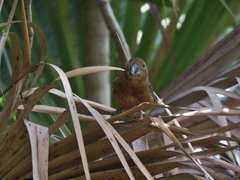
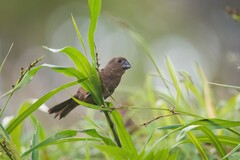
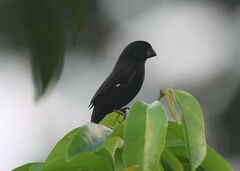
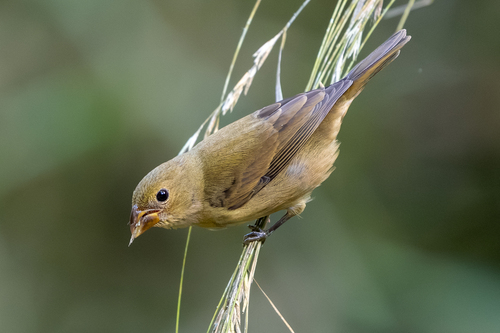
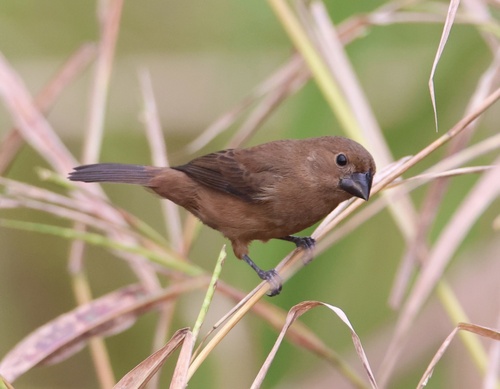
The male is almost entirely black, with a small white wing patch. The female is a rich brown all over. They are both very similar to the all-black Caribbean slope form of the variable seedeater. It is distinguished, however, by a larger bill with a straight culmen. They measure 11.5 cm (4.5 in) long and weigh 13.5 g (0.48 oz).

BirdLife species factsheet for Sporophila funerea "Sporophila funerea". Avibase. "Thick-billed seed-finch media". Internet Bird Collection. Thick-billed seed-finch photo gallery at VIREO (Drexel University) Interactive range map of Oryzoborus funereus at IUCN Red List

Audio recordings of Thick-billed... Wikipedia →
Sounds

Song0:40

Ecuador · 2012

© Manuel Sánchez-Nivicela · XC997086 · CC BY-NC-ND 4.0

Call0:15

Ecuador · 1997

© Olaf Jahn · XC262684 · CC BY-NC-SA 4.0

Song0:12

Costa Rica · 2022

© Brendan Sloan · XC754664 · CC BY-NC-ND 4.0

Global Distribution

Parks Where Found

# Park Country Daily sighting probability
1 Piedras Blancas National Park 🇨🇷 Costa Rica
~20%
2 San Lorenzo Protected Forest 🇵🇦 Panama
~10%
3 Gandoca-Manzanillo Wildlife Refuge 🇨🇷 Costa Rica
~10%
4 Chagres National Park 🇵🇦 Panama
~10%
5 Tenorio Volcano National Park 🇨🇷 Costa Rica
~10%
6 Cockscomb Basin Wildlife Sanctuary 🇧🇿 Belize
~10%
7 Arenal Volcano National Park 🇨🇷 Costa Rica
~10%
8 Cahuita National Park 🇨🇷 Costa Rica
~10%
9 Tortuguero National Park 🇨🇷 Costa Rica
~10%
10 La Amistad International Park (Panama) 🇵🇦 Panama
~10%
11 Soberanía National Park 🇵🇦 Panama
~10%
12 Bastimentos Island National Marine Park 🇵🇦 Panama
<5%
13 Braulio Carrillo National Park 🇨🇷 Costa Rica
<5%
14 Cerro Azul Meámbar National Park 🇭🇳 Honduras
<5%
15 Montes Azules Biosphere Reserve 🇲🇽 Mexico
<5%
16 Corcovado National Park 🇨🇷 Costa Rica
<5%
17 Rincón de la Vieja National Park 🇨🇷 Costa Rica
<5%
18 Manuel Antonio National Park 🇨🇷 Costa Rica
<5%
19 Marino Ballena National Park 🇨🇷 Costa Rica
<5%
20 Darién National Park 🇵🇦 Panama
<5%
21 Farallones de Cali National Natural Park 🇨🇴 Colombia
<5%
22 Tapantí-Macizo de la Muerte National Park 🇨🇷 Costa Rica
<5%
23 Calakmul Biosphere Reserve 🇲🇽 Mexico
<5%
24 Poás Volcano National Park 🇨🇷 Costa Rica
<5%
25 Cusuco National Park 🇭🇳 Honduras
<5%
26 Carara National Park 🇨🇷 Costa Rica
<5%
27 Parque Natural Metropolitano 🇵🇦 Panama
<5%
28 Lago de Yojoa 🇭🇳 Honduras
<5%
29 Tikal National Park 🇬🇹 Guatemala
<5%

Cities Where Found

# City Country Daily sighting probability
1 Panama City 🇵🇦 Panama
<5%
2 Cali 🇨🇴 Colombia
<5%
3 San Pedro Sula 🇭🇳 Honduras
<5%
4 Medellín 🇨🇴 Colombia
<5%
5 San José 🇨🇷 Costa Rica
<5%

Before you go

What are the chances of seeing a Thick-billed Seed-Finch in Piedras Blancas National Park?

Possible

About 20% of wildlife watchers report a Thick-billed Seed-Finch sighting in Piedras Blancas National Park on a given day, based on 483 verified sightings from GBIF citizen-science data from 2019 to 2026. It is the 75th most-seen of the 344 birds we can rate there. Over three days the chance rises to about 50%, and over a week to about 80%, if each day is a fresh chance.

When is the best time to see a Thick-billed Seed-Finch in Piedras Blancas National Park?

October

In that month about 40% of wildlife watchers report a Thick-billed Seed-Finch in Piedras Blancas National Park on a given day, against about 10% in June and August–September, the lowest months. That is one of Piedras Blancas National Park's wettest months, with about 650 mm of rain against 55 mm in February.

What time of day is best to see a Thick-billed Seed-Finch?

Between 7 and 10 am

Across all the parks we cover, that three-hour window holds the most Thick-billed Seed-Finch sightings with a recorded time, and about 9 in 10 of them come between 6 am and 6 pm: it is a daytime animal.

Is Piedras Blancas National Park the best place to see a Thick-billed Seed-Finch?

Yes

Of the 29 parks where we can rate Thick-billed Seed-Finch sightings, Piedras Blancas National Park has the highest daily chance: about 20%. Next come San Lorenzo Protected Forest (Panama, about 10%) and Gandoca-Manzanillo Wildlife Refuge (Costa Rica, about 10%).

Which relatives of the Thick-billed Seed-Finch live in Piedras Blancas National Park?

Same genus: Sporophila

The closest relatives of the Thick-billed Seed-Finch that you can see in Piedras Blancas National Park (genus Sporophila, Typical Seedeaters and Seed-Finches) are Variable Seedeater (about 60%), Yellow-bellied Seedeater (about 10%) and Morelet's Seedeater (about 10%), with each one's daily chance of a sighting.

Where does the Thick-billed Seed-Finch sighting chance come from?

GBIF citizen-science records

It is estimated from how often the Thick-billed Seed-Finch is recorded against all the birds logged in Piedras Blancas National Park (483 verified sightings from 2019 to 2026), calibrated against known sighting rates. Figures are rounded to the nearest 10% because citizen-science data supports honest approximations, not decimals, and months with records from fewer than five people show "—". How it works.

← Back to Piedras Blancas National Park