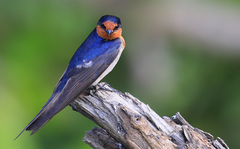
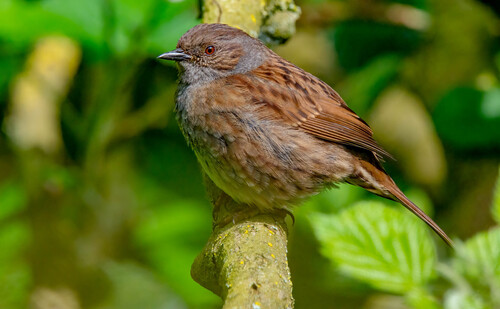
Welcome Swallow

Welcome Swallow

Hirundo neoxena

Silhouette: Matt Wilkins · PhyloPic

LCLeast ConcernNTVUENCR
Daily sighting probability ~30% · Possible
at Rakiura National Park

In 3 days ~70% in a week ~90%

589 Verified sightings at Rakiura National Park From 2019 to 2026
14,822 In all 27 parks
September Best month
☀️ Diurnal When it's spotted

About the Welcome Swallow

The welcome swallow (Hirundo neoxena) is a small passerine bird in the swallow family Hirundinidae that is native to Australia and nearby islands. It has self-introduced into New Zealand in the middle of the twentieth century. It is very similar to the Pacific swallow with which it is often considered conspecific.

This species breeds in southern and eastern Australia in a variety of habitats, mostly in open areas, man-made clearings or urban environments, but not desert or dense forest. Eastern populations are largely migratory, wintering in northern Australia. Western birds and those in New Zealand are mainly sedentary.

The welcome swallow was first described in 1842 by John Gould in his The Birds of Australia as a member of the genus Hirundo, but the first publication is often incorrectly given as in the Proceedings of the Zoological Society of London. Both its species name and common name refer to people welcoming its return as a herald of spring in southern parts of Australia.

The welcome swallow is a small fast-flying bird. Its flying style is circular in pattern with swift darting motions. It has graceful shape and flight, moreover it often flies... Wikipedia →

Sounds

Call0:18

Australia · 2021

© Marc Anderson · XC1071223 · CC BY-NC-ND 4.0

Song1:09

Australia · 2021

© Colin Reid · XC655598 · CC BY-NC-SA 4.0

Begging call0:33

Australia · 2020

© Phil Gregory · XC604137 · CC BY-NC-SA 4.0

Global Distribution

Parks Where Found

# Park Country Daily sighting probability
1 Rottnest Island 🇦🇺 Australia
~90%
2 Cradle Mountain-Lake St Clair National Park 🇦🇺 Australia
~60%
3 Maria Island National Park 🇦🇺 Australia
~60%
4 Lamington National Park 🇦🇺 Australia
~60%
5 Great Otway National Park 🇦🇺 Australia
~60%
6 Abel Tasman National Park 🇳🇿 New Zealand
~60%
7 Daintree National Park 🇦🇺 Australia
~60%
8 Flinders Chase 🇦🇺 Australia
~60%
9 Noosa National Park 🇦🇺 Australia
~60%
10 Arthur's Pass National Park 🇳🇿 New Zealand
~50%
11 Fiordland National Park 🇳🇿 New Zealand
~50%
12 Ningaloo Marine Park 🇦🇺 Australia
~50%
13 Royal National Park 🇦🇺 Australia
~40%
14 Egmont National Park 🇳🇿 New Zealand
~40%
15 Grampians National Park 🇦🇺 Australia
~40%
16 Freycinet National Park 🇦🇺 Australia
~40%
17 Booderee National Park 🇦🇺 Australia
~40%
18 Kosciuszko National Park 🇦🇺 Australia
~40%
19 Rakiura National Park 🇳🇿 New Zealand
~30%
20 Springbrook National Park 🇦🇺 Australia
~30%
21 Blue Mountains National Park 🇦🇺 Australia
~30%
22 Cape Range 🇦🇺 Australia
~30%
23 Wilsons Promontory National Park 🇦🇺 Australia
~30%
24 Aoraki Mount Cook National Park 🇳🇿 New Zealand
~30%
25 Hattah-Kulkyne National Park 🇦🇺 Australia
~10%
26 Flinders Ranges National Park 🇦🇺 Australia
~10%
27 Uluru-Kata Tjuta National Park 🇦🇺 Australia
<5%

Cities Where Found

# City Country Daily sighting probability
1 Auckland 🇳🇿 New Zealand
~70%
2 Brisbane 🇦🇺 Australia
~70%
3 Melbourne 🇦🇺 Australia
~70%
4 Sydney 🇦🇺 Australia
~70%
5 Perth 🇦🇺 Australia
~50%
6 Hobart 🇦🇺 Australia
~20%

Before you go

What are the chances of seeing a Welcome Swallow in Rakiura National Park?

Possible

About 30% of wildlife watchers report a Welcome Swallow sighting in Rakiura National Park on a given day, based on 589 verified sightings from GBIF citizen-science data from 2019 to 2026. It is the 27th most-seen of the 80 birds we can rate there. Over three days the chance rises to about 70%, and over a week to about 90%, if each day is a fresh chance.

When is the best time to see a Welcome Swallow in Rakiura National Park?

September

In that month about 50% of wildlife watchers report a Welcome Swallow in Rakiura National Park on a given day, against about 10% in July, the lowest month.

What time of day is best to see a Welcome Swallow?

Between 10 am and 1 pm

Across all the parks we cover, that three-hour window holds the most Welcome Swallow sightings with a recorded time, and about 9 in 10 of them come between 6 am and 6 pm: it is a daytime animal.

Which relatives of the Welcome Swallow live in Rakiura National Park?

Same order: Passeriformes

The closest relatives of the Welcome Swallow that you can see in Rakiura National Park (order Passeriformes, Perching Birds) are Tūī (about 90%), New Zealand Bellbird (about 80%) and New Zealand Fantail (about 70%), with each one's daily chance of a sighting.

Where does the Welcome Swallow sighting chance come from?

GBIF citizen-science records

It is estimated from how often the Welcome Swallow is recorded against all the birds logged in Rakiura National Park (589 verified sightings from 2019 to 2026), calibrated against known sighting rates. Figures are rounded to the nearest 10% because citizen-science data supports honest approximations, not decimals, and months with records from fewer than five people show "—". How it works.

← Back to Rakiura National Park