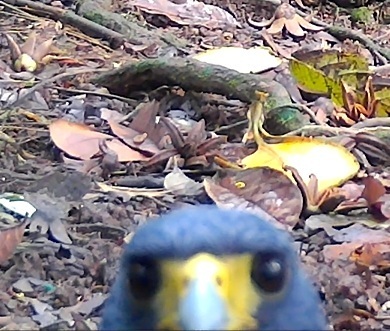
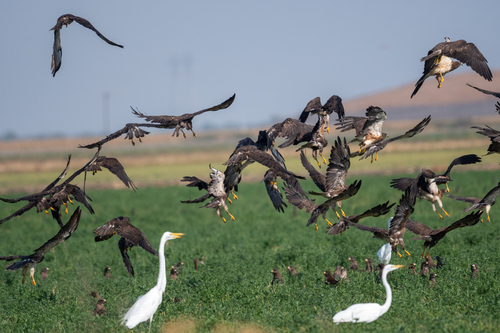
White-tailed Kite

White-tailed Kite

Elanus leucurus

Silhouette: Catherine Yasuda · PhyloPic

LCLeast ConcernNTVUENCR
Daily sighting probability <5% · Rare
at Tenorio Volcano National Park

In 3 days <5% in a week ~10%

52 Verified sightings at Tenorio Volcano National Park From 2019 to 2026
2,597 In all 37 parks
February Best month
☀️ Diurnal When it's spotted

About the White-tailed Kite

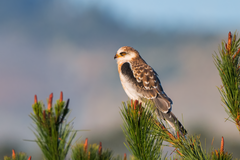
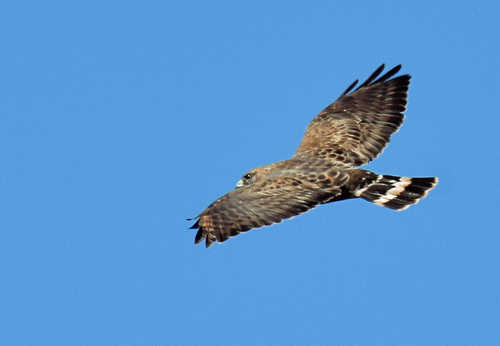
The white-tailed kite (Elanus leucurus) is a small raptor found in South America and parts of western North America. It replaces the related Old World black-winged kite in its native range. The white-tailed kite was described in 1818 by French ornithologist Louis Pierre Vieillot under the binomial name Milvus leucurus, with the type locality as Paraguay. It is now one of four species in the genus Elanus, which was introduced in 1809 by French zoologist Jules-César Savigny. The word Elanus is from Ancient Greek elanos for a "kite". The specific epithet leucurus is from the Ancient Greek leukouros for "white-tailed": leukos is "white" and oura is "tail".

For some recent decades, it was lumped with the black-winged kite of Europe and Africa as Elanus caeruleus and was collectively called black-shouldered kite.[4] However, the American Ornithologists' Union accepted a more recent argument that the white-tailed kite differed from the Old World species in size, shape, plumage, and behavior, and that these differences were sufficient to warrant full species status.[5] Thus, the white-tailed kite was returned to its original name. Meanwhile, the Old World E. caeruleus is once... Wikipedia →

Sounds

Flight call0:11

Chile · 2022

© Cristian Pinto Fernandez · XC746110 · CC BY-NC-SA 4.0

Call0:17

United States · 2020

© Steve Hampton · XC565245 · CC BY-NC-SA 4.0

Alarm call0:10

Ecuador · 2018

© Nicole Alfaro Ponce · XC413291 · CC BY-NC-SA 4.0

Global Distribution

Parks Where Found

# Park Country Daily sighting probability
1 Emas National Park 🇧🇷 Brazil
~20%
2 Everglades National Park 🇺🇸 United States
~10%
3 Lago de Yojoa 🇭🇳 Honduras
~10%
4 Irazú Volcano National Park 🇨🇷 Costa Rica
~10%
5 Chapada Diamantina National Park 🇧🇷 Brazil
~10%
6 Manuel Antonio National Park 🇨🇷 Costa Rica
<5%
7 Cerro Azul Meámbar National Park 🇭🇳 Honduras
<5%
8 Iberá National Park 🇦🇷 Argentina
<5%
9 Chingaza National Natural Park 🇨🇴 Colombia
<5%
10 Palo Verde National Park 🇨🇷 Costa Rica
<5%
11 El Impenetrable National Park 🇦🇷 Argentina
<5%
12 Rincón de la Vieja National Park 🇨🇷 Costa Rica
<5%
13 Bastimentos Island National Marine Park 🇵🇦 Panama
<5%
14 La Amistad International Park (Panama) 🇵🇦 Panama
<5%
15 Calakmul Biosphere Reserve 🇲🇽 Mexico
<5%
16 Serra da Canastra National Park 🇧🇷 Brazil
<5%
17 Vicente Pérez Rosales National Park 🇨🇱 Chile
<5%
18 Península Valdés 🇦🇷 Argentina
<5%
19 Poás Volcano National Park 🇨🇷 Costa Rica
<5%
20 Las Baulas Marine National Park 🇨🇷 Costa Rica
<5%
21 Gandoca-Manzanillo Wildlife Refuge 🇨🇷 Costa Rica
<5%
22 Henri Pittier National Park 🇻🇪 Venezuela
<5%
23 Tenorio Volcano National Park 🇨🇷 Costa Rica
<5%
24 Redwood National Park 🇺🇸 United States
<5%
25 Amacayacu National Natural Park 🇨🇴 Colombia
<5%
26 Masaya Volcano National Park 🇳🇮 Nicaragua
<5%
27 Piedras Blancas National Park 🇨🇷 Costa Rica
<5%
28 Braulio Carrillo National Park 🇨🇷 Costa Rica
<5%
29 Parque Estadual Encontro das Águas 🇧🇷 Brazil
<5%
30 Carara National Park 🇨🇷 Costa Rica
<5%
31 Arenal Volcano National Park 🇨🇷 Costa Rica
<5%
32 Chirripó National Park 🇨🇷 Costa Rica
<5%
33 Tapantí-Macizo de la Muerte National Park 🇨🇷 Costa Rica
<5%
34 Volcán Barú National Park 🇵🇦 Panama
<5%
35 Soberanía National Park 🇵🇦 Panama
<5%
36 Channel Islands National Park 🇺🇸 United States
<5%
37 Monteverde Cloud Forest Reserve 🇨🇷 Costa Rica
<5%

Cities Where Found

# City Country Daily sighting probability
1 Bogota 🇨🇴 Colombia
~30%
2 Toluca 🇲🇽 México
~20%
3 León 🇲🇽 México
~20%
4 San Pedro Sula 🇭🇳 Honduras
~10%
5 Puebla 🇲🇽 México
~10%
6 Sacramento 🇺🇸 United States
~10%
7 San José 🇨🇷 Costa Rica
~10%
8 San Francisco 🇺🇸 United States
<5%
9 Monterrey 🇲🇽 México
<5%
10 Curitiba 🇧🇷 Brazil
<5%

Zoos & Centres Where Found

# Zoo / Centre Country
1 California Raptor Center 🇺🇸 United States In captivity
2 Orange County Zoo 🇺🇸 United States In captivity
3 Lindsay Wildlife Experience 🇺🇸 United States In captivity
4 Cascades Raptor Center 🇺🇸 United States In captivity

Before you go

What are the chances of seeing a White-tailed Kite in Tenorio Volcano National Park?

Rare

Under 5% of wildlife watchers report a White-tailed Kite sighting in Tenorio Volcano National Park on a given day, based on 52 verified sightings from GBIF citizen-science data from 2019 to 2026. It is the 281st most-seen of the 444 birds we can rate there. Over three days the chance rises to under 5%, and over a week to about 10%, if each day is a fresh chance.

When is the best time to see a White-tailed Kite in Tenorio Volcano National Park?

Any time of year

In every month with enough records, under 5% of wildlife watchers report a White-tailed Kite in Tenorio Volcano National Park on a given day, so our monthly data shows no clear season.

What time of day is best to see a White-tailed Kite?

Between 8 and 11 am

Across all the parks we cover, that three-hour window holds the most White-tailed Kite sightings with a recorded time, and about 8 in 10 of them come between 6 am and 6 pm: it is a daytime animal.

Is Tenorio Volcano National Park the best place to see a White-tailed Kite?

23rd of 37

Of the 37 parks where we can rate White-tailed Kite sightings, Tenorio Volcano National Park ranks 23rd at under 5%. The best odds are in Emas National Park (Brazil, about 20%), Everglades National Park (United States, about 10%) and Lago de Yojoa (Honduras, about 10%).

Which relatives of the White-tailed Kite live in Tenorio Volcano National Park?

Same family: Accipitridae

The closest relatives of the White-tailed Kite that you can see in Tenorio Volcano National Park (family Accipitridae, Hawks, Eagles, and Kites) are Gray-lined Hawk (about 30%), White Hawk (about 10%) and American Swallow-tailed Kite (about 10%), with each one's daily chance of a sighting.

Where does the White-tailed Kite sighting chance come from?

GBIF citizen-science records

It is estimated from how often the White-tailed Kite is recorded against all the birds logged in Tenorio Volcano National Park (52 verified sightings from 2019 to 2026), calibrated against known sighting rates. Figures are rounded to the nearest 10% because citizen-science data supports honest approximations, not decimals, and months with records from fewer than five people show "—". How it works.

← Back to Tenorio Volcano National Park