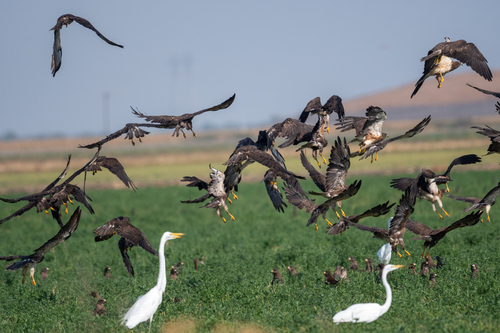
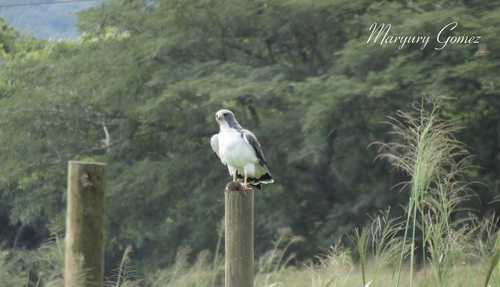
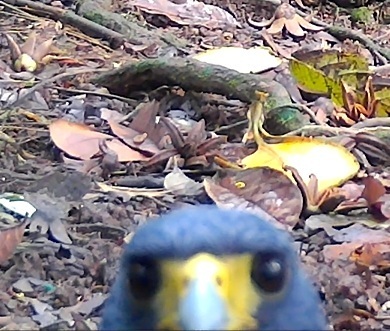
Ornate Hawk-Eagle

Ornate Hawk-Eagle

Spizaetus ornatus

Silhouette: Sheatherius · PhyloPic

LCNTNear ThreatenedVUENCR
Daily sighting probability ~10% · With luck
at Volcán Barú National Park

In 3 days ~30% in a week ~50%

177 Verified sightings at Volcán Barú National Park From 2019 to 2026
4,282 In all 31 parks
January Best month
☀️ Diurnal When it's spotted

About the Ornate Hawk-Eagle

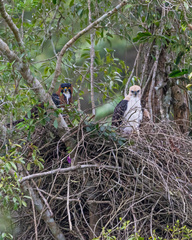
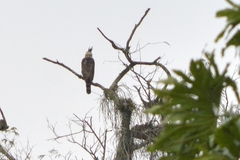
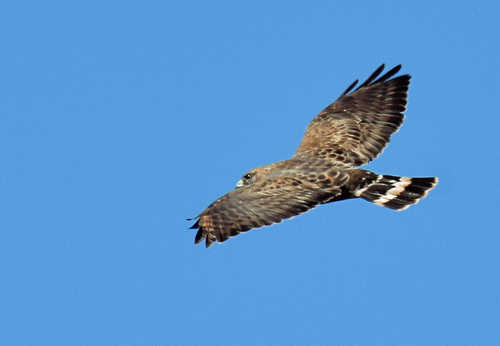
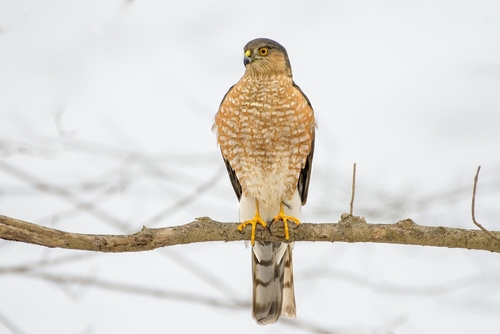
The ornate hawk-eagle (Spizaetus ornatus) is a bird of prey from the tropical Americas. Formerly, some authorities referred to this species as the crested hawk-eagle, a name that may cause some confusion as it is more commonly used for an Asian eagle species. Like all eagles, it is in the family Accipitridae. This species has a feathered tarsus that marks it as a member of the Aquilinae or booted eagle subfamily. This species is notable for the vivid colors and bold markings of adults, which differ considerably from the far more whitish plumage of the juvenile bird. The ornate hawk-eagle ranges from central Mexico south through much of Central America and in a somewhat spotty but broad overall range into South America, including in the west apart from the Andes and broadly on the Atlantic side especially Brazil down to as far as Southeast Brazil and northern Argentina. This species is found largely in primary forests with tall trees, although can be found in many forest types.

The ornate hawk-eagle female lays almost always a single egg and the species has a fairly prolonged breeding cycle like many tropical raptors, especially due to a lengthy post-fledging stage on which juveniles are dependent on their parents. It is a diversified and exceptionally powerful predator which takes a range of prey, usually various medium-to-large-sized birds and small-to-medium-sized mammals as well as occasional reptiles. Like many forest-dependent raptors, especially those in the tropical and subtropical regions, this species is likely under the pressing threat of deforestation. The decline of forest habitat in this species range, especially the Amazon rainforest, led the IUCN to uplist the ornate hawk-eagle as Near Threatened in 2016. Wikipedia →
Sounds

Recording0:14

Argentina · 2026

© Faustino Hollmann · XC1176760 · CC BY-NC-SA 4.0

Call0:27

Brazil · 2025

© JAYRSON ARAUJO DE OLIVEIRA · XC1059173 · CC BY-NC-SA 4.0

Alarm call0:29

Brazil · 2022

© Marcelo J Feliti · XC735209 · CC BY-NC-SA 4.0

Global Distribution

Parks Where Found

# Park Country Daily sighting probability
1 Darién National Park 🇵🇦 Panama
~10%
2 Volcán Barú National Park 🇵🇦 Panama
~10%
3 Calakmul Biosphere Reserve 🇲🇽 Mexico
~10%
4 Monteverde Cloud Forest Reserve 🇨🇷 Costa Rica
~10%
5 Tenorio Volcano National Park 🇨🇷 Costa Rica
~10%
6 Arenal Volcano National Park 🇨🇷 Costa Rica
~10%
7 Tikal National Park 🇬🇹 Guatemala
~10%
8 Chirripó National Park 🇨🇷 Costa Rica
<5%
9 Farallones de Cali National Natural Park 🇨🇴 Colombia
<5%
10 Coiba National Park 🇵🇦 Panama
<5%
11 Henri Pittier National Park 🇻🇪 Venezuela
<5%
12 Tapantí-Macizo de la Muerte National Park 🇨🇷 Costa Rica
<5%
13 Braulio Carrillo National Park 🇨🇷 Costa Rica
<5%
14 La Amistad International Park (Panama) 🇵🇦 Panama
<5%
15 Tambopata National Reserve 🇵🇪 Peru
<5%
16 Pico Bonito National Park 🇭🇳 Honduras
<5%
17 Los Quetzales National Park 🇨🇷 Costa Rica
<5%
18 Manu National Park 🇵🇪 Peru
<5%
19 Cuyabeno Wildlife Reserve 🇪🇨 Ecuador
<5%
20 Cockscomb Basin Wildlife Sanctuary 🇧🇿 Belize
<5%
21 Yasuní National Park 🇪🇨 Ecuador
<5%
22 Chagres National Park 🇵🇦 Panama
<5%
23 Poás Volcano National Park 🇨🇷 Costa Rica
<5%
24 Rincón de la Vieja National Park 🇨🇷 Costa Rica
<5%
25 Machalilla National Park 🇪🇨 Ecuador
<5%
26 Soberanía National Park 🇵🇦 Panama
<5%
27 Corcovado National Park 🇨🇷 Costa Rica
<5%
28 Sian Ka'an Biosphere Reserve 🇲🇽 Mexico
<5%
29 Iguaçu National Park 🇧🇷 Brazil
<5%
30 Iguazú National Park 🇦🇷 Argentina
<5%
31 Piedras Blancas National Park 🇨🇷 Costa Rica
<5%

Zoos & Centres Where Found

# Zoo / Centre Country
1 Belize Zoo 🇧🇿 Belize In captivity
2 São Paulo Zoo 🇧🇷 Brazil In captivity
3 Fort Worth Zoo 🇺🇸 United States In captivity
4 Zoológico do CIGS 🇧🇷 Brazil In captivity
5 Zoo Park da Montanha 🇧🇷 Brazil In captivity
6 Parque Zoológico Nacional Simón Bolívar 🇨🇷 Costa Rica In captivity
7 GüiráOga 🇦🇷 Argentina In captivity
8 Kung Fu Corals 🇺🇸 United States In captivity
9 Parque Cóndor 🇪🇨 Ecuador In captivity
10 Rescate Wildlife Rescue Center 🇨🇷 Costa Rica In captivity
11 Wiwa Quito 🇪🇨 Ecuador In captivity
12 Zoológico Miguél Álvarez del Toro 🇲🇽 Mexico In captivity

Before you go

What are the chances of seeing an Ornate Hawk-Eagle in Volcán Barú National Park?

With luck

About 10% of wildlife watchers report an Ornate Hawk-Eagle sighting in Volcán Barú National Park on a given day, based on 177 verified sightings from GBIF citizen-science data from 2019 to 2026. It is the 105th most-seen of the 296 birds we can rate there. Over three days the chance rises to about 30%, and over a week to about 50%, if each day is a fresh chance.

When is the best time to see an Ornate Hawk-Eagle in Volcán Barú National Park?

January

In that month about 20% of wildlife watchers report an Ornate Hawk-Eagle in Volcán Barú National Park on a given day, against under 5% in June and August, the lowest months. That is one of Volcán Barú National Park's driest months, with about 90 mm of rain against 460 mm in October.

What time of day is best to see an Ornate Hawk-Eagle?

Between 9 am and noon

Across all the parks we cover, that three-hour window holds the most Ornate Hawk-Eagle sightings with a recorded time, and nearly all of them come between 6 am and 6 pm: it is a daytime animal.

Is Volcán Barú National Park the best place to see an Ornate Hawk-Eagle?

Among the best

Of the 31 parks where we can rate Ornate Hawk-Eagle sightings, Volcán Barú National Park ranks 2nd at about 10%, level with the leaders once rounded. The best odds are in Darién National Park (Panama, about 10%).

Where does the Ornate Hawk-Eagle sighting chance come from?

GBIF citizen-science records

It is estimated from how often the Ornate Hawk-Eagle is recorded against all the birds logged in Volcán Barú National Park (177 verified sightings from 2019 to 2026), calibrated against known sighting rates. Figures are rounded to the nearest 10% because citizen-science data supports honest approximations, not decimals, and months with records from fewer than five people show "—". How it works.

← Back to Volcán Barú National Park