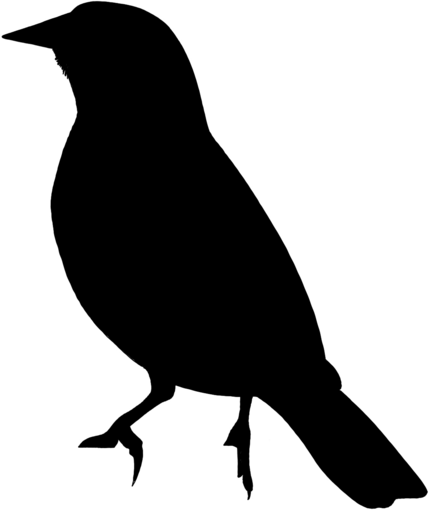
Red-winged Blackbird

Red-winged Blackbird

Agelaius phoeniceus

Silhouette: Andy Wilson · PhyloPic

LCLeast ConcernNTVUENCR
Daily sighting probability ~20% · Possible
at Acadia National Park

In 3 days ~40% in a week ~70%

2,070 Verified sightings at Acadia National Park From 2019 to 2026
54,730 In all 56 parks
May Best month
☀️ Diurnal When it's spotted

About the Red-winged Blackbird

The red-winged blackbird (Agelaius phoeniceus) is a passerine bird of the family Icteridae found in most of North America and much of Central America. It breeds from Alaska and Newfoundland south to Florida, the Gulf of Mexico, Mexico, and Guatemala, with isolated populations in western El Salvador, northwestern Honduras, and northwestern Costa Rica. It may winter as far north as Pennsylvania and British Columbia, but northern populations are generally migratory, moving south to Mexico and the Southern United States.

Claims have been made that it is the most abundant living land bird in North America, as bird-counting censuses of wintering red-winged blackbirds sometimes show that loose flocks can number in excess of a million birds per flock and the full number of breeding pairs across North and Central America may exceed 250 million in peak years. It also ranks among the best-studied wild bird species in the world. The red-winged blackbird is sexually dimorphic; the male is all black with a red shoulder and yellow wing bar, while the female is a nondescript dark brown. Seeds and insects make up the bulk of the red-winged blackbird's diet.

The red-winged blackbird... Wikipedia →

Sounds

Song0:35

United States · 2024

© Pat Goltz · XC1148215 · CC BY-NC-SA 4.0

Call0:18

Canada · 2023

© Tom Cooney · XC1103915 · CC BY-NC-SA 4.0

Recording0:18

United States · 2023

© Amy · XC784360 · CC BY-NC-SA 4.0

Global Distribution

Parks Where Found

# Park Country Daily sighting probability
1 Point Pelee National Park 🇨🇦 Canada
~90%
2 Elk Island National Park 🇨🇦 Canada
~60%
3 Riding Mountain National Park 🇨🇦 Canada
~60%
4 Badlands National Park 🇺🇸 United States
~60%
5 Everglades National Park 🇺🇸 United States
~50%
6 Voyageurs National Park 🇺🇸 United States
~50%
7 Merritt Island National Wildlife Refuge 🇺🇸 United States
~40%
8 Palo Verde National Park 🇨🇷 Costa Rica
~30%
9 Yellowstone National Park 🇺🇸 United States
~30%
10 Yosemite National Park 🇺🇸 United States
~30%
11 Death Valley National Park 🇺🇸 United States
~30%
12 Banff National Park 🇨🇦 Canada
~30%
13 Big Cypress National Preserve 🇺🇸 United States
~30%
14 Celestún Biosphere Reserve 🇲🇽 Mexico
~20%
15 Rocky Mountain National Park 🇺🇸 United States
~20%
16 Grand Teton National Park 🇺🇸 United States
~20%
17 Great Smoky Mountains National Park 🇺🇸 United States
~20%
18 Ría Lagartos Biosphere Reserve 🇲🇽 Mexico
~20%
19 Lago de Yojoa 🇭🇳 Honduras
~20%
20 Acadia National Park 🇺🇸 United States
~20%
21 Redwood National Park 🇺🇸 United States
~10%
22 Glacier National Park 🇺🇸 United States
~10%
23 Padre Island National Seashore 🇺🇸 United States
~10%
24 Carara National Park 🇨🇷 Costa Rica
~10%
25 Wood Buffalo National Park 🇨🇦 Canada
~10%
26 Shenandoah National Park 🇺🇸 United States
~10%
27 Jasper National Park 🇨🇦 Canada
~10%
28 Congaree National Park 🇺🇸 United States
~10%
29 Channel Islands National Park 🇺🇸 United States
~10%
30 Great Bear Rainforest 🇨🇦 Canada
~10%
31 Cape Breton Highlands National Park 🇨🇦 Canada
~10%
32 Isle Royale National Park 🇺🇸 United States
~10%
33 Olympic National Park 🇺🇸 United States
~10%
34 Sian Ka'an Biosphere Reserve 🇲🇽 Mexico
~10%
35 Biotopo Cerro Cahuí 🇬🇹 Guatemala
~10%
36 Pacific Rim National Park Reserve 🇨🇦 Canada
~10%
37 Braulio Carrillo National Park 🇨🇷 Costa Rica
~10%
38 Cerro Azul Meámbar National Park 🇭🇳 Honduras
~10%
39 Tortuguero National Park 🇨🇷 Costa Rica
~10%
40 Arenal Volcano National Park 🇨🇷 Costa Rica
~10%
41 Saguaro National Park 🇺🇸 United States
~10%
42 Zion National Park 🇺🇸 United States
<5%
43 Joshua Tree National Park 🇺🇸 United States
<5%
44 Sequoia and Kings Canyon National Parks 🇺🇸 United States
<5%
45 Bahía de Loreto National Park 🇲🇽 Mexico
<5%
46 Cumbres de Monterrey National Park 🇲🇽 Mexico
<5%
47 Montes Azules Biosphere Reserve 🇲🇽 Mexico
<5%
48 Big Bend National Park 🇺🇸 United States
<5%
49 Santa Rosa National Park 🇨🇷 Costa Rica
<5%
50 Kluane National Park 🇨🇦 Canada
<5%
51 Grand Canyon National Park 🇺🇸 United States
<5%
52 Poás Volcano National Park 🇨🇷 Costa Rica
<5%
53 Pico Bonito National Park 🇭🇳 Honduras
<5%
54 Manuel Antonio National Park 🇨🇷 Costa Rica
<5%
55 Tenorio Volcano National Park 🇨🇷 Costa Rica
<5%
56 La Amistad International Park (Panama) 🇵🇦 Panama
<5%

Cities Where Found

# City Country Daily sighting probability
1 Chicago 🇺🇸 United States
~60%
2 Denver 🇺🇸 United States
~60%
3 Toronto 🇨🇦 Canada
~60%
4 Detroit 🇺🇸 United States
~50%
5 Minneapolis [Saint Paul] 🇺🇸 United States
~50%
6 Montreal 🇨🇦 Canada
~50%
7 Boston 🇺🇸 United States
~50%
8 Baltimore 🇺🇸 United States
~50%
9 New York City 🇺🇸 United States
~40%
10 Washington 🇺🇸 United States
~40%

Zoos & Centres Where Found

# Zoo / Centre Country
1 National Zoological Park 🇺🇸 United States In captivity
2 Cincinnati Zoo and Botanical Garden 🇺🇸 United States In captivity
3 Xcaret 🇲🇽 Mexico In captivity
4 Akron Zoo 🇺🇸 United States In captivity
5 Key West Aquarium 🇺🇸 United States In captivity

Before you go

What are the chances of seeing a Red-winged Blackbird in Acadia National Park?

Possible

About 20% of wildlife watchers report a Red-winged Blackbird sighting in Acadia National Park on a given day, based on 2,070 verified sightings from GBIF citizen-science data from 2019 to 2026. It is the 50th most-seen of the 243 birds we can rate there. Over three days the chance rises to about 40%, and over a week to about 70%, if each day is a fresh chance.

When is the best time to see a Red-winged Blackbird in Acadia National Park?

April to June

In those months about 30% of wildlife watchers report a Red-winged Blackbird in Acadia National Park on a given day, against under 5% in August–October and December–February, the lowest months.

What time of day is best to see a Red-winged Blackbird?

Between 8 and 11 am

Across all the parks we cover, that three-hour window holds the most Red-winged Blackbird sightings with a recorded time, and about 9 in 10 of them come between 6 am and 6 pm: it is a daytime animal.

Where does the Red-winged Blackbird sighting chance come from?

GBIF citizen-science records

It is estimated from how often the Red-winged Blackbird is recorded against all the birds logged in Acadia National Park (2,070 verified sightings from 2019 to 2026), calibrated against known sighting rates. Figures are rounded to the nearest 10% because citizen-science data supports honest approximations, not decimals, and months with records from fewer than five people show "—". How it works.

← Back to Acadia National Park