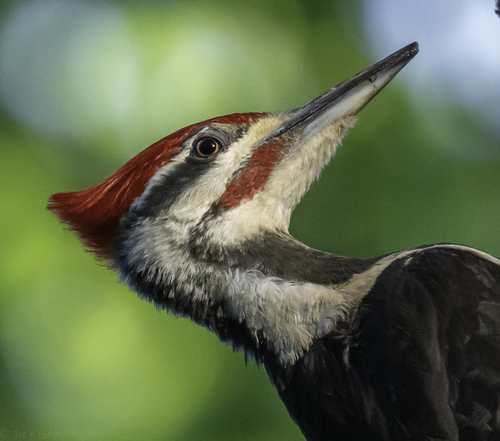


Yellow-bellied Sapsucker

Yellow-bellied Sapsucker

Sphyrapicus varius

Silhouette: Nancy Wyman (photo), John E. McCormack, Michael G. Harvey, Brant C. Faircloth, Nicholas G. Crawford, Travis C. Glenn, Robb T. Brumfield & T. Michael Keesey · PhyloPic

LCLeast ConcernNTVUENCR
Daily sighting probability <5% · Rare
at Boston

In 3 days ~10% in a week ~20%

1,461 Verified sightings at Boston
6,495 In all 44 parks From 2019 to 2026
October Best month
☀️ Diurnal When it's spotted

About the Yellow-bellied Sapsucker

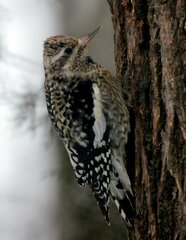
The yellow-bellied sapsucker (Sphyrapicus varius) is a medium-sized woodpecker that breeds in Canada and the northeastern United States. The yellow-bellied sapsucker was described and illustrated using a hand-coloured plate by the English naturalist Mark Catesby in his The Natural History of Carolina, Florida and the Bahama Islands which was published between 1729 and 1732. When in 1766 the Swedish naturalist Carl Linnaeus updated his Systema Naturae for the twelfth edition, he included the yellow-bellied sapsucker, coined the binomial name Picus varius and cited Catesby's book. The specific epithet varius is the Latin word meaning "various", "diverse" or "variegated". Linnaeus specified the type locality as America septentrionalis (North America) but the locality is now restricted to South Carolina. The yellow-bellied sapsucker is now placed in the genus Sphyrapicus that was erected in 1858 by the American naturalist Spencer Baird with the yellow-bellied sapsucker as the type species. Within the genus Sphyrapicus, the yellow-bellied sapsucker is sister to a clade containing the red-breasted sapsucker (Sphyrapicus ruber) and the red-naped sapsucker (Sphyrapicus nuchalis... Wikipedia →

Sounds

Drumming1:04

United States · 2025

© Bobby Wilcox · XC1038387 · CC BY-NC-SA 4.0

Mew call0:22

United States · 2024

© Valerie Heemstra · XC899093 · CC BY-NC-SA 4.0

Call1:03

United States · 2020

© Richard E. Webster · XC663258 · CC BY-NC-SA 4.0

Global Distribution

Parks Where Found

# Park Country Daily sighting probability
1 Riding Mountain National Park 🇨🇦 Canada
~40%
2 Congaree National Park 🇺🇸 United States
~30%
3 Elk Island National Park 🇨🇦 Canada
~20%
4 Voyageurs National Park 🇺🇸 United States
~20%
5 Ciénaga de Zapata 🇨🇺 Cuba
~10%
6 Wood Buffalo National Park 🇨🇦 Canada
~10%
7 Arrecifes de Cozumel National Park 🇲🇽 Mexico
~10%
8 Shenandoah National Park 🇺🇸 United States
~10%
9 Isle Royale National Park 🇺🇸 United States
~10%
10 Great Smoky Mountains National Park 🇺🇸 United States
~10%
11 Kluane National Park 🇨🇦 Canada
~10%
12 Point Pelee National Park 🇨🇦 Canada
~10%
13 Big Cypress National Preserve 🇺🇸 United States
~10%
14 Cumbres de Monterrey National Park 🇲🇽 Mexico
~10%
15 Sian Ka'an Biosphere Reserve 🇲🇽 Mexico
~10%
16 Reserva de la Biosfera Mariposa Monarca 🇲🇽 Mexico
~10%
17 Merritt Island National Wildlife Refuge 🇺🇸 United States
~10%
18 Everglades National Park 🇺🇸 United States
<5%
19 Chagres National Park 🇵🇦 Panama
<5%
20 Acadia National Park 🇺🇸 United States
<5%
21 Big Bend National Park 🇺🇸 United States
<5%
22 Bastimentos Island National Marine Park 🇵🇦 Panama
<5%
23 Monteverde Cloud Forest Reserve 🇨🇷 Costa Rica
<5%
24 Arenal Volcano National Park 🇨🇷 Costa Rica
<5%
25 Cusuco National Park 🇭🇳 Honduras
<5%
26 Calakmul Biosphere Reserve 🇲🇽 Mexico
<5%
27 Blue and John Crow Mountains National Park 🇯🇲 Jamaica
<5%
28 Lago de Yojoa 🇭🇳 Honduras
<5%
29 Joshua Tree National Park 🇺🇸 United States
<5%
30 Braulio Carrillo National Park 🇨🇷 Costa Rica
<5%
31 La Amistad International Park (Panama) 🇵🇦 Panama
<5%
32 Celestún Biosphere Reserve 🇲🇽 Mexico
<5%
33 Cape Breton Highlands National Park 🇨🇦 Canada
<5%
34 Cockscomb Basin Wildlife Sanctuary 🇧🇿 Belize
<5%
35 Parque Natural Metropolitano 🇵🇦 Panama
<5%
36 Masaya Volcano National Park 🇳🇮 Nicaragua
<5%
37 Saguaro National Park 🇺🇸 United States
<5%
38 Tikal National Park 🇬🇹 Guatemala
<5%
39 Los Quetzales National Park 🇨🇷 Costa Rica
<5%
40 Tapantí-Macizo de la Muerte National Park 🇨🇷 Costa Rica
<5%
41 Tortuguero National Park 🇨🇷 Costa Rica
<5%
42 Banff National Park 🇨🇦 Canada
<5%
43 Soberanía National Park 🇵🇦 Panama
<5%
44 Carara National Park 🇨🇷 Costa Rica
<5%

Cities Where Found

# City Country Daily sighting probability
1 New York City 🇺🇸 United States
~10%
2 Philadelphia 🇺🇸 United States
~10%
3 Puebla 🇲🇽 México
~10%
4 Baltimore 🇺🇸 United States
~10%
5 Washington 🇺🇸 United States
~10%
6 Havana 🇨🇺 Cuba
~10%
7 Montreal 🇨🇦 Canada
~10%
8 Miami 🇺🇸 United States
~10%
9 Orlando 🇺🇸 United States
~10%
10 Chicago 🇺🇸 United States
~10%

Zoos & Centres Where Found

# Zoo / Centre Country
1 Ralph Perkins II Wildlife Center and Woods Garden 🇺🇸 United States In captivity

Before you go

What are the chances of seeing a Yellow-bellied Sapsucker in Boston?

Rare

Under 5% of wildlife watchers report a Yellow-bellied Sapsucker sighting in Boston on a given day, based on 1,461 verified sightings from GBIF citizen-science data. It is the 111th most-seen of the 283 birds we can rate there. Over three days the chance rises to about 10%, and over a week to about 20%, if each day is a fresh chance.

When is the best time to see a Yellow-bellied Sapsucker in Boston?

October to January

In those months about 10% of wildlife watchers report a Yellow-bellied Sapsucker in Boston on a given day, against under 5% in February to September, the lowest months.

What time of day is best to see a Yellow-bellied Sapsucker?

Between 9 am and noon

Across all the parks we cover, that three-hour window holds the most Yellow-bellied Sapsucker sightings with a recorded time, and nearly all of them come between 6 am and 6 pm: it is a daytime animal.

Is Boston the best place to see a Yellow-bellied Sapsucker?

19th of 36

Of the 36 cities where we can rate Yellow-bellied Sapsucker sightings, Boston ranks 19th at under 5%. The best odds are in New York City (United States, about 10%), Philadelphia (United States, about 10%) and Puebla (México, about 10%).

Which relatives of the Yellow-bellied Sapsucker live in Boston?

Same family: Picidae

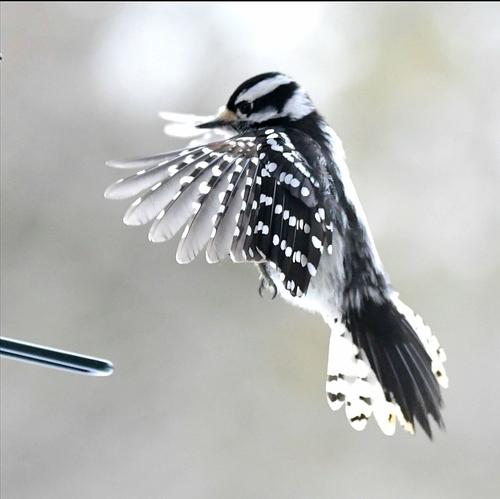
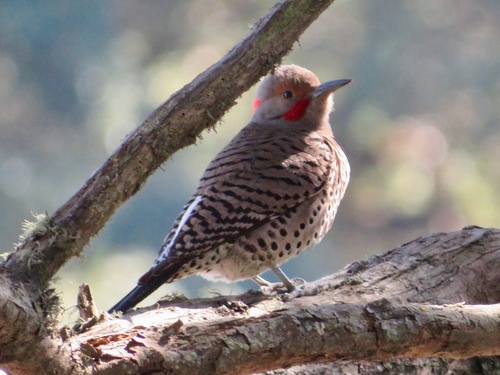
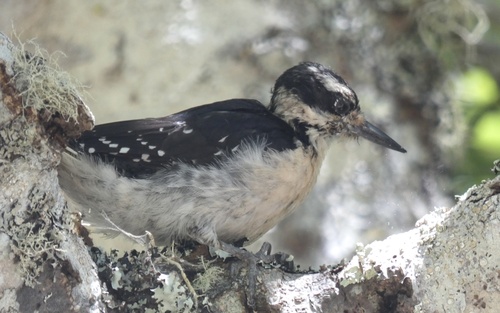
The closest relatives of the Yellow-bellied Sapsucker that you can see in Boston (family Picidae, Woodpeckers) are Downy Woodpecker (about 60%), Red-bellied Woodpecker (about 40%) and Northern Flicker (about 40%), with each one's daily chance of a sighting.

Where does the Yellow-bellied Sapsucker sighting chance come from?

GBIF citizen-science records

It is estimated from how often the Yellow-bellied Sapsucker is recorded against all the birds logged in Boston (1,461 verified sightings), calibrated against known sighting rates. Figures are rounded to the nearest 10% because citizen-science data supports honest approximations, not decimals, and months with records from fewer than five people show "—". How it works.

← Back to Boston