Banded Peacock
Daily sighting probability ~10% · With luck
at Guatemala City

In 3 days ~40% in a week ~70%

20 Verified sightings at Guatemala City
2,205 In all 36 parks From 2019 to 2026
December Best month
☀️ Diurnal When it's spotted

About the Banded Peacock

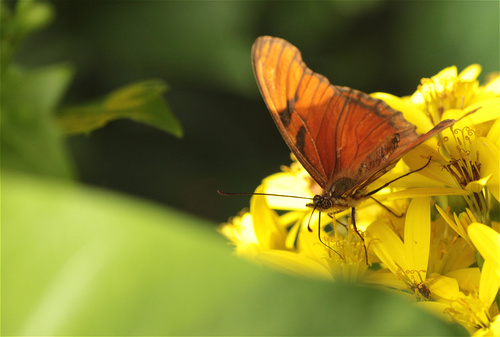
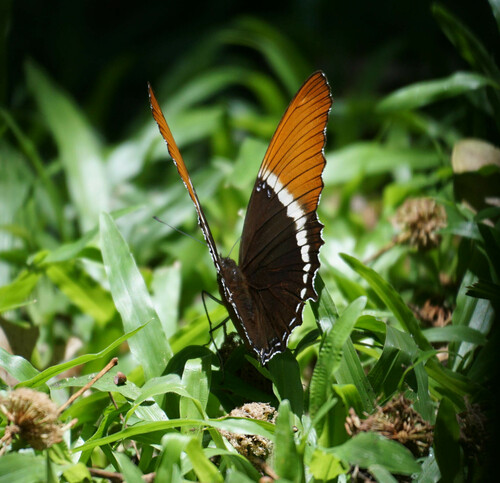
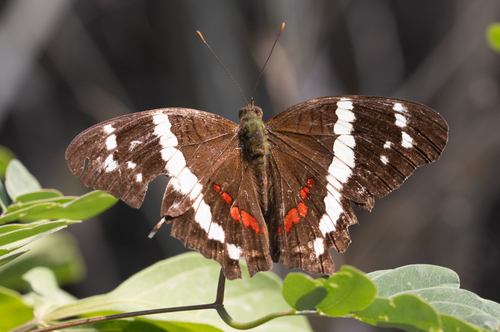
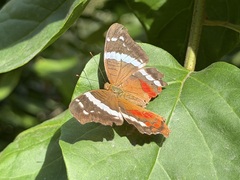
Anartia fatima, the banded peacock, is a butterfly in the family Nymphalidae. It is commonly found in south Texas, Mexico, and Central America but most studied in Costa Rica. This butterfly prefers subtropical climates and moist areas, such as near rivers. It spends much of its time in second-growth woodlands.

Its larvae feed on plants in the family Acanthaceae, while adults primarily feed on flower nectar from Acanthus species. The species is diurnal. These butterflies face interspecies competition for nectar with other butterflies and must also compete with hummingbirds, who will chase them away.

The eggs are laid in low-lying host plant leaves and flower bracts. Several hundred are laid by a single female within the span of a few days, with only a small percentage of the eggs surviving to adulthood. Eggs take five days to hatch and the larvae complete six instar phases before pupation. After pupation is complete, adults emerge and fly off within 1–2 hours.

This butterfly is not toxic to predators. It is the victim of predation by many bird, lizard, frog, and arthropod species. However, this butterfly is so ubiquitous that losses from predation do not endanger the species. Wikipedia →
Global Distribution

Parks Where Found

# Park Country Daily sighting probability
1 Ostional Wildlife Refuge 🇨🇷 Costa Rica
~60%
2 Rincón de la Vieja National Park 🇨🇷 Costa Rica
~50%
3 Chagres National Park 🇵🇦 Panama
~50%
4 Cockscomb Basin Wildlife Sanctuary 🇧🇿 Belize
~50%
5 Soberanía National Park 🇵🇦 Panama
~40%
6 Biotopo Cerro Cahuí 🇬🇹 Guatemala
~40%
7 Braulio Carrillo National Park 🇨🇷 Costa Rica
~40%
8 Tortuguero National Park 🇨🇷 Costa Rica
~40%
9 Carara National Park 🇨🇷 Costa Rica
~40%
10 Cabo Blanco Absolute Nature Reserve 🇨🇷 Costa Rica
~40%
11 Gandoca-Manzanillo Wildlife Refuge 🇨🇷 Costa Rica
~40%
12 Piedras Blancas National Park 🇨🇷 Costa Rica
~40%
13 Corcovado National Park 🇨🇷 Costa Rica
~40%
14 Bastimentos Island National Marine Park 🇵🇦 Panama
~40%
15 Marino Ballena National Park 🇨🇷 Costa Rica
~30%
16 Pico Bonito National Park 🇭🇳 Honduras
~30%
17 Arenal Volcano National Park 🇨🇷 Costa Rica
~30%
18 Montes Azules Biosphere Reserve 🇲🇽 Mexico
~30%
19 Tikal National Park 🇬🇹 Guatemala
~30%
20 Tenorio Volcano National Park 🇨🇷 Costa Rica
~30%
21 Lago de Yojoa 🇭🇳 Honduras
~30%
22 Manuel Antonio National Park 🇨🇷 Costa Rica
~30%
23 Las Baulas Marine National Park 🇨🇷 Costa Rica
~30%
24 Darién National Park 🇵🇦 Panama
~30%
25 Cerro Azul Meámbar National Park 🇭🇳 Honduras
~20%
26 Cahuita National Park 🇨🇷 Costa Rica
~20%
27 La Amistad International Park (Panama) 🇵🇦 Panama
~20%
28 Calakmul Biosphere Reserve 🇲🇽 Mexico
~20%
29 Monteverde Cloud Forest Reserve 🇨🇷 Costa Rica
~20%
30 Parque Natural Metropolitano 🇵🇦 Panama
~20%
31 Chirripó National Park 🇨🇷 Costa Rica
~20%
32 Masaya Volcano National Park 🇳🇮 Nicaragua
~20%
33 Sian Ka'an Biosphere Reserve 🇲🇽 Mexico
~10%
34 Cumbres de Monterrey National Park 🇲🇽 Mexico
~10%
35 Tapantí-Macizo de la Muerte National Park 🇨🇷 Costa Rica
~10%
36 Cañón del Sumidero National Park 🇲🇽 Mexico
~10%

Cities Where Found

# City Country Daily sighting probability
1 San José 🇨🇷 Costa Rica
~30%
2 San Pedro Sula 🇭🇳 Honduras
~30%
3 Panama City 🇵🇦 Panama
~30%
4 San Salvador 🇸🇻 El Salvador
~30%
5 Tegucigalpa 🇭🇳 Honduras
~20%
6 Managua 🇳🇮 Nicaragua
~20%
7 Guatemala City 🇬🇹 Guatemala
~10%
8 Monterrey 🇲🇽 México
~10%
9 Mexico City 🇲🇽 México
<5%

Before you go

What are the chances of seeing a Banded Peacock in Guatemala City?

With luck

About 10% of wildlife watchers report a Banded Peacock sighting in Guatemala City on a given day, based on 20 verified sightings from GBIF citizen-science data. It is the 17th most-seen of the 87 insects we can rate there. Over three days the chance rises to about 40%, and over a week to about 70%, if each day is a fresh chance.

When is the best time to see a Banded Peacock in Guatemala City?

November and December

In those months about 30% of wildlife watchers report a Banded Peacock in Guatemala City on a given day, against under 5% in January and June–July, the lowest months. Those are among Guatemala City's driest months, with about 25 mm of rain a month against 240 mm in September.

What time of day is best to see a Banded Peacock?

Between 9 am and noon

Across all the parks we cover, that three-hour window holds the most Banded Peacock sightings with a recorded time, and about 9 in 10 of them come between 6 am and 6 pm: it is a daytime animal.

Is Guatemala City the best place to see a Banded Peacock?

7th of 9

Of the 9 cities where we can rate Banded Peacock sightings, Guatemala City ranks 7th at about 10%. The best odds are in San José (Costa Rica, about 30%), San Pedro Sula (Honduras, about 30%) and Panama City (Panama, about 30%).

Which relatives of the Banded Peacock live in Guatemala City?

Same family: Nymphalidae

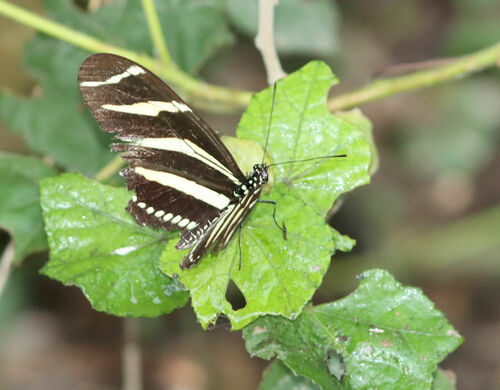
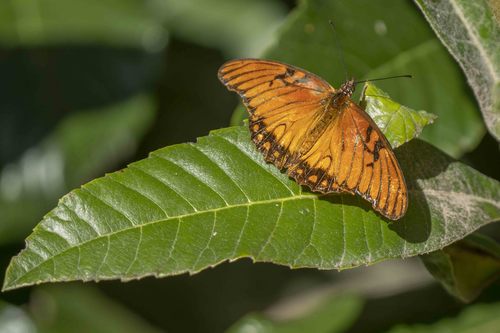
The closest relatives of the Banded Peacock that you can see in Guatemala City (family Nymphalidae, Brush-footed Butterflies) are Monarch (about 50%), Zebra Longwing (about 30%) and Mexican Silverspot (about 20%), with each one's daily chance of a sighting.

Where does the Banded Peacock sighting chance come from?

GBIF citizen-science records

It is estimated from how often the Banded Peacock is recorded against all the insects logged in Guatemala City (20 verified sightings), calibrated against known sighting rates. Figures are rounded to the nearest 10% because citizen-science data supports honest approximations, not decimals, and months with records from fewer than five people show "—". How it works.

← Back to Guatemala City