


Completed

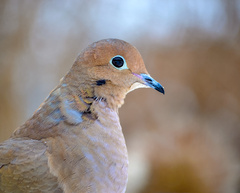


Mourning Dove
Zenaida macroura
Silhouette: Andy Wilson · PhyloPic
- KingdomAnimalia (Animals)
- PhylumChordata (Chordates)
- ClassAves (Birds)
- OrderColumbiformes (Pigeons and Doves)
- FamilyColumbidae (Pigeons and Doves)
- GenusZenaida (Zenaida Doves)
- SpeciesZenaida macroura (Mourning Dove)
In 3 days ~60% in a week ~90%
3,749 Verified sightings at Mexico City
50,912 In all 58 parks From 2019 to 2026
May Best month
☀️ Diurnal When it's spotted
About the Mourning Dove
The mourning dove (Zenaida macroura) is a member of the dove family, Columbidae. The bird is also known as the American mourning dove, the rain dove, and colloquially as the turtle dove, and it was once known as the Carolina pigeon and Carolina turtledove. It is one of the most abundant and widespread North American birds and a popular gamebird, with more than 20 million birds (up to 70 million in some years) shot annually in the U.S., both for sport and meat. Its ability to sustain its population under such pressure is due to its prolific breeding; in warm areas, one pair may raise up to six broods of two young each in a single year. The wings make an unusual whistling sound upon take-off and landing, a form of sonation. The bird is a strong flier, capable of speeds up to 88 km/h (55 mph).
Mourning doves are light gray and brown and generally muted in color. Males and females are similar in appearance. The species is generally monogamous, with two squabs (young) per brood. Both parents incubate and care for the young. Mourning doves eat almost exclusively seeds, but the young are fed crop milk by their parents.
In 1731, the English naturalist Mark Catesby described... Wikipedia →
Recent sightings of Mourning Dove in Mexico City
LIVEiNaturalistGlobal Distribution
Parks Where Found
Cities Where Found
| # | City | Country | Daily sighting probability |
|---|---|---|---|
| 1 | Mesa | 🇺🇸 United States | |
| 2 | Phoenix | 🇺🇸 United States | |
| 3 | Santo Domingo | 🇩🇴 Dominican Republic | |
| 4 | Sacramento | 🇺🇸 United States | |
| 5 | New York City | 🇺🇸 United States | |
| 6 | Baltimore | 🇺🇸 United States | |
| 7 | Orlando | 🇺🇸 United States | |
| 8 | Philadelphia | 🇺🇸 United States | |
| 9 | Detroit | 🇺🇸 United States | |
| 10 | Washington | 🇺🇸 United States |
Zoos & Centres Where Found
| # | Zoo / Centre | Country | |
|---|---|---|---|
| 1 | Zoo Miami | 🇺🇸 United States | |
| 2 | Audubon Zoo | 🇺🇸 United States | |
| 3 | Oklahoma City Zoo and Botanical Garden | 🇺🇸 United States | |
| 4 | Arizona-Sonora Desert Museum | 🇺🇸 United States | |
| 5 | Maine Wildlife Park | 🇺🇸 United States | |
| 6 | ABQ BioPark Zoo | 🇺🇸 United States | |
| 7 | Hanover Zoo | 🇩🇪 Germany | |
| 8 | Hogle Zoo | 🇺🇸 United States | |
| 9 | Akron Zoo | 🇺🇸 United States | |
| 10 | Santillana Zoo | 🇪🇸 Spain | |
| 11 | World of Birds Wildlife Sanctuary and Monkey Park | 🇿🇦 South Africa | |
| 12 | Zoológico de Culiacán | 🇲🇽 Mexico | |
| 13 | Lindsay Wildlife Experience | 🇺🇸 United States | |
| 14 | Museum of Life and Science | 🇺🇸 United States |
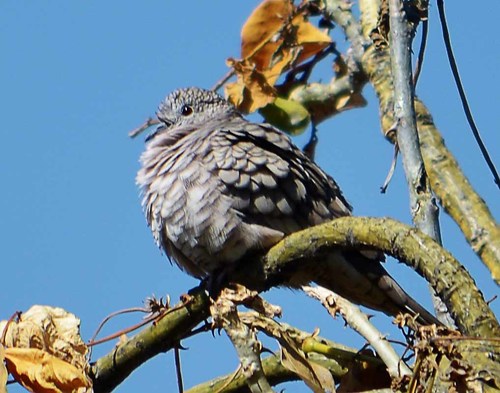
Closest Relatives at Mexico City




Before you go
What are the chances of seeing a Mourning Dove in Mexico City?
Possible
About 30% of wildlife watchers report a Mourning Dove sighting in Mexico City on a given day, based on 3,749 verified sightings from GBIF citizen-science data. It is the 29th most-seen of the 332 birds we can rate there. Over three days the chance rises to about 60%, and over a week to about 90%, if each day is a fresh chance.
When is the best time to see a Mourning Dove in Mexico City?
September to July
In those months about 30% of wildlife watchers report a Mourning Dove in Mexico City on a given day, against about 20% in August, the lowest month.
What time of day is best to see a Mourning Dove?
Between 4 and 7 pm
Across all the parks we cover, that three-hour window holds the most Mourning Dove sightings with a recorded time, and about 9 in 10 of them come between 6 am and 6 pm: it is a daytime animal.
Is Mexico City the best place to see a Mourning Dove?
30th of 45
Of the 45 cities where we can rate Mourning Dove sightings, Mexico City ranks 30th at about 30%. The best odds are in Mesa (United States, about 90%), Phoenix (United States, about 80%) and Santo Domingo (Dominican Republic, about 80%).
Where does the Mourning Dove sighting chance come from?
GBIF citizen-science records
It is estimated from how often the Mourning Dove is recorded against all the birds logged in Mexico City (3,749 verified sightings), calibrated against known sighting rates. Figures are rounded to the nearest 10% because citizen-science data supports honest approximations, not decimals, and months with records from fewer than five people show "—". How it works.
