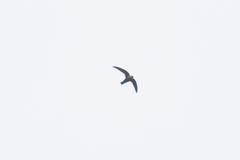

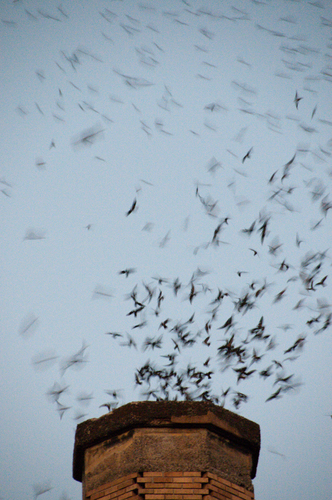
Chestnut-collared Swift

Chestnut-collared Swift

Streptoprocne rutila

Silhouette: Aviceda (vectorized by T. Michael Keesey) · PhyloPic

LCLeast ConcernNTVUENCR
Daily sighting probability <5% · Rare
at Poás Volcano National Park

In 3 days <5%

13 Verified sightings at Poás Volcano National Park From 2019 to 2026
1,675 In all 31 parks
May Best month
☀️ Diurnal When it's spotted

About the Chestnut-collared Swift

The chestnut-collared swift (Streptoprocne rutila) is a species of bird in subfamily Cypseloidinae of the swift family Apodidae. It is found from Mexico and Trinidad south to Peru and Bolivia. The chestnut-collared swift has at various times been placed in genera Cypseloides and Chaetura.

The chesnut-collared swift is one of the smaller members of genus Streptoprocne. It is 12 to 14 cm (4.7 to 5.5 in) long and weighs about 21 g (0.74 oz). It has a wide slightly notched tail and broad wings. Adult males of the nominate subspecies S. r. rutila have a sooty blackish brown crown, a blackish brown back, slightly paler rump and uppertail coverts, and a sooty blackish brown tail. They have a narrow black patch around the eye and grayish brown cheeks, chin, and throat with... Wikipedia →

Sounds

Call0:12

Ecuador · 2025

© Manuel Sánchez-Nivicela · XC1090917 · CC BY-NC-ND 4.0

Flight call0:10

Ecuador · 1996

© Mitch Lysinger · XC260446 · CC BY-NC-SA 4.0

Song0:04

Mexico · 2015

© Manuel Grosselet · XC247524 · CC BY-NC-SA 4.0

Global Distribution

Parks Where Found

# Park Country Daily sighting probability
1 El Triunfo 🇲🇽 Mexico
~10%
2 Podocarpus National Park 🇪🇨 Ecuador
~10%
3 Henri Pittier National Park 🇻🇪 Venezuela
<5%
4 Sierra de la Macarena National Park 🇨🇴 Colombia
<5%
5 Manu National Park 🇵🇪 Peru
<5%
6 Farallones de Cali National Natural Park 🇨🇴 Colombia
<5%
7 Chirripó National Park 🇨🇷 Costa Rica
<5%
8 Los Nevados National Natural Park 🇨🇴 Colombia
<5%
9 Pico Bonito National Park 🇭🇳 Honduras
<5%
10 Amboró National Park 🇧🇴 Bolivia
<5%
11 Tapantí-Macizo de la Muerte National Park 🇨🇷 Costa Rica
<5%
12 Gandoca-Manzanillo Wildlife Refuge 🇨🇷 Costa Rica
<5%
13 Monteverde Cloud Forest Reserve 🇨🇷 Costa Rica
<5%
14 Irazú Volcano National Park 🇨🇷 Costa Rica
<5%
15 Cahuita National Park 🇨🇷 Costa Rica
<5%
16 Braulio Carrillo National Park 🇨🇷 Costa Rica
<5%
17 Los Quetzales National Park 🇨🇷 Costa Rica
<5%
18 Rincón de la Vieja National Park 🇨🇷 Costa Rica
<5%
19 Chingaza National Natural Park 🇨🇴 Colombia
<5%
20 Cusuco National Park 🇭🇳 Honduras
<5%
21 Arenal Volcano National Park 🇨🇷 Costa Rica
<5%
22 La Amistad International Park (Panama) 🇵🇦 Panama
<5%
23 Tortuguero National Park 🇨🇷 Costa Rica
<5%
24 Bastimentos Island National Marine Park 🇵🇦 Panama
<5%
25 Tenorio Volcano National Park 🇨🇷 Costa Rica
<5%
26 Tayrona National Natural Park 🇨🇴 Colombia
<5%
27 Manuel Antonio National Park 🇨🇷 Costa Rica
<5%
28 Carara National Park 🇨🇷 Costa Rica
<5%
29 Poás Volcano National Park 🇨🇷 Costa Rica
<5%
30 Corcovado National Park 🇨🇷 Costa Rica
<5%
31 Marino Ballena National Park 🇨🇷 Costa Rica
<5%

Cities Where Found

# City Country Daily sighting probability
1 San José 🇨🇷 Costa Rica
<5%
2 Medellín 🇨🇴 Colombia
<5%
3 Guayaquil 🇪🇨 Ecuador
<5%
4 Cali 🇨🇴 Colombia
<5%
5 Guatemala City 🇬🇹 Guatemala
<5%
6 Mexico City 🇲🇽 México
<5%

Before you go

What are the chances of seeing a Chestnut-collared Swift in Poás Volcano National Park?

Rare

Under 5% of wildlife watchers report a Chestnut-collared Swift sighting in Poás Volcano National Park on a given day, based on 13 verified sightings from GBIF citizen-science data from 2019 to 2026. It is the 281st most-seen of the 356 birds we can rate there. Over three days the chance rises to under 5%, if each day is a fresh chance.

When is the best time to see a Chestnut-collared Swift in Poás Volcano National Park?

May

In that month about 10% of wildlife watchers report a Chestnut-collared Swift in Poás Volcano National Park on a given day, against under 5% in June to April, the lowest months.

What time of day is best to see a Chestnut-collared Swift?

Between 8 and 11 am

Across all the parks we cover, that three-hour window holds the most Chestnut-collared Swift sightings with a recorded time, and about 9 in 10 of them come between 6 am and 6 pm: it is a daytime animal.

Is Poás Volcano National Park the best place to see a Chestnut-collared Swift?

29th of 31

Of the 31 parks where we can rate Chestnut-collared Swift sightings, Poás Volcano National Park ranks 29th at under 5%. The best odds are in El Triunfo (Mexico, about 10%), Podocarpus National Park (Ecuador, about 10%) and Henri Pittier National Park (Venezuela, under 5%).

Where does the Chestnut-collared Swift sighting chance come from?

GBIF citizen-science records

It is estimated from how often the Chestnut-collared Swift is recorded against all the birds logged in Poás Volcano National Park (13 verified sightings from 2019 to 2026), calibrated against known sighting rates. Figures are rounded to the nearest 10% because citizen-science data supports honest approximations, not decimals, and months with records from fewer than five people show "—". How it works.

← Back to Poás Volcano National Park