Black Redstart

Black Redstart

Phoenicurus ochruros

Silhouette: Martin Bulla, based on François Desbordes' illustration · PhyloPic

LCLeast ConcernNTVUENCR
Daily sighting probability ~10% · With luck
at Casablanca

In 3 days ~30% in a week ~60%

11 Verified sightings at Casablanca
16,765 In all 42 parks From 2019 to 2026
February Best month
☀️ Diurnal When it's spotted

About the Black Redstart

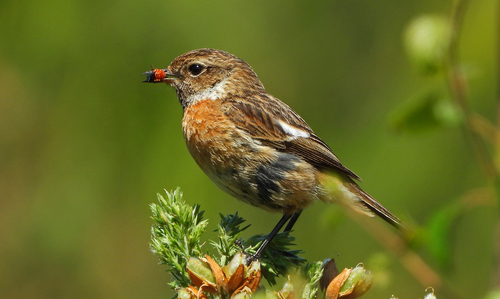
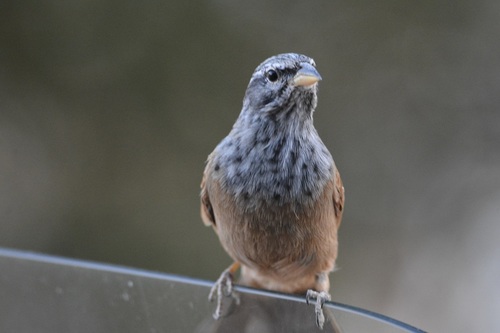
The black redstart (Phoenicurus ochruros) is a small passerine bird in the Old World flycatcher family. It is a widespread breeder in rocky habitats across Eurasia and North Africa, from the British Isles south to Morocco and east to central China. It is resident in the milder parts of its range, but northern and eastern birds migrate.

The first formal description of the black redstart was by the German naturalist Samuel Gottlieb Gmelin in 1774 under the binomial name Mottacilla ochruros. The species is now placed in the genus Phoenicurus that was introduced in 1817 by the English naturalist Thomas Forster. Both parts of the scientific name are from Ancient Greek and refer to the colour of the tail. The genus name Phoenicurus is from phoinix, "red", and -ouros -"tailed", and the specific ochruros is from okhros, "pale yellow" and -ouros. Obsolete common names include Tithys redstart, blackstart (not to be confused with the species currently known as blackstart) and black redtail.

The black redstart is a member of a temperate Eurasian clade, which also includes the Daurian redstart, Hodgson's redstart, the white-winged redstart and perhaps Przevalski's... Wikipedia →

Sounds

Call0:22

France · 2026

© Thierry THOMAS · XC1186854 · CC BY-NC-SA 4.0

Song0:46

Sweden · 2025

© David Hammarberg · XC1002842 · CC BY-NC-SA 4.0

Recording1:03

Italy · 2022

© Gianluca Congi · XC744967 · CC BY-NC-SA 4.0

Global Distribution

Parks Where Found

# Park Country Daily sighting probability
1 Vanoise National Park 🇫🇷 France
~80%
2 Hohe Tauern National Park 🇦🇹 Austria
~70%
3 Picos de Europa National Park 🇪🇸 Spain
~70%
4 Aigüestortes National Park 🇪🇸 Spain
~60%
5 Tatra National Park 🇸🇰 Slovakia
~60%
6 Hemis National Park 🇮🇳 India
~50%
7 Ordesa y Monte Perdido National Park 🇪🇸 Spain
~50%
8 Mercantour National Park 🇫🇷 France
~50%
9 Pyrénées National Park 🇫🇷 France
~50%
10 Gobi Gurvansaikhan National Park 🇲🇳 Mongolia
~50%
11 Triglav National Park 🇸🇮 Slovenia
~50%
12 Monfragüe National Park 🇪🇸 Spain
~50%
13 Ecrins National Park 🇫🇷 France
~50%
14 Cévennes National Park 🇫🇷 France
~40%
15 Sierra Nevada National Park 🇪🇸 Spain
~40%
16 Hortobágy National Park 🇭🇺 Hungary
~40%
17 Sierra de Guadarrama National Park 🇪🇸 Spain
~40%
18 Plitvice Lakes National Park 🇭🇷 Croatia
~40%
19 Białowieża National Park 🇵🇱 Poland
~30%
20 Keoladeo National Park 🇮🇳 India
~30%
21 Fertő-Hanság National Park 🇭🇺 Hungary
~30%
22 Biebrza National Park 🇵🇱 Poland
~30%
23 Satpura National Park 🇮🇳 India
~20%
24 Bavarian Forest National Park 🇩🇪 Germany
~20%
25 Doñana National Park 🇪🇸 Spain
~20%
26 Bandhavgarh National Park 🇮🇳 India
~20%
27 Ranthambore National Park 🇮🇳 India
~20%
28 Kiskunság National Park 🇭🇺 Hungary
~20%
29 Gir National Park 🇮🇳 India
~10%
30 Kanha National Park 🇮🇳 India
~10%
31 Chitwan National Park 🇳🇵 Nepal
~10%
32 Camargue 🇫🇷 France
~10%
33 Gauja National Park 🇱🇻 Latvia
~10%
34 Jim Corbett National Park 🇮🇳 India
~10%
35 Royal Bardia National Park 🇳🇵 Nepal
~10%
36 Langtang National Park 🇳🇵 Nepal
~10%
37 Jiuzhaigou National Park 🇨🇳 China
~10%
38 Wadden Sea National Park 🇩🇪 Germany
<5%
39 Kaziranga National Park 🇮🇳 India
<5%
40 Manas National Park 🇮🇳 India
<5%
41 Sundarbans National Park 🇮🇳 India
<5%
42 Royal Manas National Park 🇧🇹 Bhutan
<5%

Cities Where Found

# City Country Daily sighting probability
1 Lisbon 🇵🇹 Portugal
~70%
2 Porto 🇵🇹 Portugal
~40%
3 Antalya 🇹🇷 Turkey
~40%
4 Belgrade 🇷🇸 Serbia
~40%
5 Budapest 🇭🇺 Hungary
~40%
6 Naples 🇮🇹 Italy
~40%
7 Barcelona 🇪🇸 Spain
~30%
8 Valencia 🇪🇸 Spain
~30%
9 Rome 🇮🇹 Italy
~30%
10 Jabalpur 🇮🇳 India
~30%

Zoos & Centres Where Found

# Zoo / Centre Country
1 Barcelona Zoo 🇪🇸 Spain In captivity
2 Aquarama Barcelona 🇪🇸 Spain In captivity
3 Maison des Vautours 🇫🇷 France In captivity

Before you go

What are the chances of seeing a Black Redstart in Casablanca?

With luck

About 10% of wildlife watchers report a Black Redstart sighting in Casablanca on a given day, based on 11 verified sightings from GBIF citizen-science data. It is the 28th most-seen of the 45 birds we can rate there. Over three days the chance rises to about 30%, and over a week to about 60%, if each day is a fresh chance.

When is the best time to see a Black Redstart in Casablanca?

February

In that month about 30% of wildlife watchers report a Black Redstart in Casablanca on a given day, against about 10% in January, March–June, August–September and November, the lowest months. July has too few records to rate.

What time of day is best to see a Black Redstart?

Between 7 and 10 am

Across all the parks we cover, that three-hour window holds the most Black Redstart sightings with a recorded time, and about 9 in 10 of them come between 6 am and 6 pm: it is a daytime animal.

Is Casablanca the best place to see a Black Redstart?

31st of 96

Of the 96 cities where we can rate Black Redstart sightings, Casablanca ranks 31st at about 10%. The best odds are in Lisbon (Portugal, about 70%), Porto (Portugal, about 40%) and Antalya (Turkey, about 40%).

Which relatives of the Black Redstart live in Casablanca?

Same family: Muscicapidae

The closest relatives of the Black Redstart that you can see in Casablanca (family Muscicapidae, Old World Flycatchers, Robins, and Chats) are European Stonechat (about 10%), European Robin (about 10%) and European Pied Flycatcher (about 10%), with each one's daily chance of a sighting.

Where does the Black Redstart sighting chance come from?

GBIF citizen-science records

It is estimated from how often the Black Redstart is recorded against all the birds logged in Casablanca (11 verified sightings), calibrated against known sighting rates. Figures are rounded to the nearest 10% because citizen-science data supports honest approximations, not decimals, and months with records from fewer than five people show "—". How it works.

← Back to Casablanca