
Western Yellow Wagtail

Western Yellow Wagtail

Motacilla flava

Silhouette: Martin Bulla, based on Ren Hathway's illustration · PhyloPic

LCLeast ConcernNTVUENCR
Daily sighting probability <5% · Rare
at Salem

In 3 days <5% in a week ~10%

10 Verified sightings at Salem
9,255 In all 58 parks From 2019 to 2026
February Best month
☀️ Diurnal When it's spotted

About the Western Yellow Wagtail

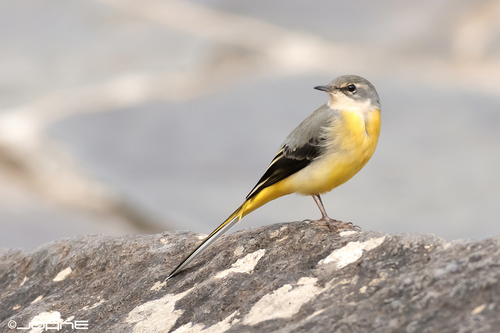
The western yellow wagtail (Motacilla flava) is a small passerine bird in the wagtail family Motacillidae, which also includes the pipits and longclaws. This species breeds in much of temperate Europe and Asia. Most populations are migratory, moving south to tropical Africa and southern Asia for the winter; the small population breeding in Egypt is however resident there.

It is a slender 15–16 cm long bird, with the characteristic long, constantly wagging tail of its genus. It is the shortest tailed of the European wagtails. The breeding adult male is basically olive above and yellow below. In other plumages, particularly in juveniles, the yellow may be diluted to whitish. The heads of breeding males come in a variety of colours and patterns depending on subspecies. The call is a high-pitched jeet. This insectivorous bird inhabits open country near water, such as wet meadows. It nests in tussocks, laying 4–8 speckled eggs.

The western yellow wagtail was formally described in 1758 by the Swedish naturalist Carl Linnaeus in the tenth edition of his Systema Naturae under its current binomial name Motacilla flava. In 1555 the Swiss naturalist Conrad Gessner had used the identical... Wikipedia →

Sounds

Call0:48

Spain · 2026

© Michael John O Mahony · XC1092444 · CC BY-NC-SA 4.0

Flight call0:21

Sweden · 2025

© Lars Edenius · XC1032741 · CC BY-NC-SA 4.0

Alarm call0:39

Sweden · 2025

© Lennart Jeppsson · XC1008592 · CC BY-NC-SA 4.0

Global Distribution

Parks Where Found

# Park Country Daily sighting probability
1 Fertő-Hanság National Park 🇭🇺 Hungary
~40%
2 Kiskunság National Park 🇭🇺 Hungary
~40%
3 Biebrza National Park 🇵🇱 Poland
~40%
4 Camargue 🇫🇷 France
~40%
5 Hortobágy National Park 🇭🇺 Hungary
~30%
6 Doñana National Park 🇪🇸 Spain
~30%
7 Awash National Park 🇪🇹 Ethiopia
~30%
8 Keoladeo National Park 🇮🇳 India
~20%
9 Murchison Falls National Park 🇺🇬 Uganda
~20%
10 Queen Elizabeth National Park 🇺🇬 Uganda
~20%
11 Ngorongoro Conservation Area 🇹🇿 Tanzania
~20%
12 Amboseli National Park 🇰🇪 Kenya
~20%
13 Wadden Sea National Park 🇩🇪 Germany
~20%
14 Lake Mburo National Park 🇺🇬 Uganda
~10%
15 Meru National Park 🇰🇪 Kenya
~10%
16 Białowieża National Park 🇵🇱 Poland
~10%
17 Akagera National Park 🇷🇼 Rwanda
~10%
18 Lake Nakuru National Park 🇰🇪 Kenya
~10%
19 Nagarhole National Park 🇮🇳 India
~10%
20 Nairobi National Park 🇰🇪 Kenya
~10%
21 Gir National Park 🇮🇳 India
~10%
22 Niokolo-Koba National Park 🇸🇳 Senegal
~10%
23 Sierra de Guadarrama National Park 🇪🇸 Spain
~10%
24 Bavarian Forest National Park 🇩🇪 Germany
~10%
25 Tsavo West National Park 🇰🇪 Kenya
~10%
26 Satpura National Park 🇮🇳 India
~10%
27 Aberdare National Park 🇰🇪 Kenya
~10%
28 Chobe National Park 🇧🇼 Botswana
<5%
29 Pyrénées National Park 🇫🇷 France
<5%
30 Sierra Nevada National Park 🇪🇸 Spain
<5%
31 Ranthambore National Park 🇮🇳 India
<5%
32 Ordesa y Monte Perdido National Park 🇪🇸 Spain
<5%
33 Monfragüe National Park 🇪🇸 Spain
<5%
34 Virunga National Park 🇨🇩 Democratic Republic of the Congo
<5%
35 Masai Mara National Reserve 🇰🇪 Kenya
<5%
36 Semuliki National Park 🇺🇬 Uganda
<5%
37 Royal Bardia National Park 🇳🇵 Nepal
<5%
38 Cévennes National Park 🇫🇷 France
<5%
39 Udawalawe National Park 🇱🇰 Sri Lanka
<5%
40 Bandhavgarh National Park 🇮🇳 India
<5%
41 Kafue National Park 🇿🇲 Zambia
<5%
42 Kidepo Valley National Park 🇺🇬 Uganda
<5%
43 Serengeti National Park 🇹🇿 Tanzania
<5%
44 Samburu National Reserve 🇰🇪 Kenya
<5%
45 Eravikulam National Park 🇮🇳 India
<5%
46 Chitwan National Park 🇳🇵 Nepal
<5%
47 Kanha National Park 🇮🇳 India
<5%
48 Picos de Europa National Park 🇪🇸 Spain
<5%
49 Gauja National Park 🇱🇻 Latvia
<5%
50 Arusha National Park 🇹🇿 Tanzania
<5%
51 Aigüestortes National Park 🇪🇸 Spain
<5%
52 Tarangire National Park 🇹🇿 Tanzania
<5%
53 Tsavo East National Park 🇰🇪 Kenya
<5%
54 Bandipur National Park 🇮🇳 India
<5%
55 Jim Corbett National Park 🇮🇳 India
<5%
56 Periyar National Park 🇮🇳 India
<5%
57 Snowdonia National Park 🇬🇧 United Kingdom
<5%
58 Bwindi Impenetrable National Park 🇺🇬 Uganda
<5%

Cities Where Found

# City Country Daily sighting probability
1 Agra 🇮🇳 India
~30%
2 Rajkot 🇮🇳 India
~30%
3 Kampala 🇺🇬 Uganda
~20%
4 Vasai-Virar 🇮🇳 India
~20%
5 Dakar 🇸🇳 Senegal
~20%
6 Kalyan-Dombivli 🇮🇳 India
~20%
7 Helsinki 🇫🇮 Finland
~20%
8 Luxor 🇪🇬 Egypt
~20%
9 Nashik 🇮🇳 India
~20%
10 Lahore 🇵🇰 Pakistan
~20%

Before you go

What are the chances of seeing a Western Yellow Wagtail in Salem?

Rare

Under 5% of wildlife watchers report a Western Yellow Wagtail sighting in Salem on a given day, based on 10 verified sightings from GBIF citizen-science data. It is the 81st most-seen of the 95 birds we can rate there. Over three days the chance rises to under 5%, and over a week to about 10%, if each day is a fresh chance.

When is the best time to see a Western Yellow Wagtail in Salem?

Any time of year

In every month with enough records, under 5% of wildlife watchers report a Western Yellow Wagtail in Salem on a given day, so our monthly data shows no clear season.

What time of day is best to see a Western Yellow Wagtail?

Between 4 and 7 pm

Across all the parks we cover, that three-hour window holds the most Western Yellow Wagtail sightings with a recorded time, and about 8 in 10 of them come between 6 am and 6 pm: it is a daytime animal.

Is Salem the best place to see a Western Yellow Wagtail?

87th of 97

Of the 97 cities where we can rate Western Yellow Wagtail sightings, Salem ranks 87th at under 5%. The best odds are in Agra (India, about 30%), Rajkot (India, about 30%) and Kampala (Uganda, about 20%).

Where does the Western Yellow Wagtail sighting chance come from?

GBIF citizen-science records

It is estimated from how often the Western Yellow Wagtail is recorded against all the birds logged in Salem (10 verified sightings), calibrated against known sighting rates. Figures are rounded to the nearest 10% because citizen-science data supports honest approximations, not decimals, and months with records from fewer than five people show "—". How it works.

← Back to Salem