White-faced Heron

White-faced Heron

Egretta novaehollandiae

Silhouette: L. Shyamal · PhyloPic

LCLeast ConcernNTVUENCR
Daily sighting probability ~40% · Likely
at Maria Island National Park

In 3 days ~80% in a week >90%

160 Verified sightings at Maria Island National Park From 2019 to 2026
5,206 In all 28 parks
June Best month
☀️ Diurnal When it's spotted

About the White-faced Heron

The white-faced heron (Egretta novaehollandiae) also known as the white-fronted heron, and incorrectly as the grey heron, or blue crane, is a common bird throughout most of Australasia, including New Guinea, the islands of Torres Strait, Indonesia, New Zealand, and all but the driest areas of Australia.

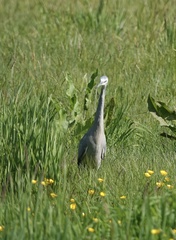
It is a medium-sized heron, pale, slightly bluish-grey, with yellow legs and white facial markings. It can be found almost anywhere near shallow water, fresh or salt, and although it is prompt to depart the scene on long, slow-beating wings if disturbed, it will boldly raid suburban fish ponds.

The white-faced heron was formally described in 1790 by the English ornithologist John Latham. He placed it with the herons in the genus Ardea and coined the binomial name Ardea novaehollandiae. Latham based his account on the "white-fronted heron" that had been described and illustrated in 1789 by the first Governor of New South Wales Arthur Phillip in his book The Voyage of Governor Phillip to Botany Bay.

It was historically considered to be closely related to Ardea but for some time it was placed in its own genus—Notophoyx—because of the absence of the plumes typical in that... Wikipedia →

Sounds

Alarm call0:05

Australia · 2023

© Romuald Mikusek · XC1062829 · CC BY-NC-SA 4.0

Call0:10

New Zealand · 2023

© Frank Lambert · XC1051393 · CC BY-NC-ND 4.0

Uncertain0:05

Australia · 2020

© Liam Manderson · XC605832 · CC BY-NC-SA 4.0

Global Distribution

Parks Where Found

# Park Country Daily sighting probability
1 Abel Tasman National Park 🇳🇿 New Zealand
~40%
2 Maria Island National Park 🇦🇺 Australia
~40%
3 Cape Range 🇦🇺 Australia
~40%
4 Wilsons Promontory National Park 🇦🇺 Australia
~40%
5 Ningaloo Marine Park 🇦🇺 Australia
~30%
6 Great Otway National Park 🇦🇺 Australia
~30%
7 Royal National Park 🇦🇺 Australia
~30%
8 Freycinet National Park 🇦🇺 Australia
~30%
9 Booderee National Park 🇦🇺 Australia
~20%
10 Daintree National Park 🇦🇺 Australia
~20%
11 Hattah-Kulkyne National Park 🇦🇺 Australia
~20%
12 Noosa National Park 🇦🇺 Australia
~20%
13 Nitmiluk National Park 🇦🇺 Australia
~20%
14 Rakiura National Park 🇳🇿 New Zealand
~20%
15 Egmont National Park 🇳🇿 New Zealand
~20%
16 Flinders Chase 🇦🇺 Australia
~20%
17 Kosciuszko National Park 🇦🇺 Australia
~10%
18 Fiordland National Park 🇳🇿 New Zealand
~10%
19 Rottnest Island 🇦🇺 Australia
~10%
20 Grampians National Park 🇦🇺 Australia
~10%
21 Aoraki Mount Cook National Park 🇳🇿 New Zealand
~10%
22 Blue Mountains National Park 🇦🇺 Australia
~10%
23 Kakadu National Park 🇦🇺 Australia
~10%
24 Uluru-Kata Tjuta National Park 🇦🇺 Australia
~10%
25 Springbrook National Park 🇦🇺 Australia
~10%
26 Flinders Ranges National Park 🇦🇺 Australia
~10%
27 Litchfield National Park 🇦🇺 Australia
<5%
28 Lamington National Park 🇦🇺 Australia
<5%

Cities Where Found

# City Country Daily sighting probability
1 Auckland 🇳🇿 New Zealand
~50%
2 Sydney 🇦🇺 Australia
~30%
3 Melbourne 🇦🇺 Australia
~30%
4 Perth 🇦🇺 Australia
~20%
5 Brisbane 🇦🇺 Australia
~10%
6 Hobart 🇦🇺 Australia
<5%

Zoos & Centres Where Found

# Zoo / Centre Country
1 Pairi Daiza 🇧🇪 Belgium In captivity
2 Tierpark Berlin 🇩🇪 Germany In captivity
3 Planckendael Zoo 🇧🇪 Belgium In captivity
4 Melbourne Zoo 🇦🇺 Australia In captivity
5 Auckland Zoo 🇳🇿 New Zealand In captivity
6 Loro Parque 🇪🇸 Spain In captivity
7 Willowbank Wildlife Reserve 🇳🇿 New Zealand In captivity
8 Featherdale Sydney Wildlife Park 🇦🇺 Australia In captivity
9 Ipswich Nature Centre 🇦🇺 Australia In captivity
10 Ōtorohanga Kiwi House 🇳🇿 New Zealand In captivity
11 Skærup Zoo 🇩🇰 Denmark In captivity
12 Birdworld Kuranda 🇦🇺 Australia In captivity
13 Kuranda Koala Gardens 🇦🇺 Australia In captivity

Before you go

What are the chances of seeing a White-faced Heron in Maria Island National Park?

Likely

About 40% of wildlife watchers report a White-faced Heron sighting in Maria Island National Park on a given day, based on 160 verified sightings from GBIF citizen-science data from 2019 to 2026. It is the 26th most-seen of the 81 birds we can rate there. Over three days the chance rises to about 80%, and over a week to over 90%, if each day is a fresh chance.

When is the best time to see a White-faced Heron in Maria Island National Park?

February and June

In those months about 60% of wildlife watchers report a White-faced Heron in Maria Island National Park on a given day, against about 30% in July to November, the lowest months.

What time of day is best to see a White-faced Heron?

Between 1 and 4 pm

Across all the parks we cover, that three-hour window holds the most White-faced Heron sightings with a recorded time, and nearly all of them come between 6 am and 6 pm: it is a daytime animal.

Is Maria Island National Park the best place to see a White-faced Heron?

Among the best

Of the 28 parks where we can rate White-faced Heron sightings, Maria Island National Park ranks 2nd at about 40%, level with the leaders once rounded. The best odds are in Abel Tasman National Park (New Zealand, about 40%). All parks ranked.

Where does the White-faced Heron sighting chance come from?

GBIF citizen-science records

It is estimated from how often the White-faced Heron is recorded against all the birds logged in Maria Island National Park (160 verified sightings from 2019 to 2026), calibrated against known sighting rates. Figures are rounded to the nearest 10% because citizen-science data supports honest approximations, not decimals, and months with records from fewer than five people show "—". How it works.

← Back to Maria Island National Park