Tricolored Heron

Tricolored Heron

Egretta tricolor

Silhouette: L. Shyamal · PhyloPic

LCLeast ConcernNTVUENCR
Daily sighting probability ~70% · Very likely
at Merritt Island National Wildlife Refuge

In 3 days >90%

9,804 Verified sightings at Merritt Island National Wildlife Refuge From 2019 to 2026
28,740 In all 45 parks
November Best month
☀️ Diurnal When it's spotted

About the Tricolored Heron

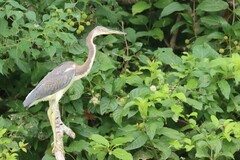
The tricolored heron (Egretta tricolor), formerly known as the Louisiana heron, is a small species of heron native to coastal parts of the Americas. The species is more solitary than other species of heron in the Americas and eats a diet consisting mostly of small fish.

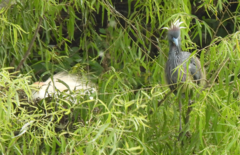
Tricolored herons breed in swamps and other coastal habitats and nests in colonies, often with other herons, usually on platforms of sticks in trees or shrubs. In each clutch, three to seven eggs are typically laid. The tricolored heron is the second most coastal heron in the United States.

The species' range follows the northeastern United States, south along the coast, through the Gulf of Mexico and the Caribbean, to northern South America as far south as Brazil. In the Pacific region, it ranges from Peru to California, but it is only a nonbreeding visitor to the far north.

It was likely the most numerous heron in North America until the cattle egret arrived to the continent in the 1950s. While the species' population appears to be on the decline, it remains quite common. The bird is listed as "Threatened" by the Florida Fish and Wildlife Conservation Commission. Wikipedia →

Sounds

Begging call0:31

United States · 2024

© Sue Riffe · XC941142 · CC BY-NC-SA 4.0

Call0:14

United States · 2022

© Paul Driver · XC705371 · CC BY-NC-SA 4.0

Flight call0:13

Ecuador · 2003

© John V. Moore · XC257318 · CC BY-NC-SA 4.0

Global Distribution

Parks Where Found

# Park Country Daily sighting probability
1 Caroni Swamp 🇹🇹 Trinidad and Tobago
~80%
2 Merritt Island National Wildlife Refuge 🇺🇸 United States
~70%
3 Ría Lagartos Biosphere Reserve 🇲🇽 Mexico
~60%
4 Celestún Biosphere Reserve 🇲🇽 Mexico
~50%
5 Isla del Coco National Park 🇨🇷 Costa Rica
~50%
6 Ciénaga de Zapata 🇨🇺 Cuba
~40%
7 Big Cypress National Preserve 🇺🇸 United States
~40%
8 Everglades National Park 🇺🇸 United States
~40%
9 El Vizcaíno Biosphere Reserve 🇲🇽 Mexico
~40%
10 Jaragua National Park 🇩🇴 Dominican Republic
~40%
11 Las Baulas Marine National Park 🇨🇷 Costa Rica
~40%
12 Carara National Park 🇨🇷 Costa Rica
~30%
13 Palo Verde National Park 🇨🇷 Costa Rica
~30%
14 Ostional Wildlife Refuge 🇨🇷 Costa Rica
~30%
15 Tortuguero National Park 🇨🇷 Costa Rica
~20%
16 Arrecifes de Cozumel National Park 🇲🇽 Mexico
~20%
17 Padre Island National Seashore 🇺🇸 United States
~20%
18 Bahía de Loreto National Park 🇲🇽 Mexico
~20%
19 Gandoca-Manzanillo Wildlife Refuge 🇨🇷 Costa Rica
~20%
20 Lago de Yojoa 🇭🇳 Honduras
~20%
21 Corcovado National Park 🇨🇷 Costa Rica
~10%
22 San Lorenzo Protected Forest 🇵🇦 Panama
~10%
23 Marino Ballena National Park 🇨🇷 Costa Rica
~10%
24 Bastimentos Island National Marine Park 🇵🇦 Panama
~10%
25 Coiba National Park 🇵🇦 Panama
~10%
26 Sian Ka'an Biosphere Reserve 🇲🇽 Mexico
~10%
27 Montes Azules Biosphere Reserve 🇲🇽 Mexico
~10%
28 Cerro Azul Meámbar National Park 🇭🇳 Honduras
~10%
29 Los Haitises National Park 🇩🇴 Dominican Republic
~10%
30 Biotopo Cerro Cahuí 🇬🇹 Guatemala
~10%
31 Utría National Natural Park 🇨🇴 Colombia
~10%
32 La Amistad International Park (Panama) 🇵🇦 Panama
~10%
33 Tayrona National Natural Park 🇨🇴 Colombia
~10%
34 Cabo Blanco Absolute Nature Reserve 🇨🇷 Costa Rica
~10%
35 Santa Rosa National Park 🇨🇷 Costa Rica
~10%
36 Soberanía National Park 🇵🇦 Panama
~10%
37 Cahuita National Park 🇨🇷 Costa Rica
~10%
38 Manuel Antonio National Park 🇨🇷 Costa Rica
~10%
39 Piedras Blancas National Park 🇨🇷 Costa Rica
<5%
40 Parque Natural Metropolitano 🇵🇦 Panama
<5%
41 Cañón del Sumidero National Park 🇲🇽 Mexico
<5%
42 Braulio Carrillo National Park 🇨🇷 Costa Rica
<5%
43 Main Ridge Forest Reserve 🇹🇹 Trinidad and Tobago
<5%
44 Chagres National Park 🇵🇦 Panama
<5%
45 Arenal Volcano National Park 🇨🇷 Costa Rica
<5%

Cities Where Found

# City Country Daily sighting probability
1 Barranquilla 🇨🇴 Colombia
~30%
2 Miami 🇺🇸 United States
~30%
3 Panama City 🇵🇦 Panama
~20%
4 Orlando 🇺🇸 United States
~20%
5 Monterrey 🇲🇽 México
~20%
6 São Luís 🇧🇷 Brazil
~10%
7 Guayaquil 🇪🇨 Ecuador
~10%
8 Puebla 🇲🇽 México
~10%
9 Havana 🇨🇺 Cuba
~10%
10 Mexico City 🇲🇽 México
~10%

Zoos & Centres Where Found

# Zoo / Centre Country
1 Gatorland 🇺🇸 United States In captivity
2 St. Augustine Alligator Farm Zoological Park 🇺🇸 United States In captivity
3 Florida Aquarium 🇺🇸 United States In captivity

Before you go

What are the chances of seeing a Tricolored Heron in Merritt Island National Wildlife Refuge?

Very likely

About 70% of wildlife watchers report a Tricolored Heron sighting in Merritt Island National Wildlife Refuge on a given day, based on 9,804 verified sightings from GBIF citizen-science data from 2019 to 2026. It is the 9th most-seen of the 279 birds we can rate there. Over three days the chance rises to over 90%, if each day is a fresh chance.

When is the best time to see a Tricolored Heron in Merritt Island National Wildlife Refuge?

November

In that month about 80% of wildlife watchers report a Tricolored Heron in Merritt Island National Wildlife Refuge on a given day, against about 50% in May and October, the lowest months.

What time of day is best to see a Tricolored Heron?

Between 7 and 10 am

Across all the parks we cover, that three-hour window holds the most Tricolored Heron sightings with a recorded time, and about 9 in 10 of them come between 6 am and 6 pm: it is a daytime animal.

Is Merritt Island National Wildlife Refuge the best place to see a Tricolored Heron?

2nd of 45

Of the 45 parks where we can rate Tricolored Heron sightings, Merritt Island National Wildlife Refuge ranks 2nd at about 70%. The best odds are in Caroni Swamp (Trinidad and Tobago, about 80%). All parks ranked.

Which relatives of the Tricolored Heron live in Merritt Island National Wildlife Refuge?

Same genus: Egretta

The closest relatives of the Tricolored Heron that you can see in Merritt Island National Wildlife Refuge (genus Egretta, Small Egrets and Herons) are Snowy Egret (about 70%), Little Blue Heron (about 70%) and Reddish Egret (about 40%), with each one's daily chance of a sighting.

Where does the Tricolored Heron sighting chance come from?

GBIF citizen-science records

It is estimated from how often the Tricolored Heron is recorded against all the birds logged in Merritt Island National Wildlife Refuge (9,804 verified sightings from 2019 to 2026), calibrated against known sighting rates. Figures are rounded to the nearest 10% because citizen-science data supports honest approximations, not decimals, and months with records from fewer than five people show "—". How it works.

← Back to Merritt Island National Wildlife Refuge