Eurasian Sparrowhawk

Eurasian Sparrowhawk

Accipiter nisus

Silhouette: Beth Reinke · PhyloPic

LCLeast ConcernNTVUENCR
Daily sighting probability ~10% · With luck
at Berlin

In 3 days ~40% in a week ~70%

638 Verified sightings at Berlin
4,080 In all 44 parks From 2019 to 2026
October Best month
☀️ Diurnal When it's spotted

About the Eurasian Sparrowhawk

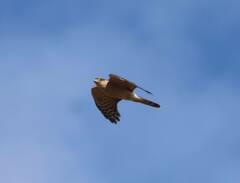
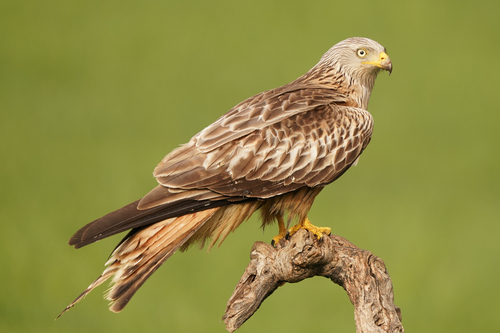
The Eurasian sparrowhawk (Accipiter nisus), also known as the northern sparrowhawk or simply the sparrowhawk, is a small bird of prey in the family Accipitridae. Adult male Eurasian sparrowhawks have bluish grey upperparts and orange-barred underparts; females and juveniles are brown above with brown barring below. The female is up to 25% larger than the male – one of the greatest size differences between the sexes in any bird species. Though it is a predator which specialises in catching woodland birds, the Eurasian sparrowhawk can be found in any habitat and often hunts garden birds in towns and cities. Males tend to take smaller birds, including tits, finches and sparrows; females catch primarily thrushes and starlings but are capable of killing birds weighing 500 g (18 oz) or more.

The Eurasian sparrowhawk is found throughout the temperate and subtropical parts of the Old World; whilst birds from the northern parts of the range migrate south for winter, their southern counterparts remain resident or make dispersive movements. Eurasian sparrowhawks breed in suitable woodland of any type, with the nest, measuring up to 60 cm (24 in) across, built using twigs in a tree. Four or five pale blue, brown-spotted eggs are laid; the success of the breeding attempt is dependent on the female maintaining a high weight while the male brings her food. The chicks hatch after 33 days and fledge after 24 to 28 days.

The probability of a juvenile surviving its first year is 34%, with 69% of adults surviving from one year to the next. Mortality in young males is greater than that of young females and the typical lifespan is four years. This species is now one of the most common birds of prey in Europe, although the population crashed after the Second World War. Organochlorine insecticides used to treat seeds before sowing built up in the bird population, and the concentrations in Eurasian sparrowhawks were enough to kill some outright and incapacitate others; affected birds laid eggs with fragile shells, which broke during incubation. However, its population recovered after the chemicals were banned, and it is now relatively common, classified as being of least concern by BirdLife International.

The Eurasian sparrowhawk's hunting behaviour has brought it into conflict with humans for hundreds of years, particularly racing pigeon owners and people rearing poultry and gamebirds. It has also been blamed for decreases in passerine populations. Studies of racing-pigeon deaths found that Eurasian sparrowhawks were responsible for less than 1%. Wikipedia →

Sounds

Begging call0:28

Germany · 2026

© Bastian Forkel · XC1162138 · CC BY-NC-SA 4.0

Call0:05

Belgium · 2026

© Windels Marie · XC1153350 · CC BY-NC-SA 4.0

Flight call0:23

France · 2022

© Manceau Lionel · XC764648 · CC BY-NC-SA 4.0

Global Distribution

Parks Where Found

# Park Country Daily sighting probability
1 Hortobágy National Park 🇭🇺 Hungary
~20%
2 Kiskunság National Park 🇭🇺 Hungary
~20%
3 Wadden Sea National Park 🇩🇪 Germany
~10%
4 Hemis National Park 🇮🇳 India
~10%
5 Biebrza National Park 🇵🇱 Poland
~10%
6 Pyrénées National Park 🇫🇷 France
~10%
7 Cévennes National Park 🇫🇷 France
~10%
8 Cairngorms National Park 🇬🇧 United Kingdom
~10%
9 Langtang National Park 🇳🇵 Nepal
~10%
10 Fertő-Hanság National Park 🇭🇺 Hungary
~10%
11 Tatra National Park 🇸🇰 Slovakia
~10%
12 Sierra Nevada National Park 🇪🇸 Spain
~10%
13 Białowieża National Park 🇵🇱 Poland
~10%
14 Bavarian Forest National Park 🇩🇪 Germany
~10%
15 Vanoise National Park 🇫🇷 France
~10%
16 Picos de Europa National Park 🇪🇸 Spain
~10%
17 Jiuzhaigou National Park 🇨🇳 China
~10%
18 Ordesa y Monte Perdido National Park 🇪🇸 Spain
~10%
19 Monfragüe National Park 🇪🇸 Spain
~10%
20 Gauja National Park 🇱🇻 Latvia
~10%
21 Royal Manas National Park 🇧🇹 Bhutan
~10%
22 Mercantour National Park 🇫🇷 France
~10%
23 Camargue 🇫🇷 France
~10%
24 Aigüestortes National Park 🇪🇸 Spain
~10%
25 Triglav National Park 🇸🇮 Slovenia
~10%
26 Sierra de Guadarrama National Park 🇪🇸 Spain
~10%
27 Snowdonia National Park 🇬🇧 United Kingdom
<5%
28 Plitvice Lakes National Park 🇭🇷 Croatia
<5%
29 Keoladeo National Park 🇮🇳 India
<5%
30 Gir National Park 🇮🇳 India
<5%
31 Gobi Gurvansaikhan National Park 🇲🇳 Mongolia
<5%
32 Jim Corbett National Park 🇮🇳 India
<5%
33 Doñana National Park 🇪🇸 Spain
<5%
34 Ranthambore National Park 🇮🇳 India
<5%
35 Royal Bardia National Park 🇳🇵 Nepal
<5%
36 Chitwan National Park 🇳🇵 Nepal
<5%
37 Namdapha National Park 🇮🇳 India
<5%
38 Satpura National Park 🇮🇳 India
<5%
39 Tsavo West National Park 🇰🇪 Kenya
<5%
40 Kaziranga National Park 🇮🇳 India
<5%
41 Doi Inthanon National Park 🇹🇭 Thailand
<5%
42 Manas National Park 🇮🇳 India
<5%
43 Samburu National Reserve 🇰🇪 Kenya
<5%
44 Kanha National Park 🇮🇳 India
<5%

Cities Where Found

# City Country Daily sighting probability
1 Jerusalem 🇮🇱 Israel
~40%
2 Ramallah 🇵🇸 Palestine
~30%
3 Bishkek 🇰🇬 Kyrgyzstan
~30%
4 Algiers 🇩🇿 Algeria
~30%
5 Almaty 🇰🇿 Kazakhstan
~30%
6 Istanbul 🇹🇷 Turkey
~30%
7 Kharkiv 🇺🇦 Ukraine
~30%
8 Liverpool 🇬🇧 United Kingdom
~20%
9 Tashkent 🇺🇿 Uzbekistan
~20%
10 Manchester 🇬🇧 United Kingdom
~20%

Zoos & Centres Where Found

# Zoo / Centre Country
1 Wildpark Gangelt 🇩🇪 Germany In captivity
2 Oasi Naturalistica di Sant'Alessio 🇮🇹 Italy In captivity
3 Tierpark Hexentanzplatz 🇩🇪 Germany In captivity
4 Záchranná stanice Pavlov 🇨🇿 Czechia In captivity
5 Adlerarena Burg Landskron 🇦🇹 Austria In captivity
6 Loch Lomond Bird of Prey Centre 🇬🇧 United Kingdom In captivity
7 Centro Animali Non Convenzionali 🇮🇹 Italy In captivity
8 hipopotamiarnia i akwarium morskie warszawskiego ZOO 🇵🇱 Poland In captivity
9 Zoológico La Era de las aves 🇪🇸 Spain In captivity

Before you go

What are the chances of seeing a Eurasian Sparrowhawk in Berlin?

With luck

About 10% of wildlife watchers report a Eurasian Sparrowhawk sighting in Berlin on a given day, based on 638 verified sightings from GBIF citizen-science data. It is the 43rd most-seen of the 160 birds we can rate there. Over three days the chance rises to about 40%, and over a week to about 70%, if each day is a fresh chance.

When is the best time to see a Eurasian Sparrowhawk in Berlin?

October

In that month about 30% of wildlife watchers report a Eurasian Sparrowhawk in Berlin on a given day, against under 5% in June, the lowest month.

What time of day is best to see a Eurasian Sparrowhawk?

Between 10 am and 1 pm

Across all the parks we cover, that three-hour window holds the most Eurasian Sparrowhawk sightings with a recorded time, and nearly all of them come between 6 am and 6 pm: it is a daytime animal.

Is Berlin the best place to see a Eurasian Sparrowhawk?

19th of 113

Of the 113 cities where we can rate Eurasian Sparrowhawk sightings, Berlin ranks 19th at about 10%. The best odds are in Jerusalem (Israel, about 40%), Ramallah (Palestine, about 30%) and Bishkek (Kyrgyzstan, about 30%).

Where does the Eurasian Sparrowhawk sighting chance come from?

GBIF citizen-science records

It is estimated from how often the Eurasian Sparrowhawk is recorded against all the birds logged in Berlin (638 verified sightings), calibrated against known sighting rates. Figures are rounded to the nearest 10% because citizen-science data supports honest approximations, not decimals, and months with records from fewer than five people show "—". How it works.

← Back to Berlin