Spotted Flycatcher

Spotted Flycatcher

Muscicapa striata

Silhouette: Ekytza · PhyloPic

LCLeast ConcernNTVUENCR
Daily sighting probability <5% · Rare
at Copenhagen

In 3 days <5%

12 Verified sightings at Copenhagen
7,064 In all 69 parks From 2019 to 2026
September Best month
☀️ Diurnal When it's spotted

About the Spotted Flycatcher

The spotted flycatcher (Muscicapa striata) is a small passerine bird in the Old World flycatcher family. It breeds in most of Europe and in the Palearctic to Siberia, and is migratory, wintering in Africa and south western Asia. It is declining in parts of its range.

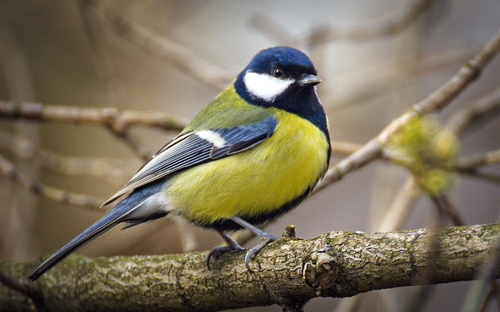
This is an undistinguished looking bird with long wings and tail. The adults have grey-brown upperparts and whitish underparts, with a streaked crown and breast, giving rise to the bird's common name. The legs are short and black, and the bill is black and has the broad but pointed shape typical of aerial insectivores. Juveniles are browner than adults and have spots on the upperparts.

The spotted flycatcher was described by the German naturalist Peter Simon Pallas in 1764 and given the binomial name Motacilla striata. The genus name Muscicapa comes from the Latin musca, a fly and capere, to catch. The specific epithet striata is from the Latin striatus meaning striated.

There are five recognised subspecies all of which winter in southern Africa. The breeding range is given below. Wikipedia →

Sounds

Alarm call0:37

Finland · 2023

© Miika Silfverberg · XC1027523 · CC BY-NC-SA 4.0

Call0:44

Sweden · 2025

© Lars Edenius · XC1014948 · CC BY-NC-SA 4.0

Song0:52

Sweden · 2022

© Thomas Bergman · XC733930 · CC BY-NC-SA 4.0

Global Distribution

Parks Where Found

# Park Country Daily sighting probability
1 Tsavo West National Park 🇰🇪 Kenya
~40%
2 Białowieża National Park 🇵🇱 Poland
~30%
3 Meru National Park 🇰🇪 Kenya
~30%
4 Plitvice Lakes National Park 🇭🇷 Croatia
~30%
5 Triglav National Park 🇸🇮 Slovenia
~20%
6 Tsavo East National Park 🇰🇪 Kenya
~20%
7 Mkomazi National Park 🇹🇿 Tanzania
~20%
8 Hohe Tauern National Park 🇦🇹 Austria
~20%
9 Cairngorms National Park 🇬🇧 United Kingdom
~20%
10 Arusha National Park 🇹🇿 Tanzania
~20%
11 Picos de Europa National Park 🇪🇸 Spain
~20%
12 uMkhuze Game Reserve 🇿🇦 South Africa
~10%
13 Tatra National Park 🇸🇰 Slovakia
~10%
14 Hwange National Park 🇿🇼 Zimbabwe
~10%
15 Fertő-Hanság National Park 🇭🇺 Hungary
~10%
16 Sierra Nevada National Park 🇪🇸 Spain
~10%
17 Biebrza National Park 🇵🇱 Poland
~10%
18 Nairobi National Park 🇰🇪 Kenya
~10%
19 Kafue National Park 🇿🇲 Zambia
~10%
20 Hortobágy National Park 🇭🇺 Hungary
~10%
21 Tarangire National Park 🇹🇿 Tanzania
~10%
22 Kruger National Park 🇿🇦 South Africa
~10%
23 Ordesa y Monte Perdido National Park 🇪🇸 Spain
~10%
24 Liwonde National Park 🇲🇼 Malawi
~10%
25 Cévennes National Park 🇫🇷 France
~10%
26 Kiskunság National Park 🇭🇺 Hungary
~10%
27 Waterberg Plateau Park 🇳🇦 Namibia
~10%
28 Akagera National Park 🇷🇼 Rwanda
~10%
29 Pilanesberg National Park 🇿🇦 South Africa
~10%
30 Samburu National Reserve 🇰🇪 Kenya
~10%
31 Mana Pools National Park 🇿🇼 Zimbabwe
~10%
32 Awash National Park 🇪🇹 Ethiopia
~10%
33 Amboseli National Park 🇰🇪 Kenya
~10%
34 Serengeti National Park 🇹🇿 Tanzania
~10%
35 Doñana National Park 🇪🇸 Spain
~10%
36 Chobe National Park 🇧🇼 Botswana
~10%
37 Ruaha National Park 🇹🇿 Tanzania
~10%
38 Mikumi National Park 🇹🇿 Tanzania
~10%
39 Pyrénées National Park 🇫🇷 France
~10%
40 Hluhluwe-Imfolozi Park 🇿🇦 South Africa
~10%
41 Lower Zambezi National Park 🇿🇲 Zambia
~10%
42 Gauja National Park 🇱🇻 Latvia
~10%
43 Etosha National Park 🇳🇦 Namibia
~10%
44 Lake Manyara National Park 🇹🇿 Tanzania
~10%
45 Lake Nakuru National Park 🇰🇪 Kenya
~10%
46 Aigüestortes National Park 🇪🇸 Spain
<5%
47 Ngorongoro Conservation Area 🇹🇿 Tanzania
<5%
48 Sierra de Guadarrama National Park 🇪🇸 Spain
<5%
49 Moremi Game Reserve 🇧🇼 Botswana
<5%
50 Bavarian Forest National Park 🇩🇪 Germany
<5%
51 Kgalagadi Transfrontier Park 🇿🇦 South Africa
<5%
52 Snowdonia National Park 🇬🇧 United Kingdom
<5%
53 Lake Mburo National Park 🇺🇬 Uganda
<5%
54 Gorongosa National Park 🇲🇿 Mozambique
<5%
55 Aberdare National Park 🇰🇪 Kenya
<5%
56 Camargue 🇫🇷 France
<5%
57 Wadden Sea National Park 🇩🇪 Germany
<5%
58 Virunga National Park 🇨🇩 Democratic Republic of the Congo
<5%
59 Masai Mara National Reserve 🇰🇪 Kenya
<5%
60 Kidepo Valley National Park 🇺🇬 Uganda
<5%
61 South Luangwa National Park 🇿🇲 Zambia
<5%
62 Monfragüe National Park 🇪🇸 Spain
<5%
63 Gobi Gurvansaikhan National Park 🇲🇳 Mongolia
<5%
64 Murchison Falls National Park 🇺🇬 Uganda
<5%
65 Queen Elizabeth National Park 🇺🇬 Uganda
<5%
66 iSimangaliso Wetland Park 🇿🇦 South Africa
<5%
67 West Coast National Park 🇿🇦 South Africa
<5%
68 Kibale National Park 🇺🇬 Uganda
<5%
69 Bwindi Impenetrable National Park 🇺🇬 Uganda
<5%

Cities Where Found

# City Country Daily sighting probability
1 Tashkent 🇺🇿 Uzbekistan
~20%
2 Jerusalem 🇮🇱 Israel
~20%
3 Mombasa 🇰🇪 Kenya
~20%
4 Sincan 🇹🇷 Turkey
~20%
5 Abu Dhabi 🇦🇪 United Arab Emirates
~20%
6 Tunis 🇹🇳 Tunisia
~20%
7 Athens 🇬🇷 Greece
~20%
8 Tehran 🇮🇷 Iran
~20%
9 Izmir 🇹🇷 Turkey
~20%
10 Ankara 🇹🇷 Turkey
~20%

Before you go

What are the chances of seeing a Spotted Flycatcher in Copenhagen?

Rare

Under 5% of wildlife watchers report a Spotted Flycatcher sighting in Copenhagen on a given day, based on 12 verified sightings from GBIF citizen-science data. It is the 136th most-seen of the 154 birds we can rate there. Over three days the chance rises to under 5%, if each day is a fresh chance.

When is the best time to see a Spotted Flycatcher in Copenhagen?

Any time of year

In every month with enough records, under 5% of wildlife watchers report a Spotted Flycatcher in Copenhagen on a given day, so our monthly data shows no clear season.

What time of day is best to see a Spotted Flycatcher?

Between 8 and 11 am

Across all the parks we cover, that three-hour window holds the most Spotted Flycatcher sightings with a recorded time, and about 8 in 10 of them come between 6 am and 6 pm: it is a daytime animal.

Is Copenhagen the best place to see a Spotted Flycatcher?

87th of 89

Of the 89 cities where we can rate Spotted Flycatcher sightings, Copenhagen ranks 87th at under 5%. The best odds are in Tashkent (Uzbekistan, about 20%), Jerusalem (Israel, about 20%) and Mombasa (Kenya, about 20%).

Which relatives of the Spotted Flycatcher live in Copenhagen?

Same family: Muscicapidae

The closest relatives of the Spotted Flycatcher that you can see in Copenhagen (family Muscicapidae, Old World Flycatchers, Robins, and Chats) are European Robin (about 20%) and Common Redstart (about 10%), with each one's daily chance of a sighting.

Where does the Spotted Flycatcher sighting chance come from?

GBIF citizen-science records

It is estimated from how often the Spotted Flycatcher is recorded against all the birds logged in Copenhagen (12 verified sightings), calibrated against known sighting rates. Figures are rounded to the nearest 10% because citizen-science data supports honest approximations, not decimals, and months with records from fewer than five people show "—". How it works.

← Back to Copenhagen