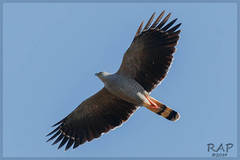
Crane Hawk

Crane Hawk

Geranospiza caerulescens

Silhouette: Sheatherius · PhyloPic

LCLeast ConcernNTVUENCR
Daily sighting probability <5% · Rare
at Guayaquil

In 3 days ~10%

17 Verified sightings at Guayaquil
3,297 In all 38 parks From 2019 to 2026
May Best month
☀️ Diurnal When it's spotted

About the Crane Hawk

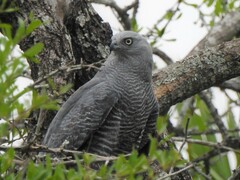
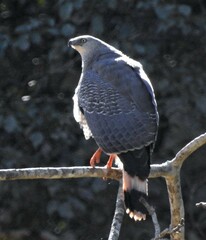
The crane hawk (Geranospiza caerulescens) is a species of bird of prey in the family Accipitridae. It is the only species placed in the genus Geranospiza. The crane hawk used to be many species that were recently lumped into one. Those species are now designated as subspecies. Color varies clinally, though, and it is now commonly accepted that they comprise one species. There are also two species of harrier-hawks in Africa of the genus Polyboroides that, while they are morphologically and behaviorally similar, are not very closely related. They serve as a good example of convergent evolution.

Six subspecies are recognised: Crane hawks occur in tropical lowlands at the edge of forests and are almost always... Wikipedia →

Sounds

Song0:15

Ecuador · 2025

© Marc Anderson · XC1094164 · CC BY-NC-ND 4.0

Call0:21

Brazil · 2024

© JAYRSON ARAUJO DE OLIVEIRA · XC921835 · CC BY-NC-SA 4.0

Canto0:41

Brazil · 2014

© Caio Brito · XC427410 · CC BY-NC-SA 4.0

Global Distribution

Parks Where Found

# Park Country Daily sighting probability
1 Parque Estadual Encontro das Águas 🇧🇷 Brazil
~30%
2 El Palmar National Park 🇦🇷 Argentina
~20%
3 El Impenetrable National Park 🇦🇷 Argentina
~20%
4 Cuyabeno Wildlife Reserve 🇪🇨 Ecuador
~10%
5 Soberanía National Park 🇵🇦 Panama
~10%
6 Machalilla National Park 🇪🇨 Ecuador
~10%
7 Yasuní National Park 🇪🇨 Ecuador
~10%
8 Carara National Park 🇨🇷 Costa Rica
~10%
9 Amacayacu National Natural Park 🇨🇴 Colombia
~10%
10 Anavilhanas National Park 🇧🇷 Brazil
~10%
11 Santa Rosa National Park 🇨🇷 Costa Rica
~10%
12 Tambopata National Reserve 🇵🇪 Peru
<5%
13 Palo Verde National Park 🇨🇷 Costa Rica
<5%
14 Emas National Park 🇧🇷 Brazil
<5%
15 Tayrona National Natural Park 🇨🇴 Colombia
<5%
16 Ostional Wildlife Refuge 🇨🇷 Costa Rica
<5%
17 Calakmul Biosphere Reserve 🇲🇽 Mexico
<5%
18 Marino Ballena National Park 🇨🇷 Costa Rica
<5%
19 Sierra de la Macarena National Park 🇨🇴 Colombia
<5%
20 Manuel Antonio National Park 🇨🇷 Costa Rica
<5%
21 Manu National Park 🇵🇪 Peru
<5%
22 Las Baulas Marine National Park 🇨🇷 Costa Rica
<5%
23 Tikal National Park 🇬🇹 Guatemala
<5%
24 Serra da Canastra National Park 🇧🇷 Brazil
<5%
25 Ría Lagartos Biosphere Reserve 🇲🇽 Mexico
<5%
26 Cabo Blanco Absolute Nature Reserve 🇨🇷 Costa Rica
<5%
27 Celestún Biosphere Reserve 🇲🇽 Mexico
<5%
28 Caroni Swamp 🇹🇹 Trinidad and Tobago
<5%
29 Darién National Park 🇵🇦 Panama
<5%
30 Sian Ka'an Biosphere Reserve 🇲🇽 Mexico
<5%
31 Tortuguero National Park 🇨🇷 Costa Rica
<5%
32 Chapada Diamantina National Park 🇧🇷 Brazil
<5%
33 Parque Natural Metropolitano 🇵🇦 Panama
<5%
34 Corcovado National Park 🇨🇷 Costa Rica
<5%
35 Iguaçu National Park 🇧🇷 Brazil
<5%
36 Iguazú National Park 🇦🇷 Argentina
<5%
37 Bastimentos Island National Marine Park 🇵🇦 Panama
<5%
38 La Amistad International Park (Panama) 🇵🇦 Panama
<5%

Cities Where Found

# City Country Daily sighting probability
1 Guayaquil 🇪🇨 Ecuador
<5%
2 Asuncion 🇵🇾 Paraguay
<5%
3 Rio de Janeiro 🇧🇷 Brazil
<5%
4 Panama City 🇵🇦 Panama
<5%
5 São Paulo 🇧🇷 Brazil
<5%

Zoos & Centres Where Found

# Zoo / Centre Country
1 London Zoo 🇬🇧 United Kingdom In captivity
2 Bauru Zoo 🇧🇷 Brazil In captivity
3 Aviario Nacional de Colombia 🇨🇴 Colombia In captivity
4 UMA "El Palapo" 🇲🇽 Mexico In captivity
5 Zoo. La Isla del Tapir 🇪🇨 Ecuador In captivity
6 Parque dos Falcões 🇧🇷 Brazil In captivity

Before you go

What are the chances of seeing a Crane Hawk in Guayaquil?

Rare

Under 5% of wildlife watchers report a Crane Hawk sighting in Guayaquil on a given day, based on 17 verified sightings from GBIF citizen-science data. It is the 116th most-seen of the 167 birds we can rate there. Over three days the chance rises to about 10%, if each day is a fresh chance.

When is the best time to see a Crane Hawk in Guayaquil?

May and December

In those months about 10% of wildlife watchers report a Crane Hawk in Guayaquil on a given day, against under 5% in January–April and June–November, the lowest months. Those are among Guayaquil's driest months, with about 30 mm of rain a month against 220 mm in February.

What time of day is best to see a Crane Hawk?

Between 8 and 11 am

Across all the parks we cover, that three-hour window holds the most Crane Hawk sightings with a recorded time, and about 9 in 10 of them come between 6 am and 6 pm: it is a daytime animal.

Is Guayaquil the best place to see a Crane Hawk?

Yes

Of the 5 cities where we can rate Crane Hawk sightings, Guayaquil has the highest daily chance: under 5%. Next come Asuncion (Paraguay, under 5%) and Rio de Janeiro (Brazil, under 5%).

Which relatives of the Crane Hawk live in Guayaquil?

Same family: Accipitridae

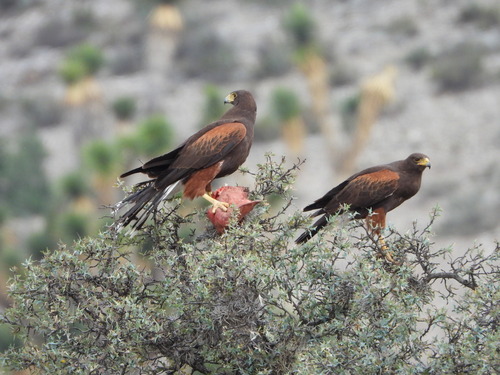
The closest relatives of the Crane Hawk that you can see in Guayaquil (family Accipitridae, Hawks, Eagles, and Kites) are Harris' Hawk (about 20%), Short-tailed Hawk (about 10%) and Snail Kite (about 10%), with each one's daily chance of a sighting.

Where does the Crane Hawk sighting chance come from?

GBIF citizen-science records

It is estimated from how often the Crane Hawk is recorded against all the birds logged in Guayaquil (17 verified sightings), calibrated against known sighting rates. Figures are rounded to the nearest 10% because citizen-science data supports honest approximations, not decimals, and months with records from fewer than five people show "—". How it works.

← Back to Guayaquil