


Completed


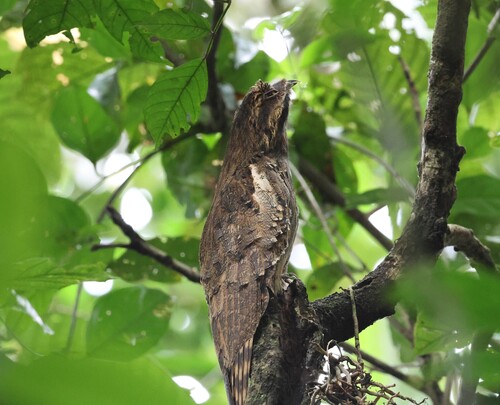
Common Potoo
Nyctibius griseus
Silhouette: Dominic Sherony (photo) and Albertonykus (silhouette) · PhyloPic
- KingdomAnimalia (Animals)
- PhylumChordata (Chordates)
- ClassAves (Birds)
- OrderNyctibiiformes (Potoos)
- FamilyNyctibiidae (Potoos)
- GenusNyctibius (Typical Potoos)
- SpeciesNyctibius griseus (Common Potoo)
In 3 days ~20% in a week ~40%
487 Verified sightings at Iguazú National Park From 2019 to 2026
4,191 In all 39 parks
October Best month
🌅 Crepuscular When it's spotted
About the Common Potoo
The common potoo (Nyctibius griseus), also known as the kakuy or urutaú, is one of seven species of birds within the genus Nyctibius. It is notable for its large, yellow eyes and a wide mouth. Potoos are nocturnal and are related to nightjars and frogmouths. They lack the characteristic bristles around the mouths of true nightjars.
The common potoo was formally described in 1789 by the German naturalist Johann Friedrich Gmelin in his revised and expanded edition of Carl Linnaeus's Systema Naturae. He placed it with all the nightjar-like species in the genus Caprimulgus and coined the binomial name Caprimulgus griseus. Gmelin based his description on "L'engoulevent gris" from Cayenne that had been described from a preserved specimen in 1779 by the French polymath Georges-Louis Leclerc, Comte de Buffon. The common potoo is now one of the seven potoos placed in the genus Nyctibius that was introduced in 1816 by the French ornithologist Louis Pierre Vieillot. The genus name is from the Ancient Greek nuktibios meaning "night-feeding", from nux night and bios "life". The specific epithet griseus is Medieval Latin meaning "grey".
The common potoo was formerly considered to be... Wikipedia →
Recent sightings of Common Potoo in Iguazú National Park
LIVEiNaturalistGlobal Distribution
Parks Where Found
Cities Where Found
| # | City | Country | Daily sighting probability |
|---|---|---|---|
| 1 | Cali | 🇨🇴 Colombia | |
| 2 | Campo Grande | 🇧🇷 Brazil | |
| 3 | Buenos Aires | 🇦🇷 Argentina | |
| 4 | Fortaleza | 🇧🇷 Brazil | |
| 5 | Vitória | 🇧🇷 Brazil | |
| 6 | Panama City | 🇵🇦 Panama | |
| 7 | Guayaquil | 🇪🇨 Ecuador | |
| 8 | Goiânia | 🇧🇷 Brazil | |
| 9 | Asuncion | 🇵🇾 Paraguay | |
| 10 | São Paulo | 🇧🇷 Brazil |
Zoos & Centres Where Found
| # | Zoo / Centre | Country | |
|---|---|---|---|
| 1 | Parque das Aves | 🇧🇷 Brazil |
Closest Relatives at Iguazú National Park


Before you go
What are the chances of seeing a Common Potoo in Iguazú National Park?
With luck
About 10% of wildlife watchers report a Common Potoo sighting in Iguazú National Park on a given day, based on 487 verified sightings from GBIF citizen-science data from 2019 to 2026. It is the 142nd most-seen of the 343 birds we can rate there. Over three days the chance rises to about 20%, and over a week to about 40%, if each day is a fresh chance.
When is the best time to see a Common Potoo in Iguazú National Park?
February and October
In those months about 20% of wildlife watchers report a Common Potoo in Iguazú National Park on a given day, against under 5% in May to August, the lowest months.
What time of day is best to see a Common Potoo?
Between 6 and 9 pm
Across all the parks we cover, that three-hour window holds the most Common Potoo sightings with a recorded time, and about 6 in 10 of them come between 6 am and 6 pm: it is most active around dawn and dusk.
Is Iguazú National Park the best place to see a Common Potoo?
8th of 39
Of the 39 parks where we can rate Common Potoo sightings, Iguazú National Park ranks 8th at about 10%. The best odds are in Caroni Swamp (Trinidad and Tobago, about 20%), Cuyabeno Wildlife Reserve (Ecuador, about 20%) and Yasuní National Park (Ecuador, about 10%).
Where does the Common Potoo sighting chance come from?
GBIF citizen-science records
It is estimated from how often the Common Potoo is recorded against all the birds logged in Iguazú National Park (487 verified sightings from 2019 to 2026), calibrated against known sighting rates. Figures are rounded to the nearest 10% because citizen-science data supports honest approximations, not decimals, and months with records from fewer than five people show "—". How it works.
