Lesser Yellowlegs

Lesser Yellowlegs

Tringa flavipes

Silhouette: Andy Wilson · PhyloPic

LCNTVUVulnerableENCR
Daily sighting probability ~20% · Possible
at Celestún Biosphere Reserve

In 3 days ~60% in a week ~90%

416 Verified sightings at Celestún Biosphere Reserve From 2019 to 2026
7,152 In all 55 parks
April Best month
☀️ Diurnal When it's spotted

About the Lesser Yellowlegs

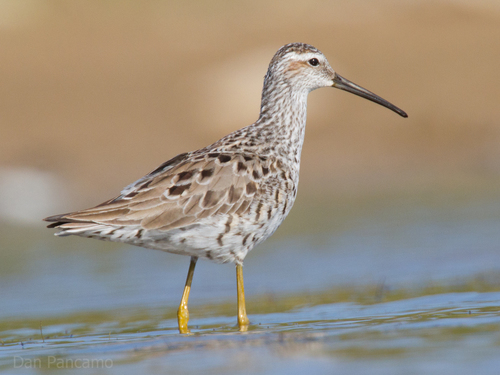
The lesser yellowlegs (Tringa flavipes) is a medium-sized shorebird. It breeds in the boreal forest region of North America, and winters from the south of North America, to the far south of South America. The lesser yellowlegs was formally described in 1789 by the German naturalist Johann Friedrich Gmelin in his revised and expanded edition of Carl Linnaeus's Systema Naturae. He placed it in the genus Scolopax and coined the binomial name Scolopax flavipes. Gmelin based his description on the "yellow shanks" seen in the province of New York in autumn that had been described in 1785 by both the English ornithologist John Latham and the Welsh naturalist Thomas Pennant. The lesser yellowlegs is now placed in the genus Tringa that was introduced in 1758 by the Swedish naturalist Carl Linnaeus in the tenth edition of his Systema Naturae. The name Tringa is the Neo-Latin word given to the green sandpiper by the Italian naturalist Ulisse Aldrovandi in 1603 based on Ancient Greek trungas, a thrush-sized, white-rumped, tail-bobbing wading bird mentioned by Aristotle. The specific epithet flavipes combines the Latin flavus meaning "yellow" with pes meaning "foot". The species is... Wikipedia →

Sounds

Call0:06

United States · 2023

© Tony Rinaud · XC1138540 · CC BY-NC-SA 4.0

Alarm call0:09

United States · 2022

© AUDEVARD Aurélien · XC1048819 · CC BY-NC-SA 4.0

Recording0:17

Chile · 2023

© Fernando del Valle · XC798882 · CC BY-NC-SA 4.0

Global Distribution

Parks Where Found

# Park Country Daily sighting probability
1 Merritt Island National Wildlife Refuge 🇺🇸 United States
~30%
2 Wood Buffalo National Park 🇨🇦 Canada
~30%
3 Celestún Biosphere Reserve 🇲🇽 Mexico
~20%
4 Katmai National Park 🇺🇸 United States
~20%
5 Ciénaga de Zapata 🇨🇺 Cuba
~20%
6 Caroni Swamp 🇹🇹 Trinidad and Tobago
~20%
7 Padre Island National Seashore 🇺🇸 United States
~20%
8 Wrangell-St. Elias National Park 🇺🇸 United States
~20%
9 El Vizcaíno Biosphere Reserve 🇲🇽 Mexico
~20%
10 Kluane National Park 🇨🇦 Canada
~10%
11 Ría Lagartos Biosphere Reserve 🇲🇽 Mexico
~10%
12 Elk Island National Park 🇨🇦 Canada
~10%
13 Isla del Coco National Park 🇨🇷 Costa Rica
~10%
14 Palo Verde National Park 🇨🇷 Costa Rica
~10%
15 Jaragua National Park 🇩🇴 Dominican Republic
~10%
16 Lauca National Park 🇨🇱 Chile
~10%
17 Everglades National Park 🇺🇸 United States
~10%
18 El Impenetrable National Park 🇦🇷 Argentina
~10%
19 Denali National Park 🇺🇸 United States
<5%
20 Arrecifes de Cozumel National Park 🇲🇽 Mexico
<5%
21 Point Pelee National Park 🇨🇦 Canada
<5%
22 Iberá National Park 🇦🇷 Argentina
<5%
23 West Coast National Park 🇿🇦 South Africa
<5%
24 Big Cypress National Preserve 🇺🇸 United States
<5%
25 Yasuní National Park 🇪🇨 Ecuador
<5%
26 Cuyabeno Wildlife Reserve 🇪🇨 Ecuador
<5%
27 Cape Breton Highlands National Park 🇨🇦 Canada
<5%
28 Gros Morne National Park 🇨🇦 Canada
<5%
29 Carara National Park 🇨🇷 Costa Rica
<5%
30 Bastimentos Island National Marine Park 🇵🇦 Panama
<5%
31 Lago de Yojoa 🇭🇳 Honduras
<5%
32 Tortuguero National Park 🇨🇷 Costa Rica
<5%
33 Gandoca-Manzanillo Wildlife Refuge 🇨🇷 Costa Rica
<5%
34 Parque Estadual Encontro das Águas 🇧🇷 Brazil
<5%
35 Las Baulas Marine National Park 🇨🇷 Costa Rica
<5%
36 Galápagos Islands 🇪🇨 Ecuador
<5%
37 La Amistad International Park (Panama) 🇵🇦 Panama
<5%
38 Pacific Rim National Park Reserve 🇨🇦 Canada
<5%
39 Los Haitises National Park 🇩🇴 Dominican Republic
<5%
40 Channel Islands National Park 🇺🇸 United States
<5%
41 Manu National Park 🇵🇪 Peru
<5%
42 Piedras Blancas National Park 🇨🇷 Costa Rica
<5%
43 Badlands National Park 🇺🇸 United States
<5%
44 Banff National Park 🇨🇦 Canada
<5%
45 Tambopata National Reserve 🇵🇪 Peru
<5%
46 Acadia National Park 🇺🇸 United States
<5%
47 Corcovado National Park 🇨🇷 Costa Rica
<5%
48 Manuel Antonio National Park 🇨🇷 Costa Rica
<5%
49 Cahuita National Park 🇨🇷 Costa Rica
<5%
50 Great Bear Rainforest 🇨🇦 Canada
<5%
51 Parque Natural Metropolitano 🇵🇦 Panama
<5%
52 Yellowstone National Park 🇺🇸 United States
<5%
53 Big Bend National Park 🇺🇸 United States
<5%
54 Soberanía National Park 🇵🇦 Panama
<5%
55 Arenal Volcano National Park 🇨🇷 Costa Rica
<5%

Cities Where Found

# City Country Daily sighting probability
1 Anchorage 🇺🇸 United States
~20%
2 São Luís 🇧🇷 Brazil
~20%
3 Cochabamba 🇧🇴 Bolivia
~20%
4 Campinas 🇧🇷 Brazil
~20%
5 Santa Cruz de la Sierra 🇧🇴 Bolivia
~10%
6 Panama City 🇵🇦 Panama
~10%
7 León 🇲🇽 México
~10%
8 Lima 🇵🇪 Peru
~10%
9 Rosario 🇦🇷 Argentina
~10%
10 Fortaleza 🇧🇷 Brazil
~10%

Zoos & Centres Where Found

# Zoo / Centre Country
1 Natura Artis Magistra 🇳🇱 Netherlands In captivity
2 Montreal Biodome 🇨🇦 Canada In captivity

Before you go

What are the chances of seeing a Lesser Yellowlegs in Celestún Biosphere Reserve?

Possible

About 20% of wildlife watchers report a Lesser Yellowlegs sighting in Celestún Biosphere Reserve on a given day, based on 416 verified sightings from GBIF citizen-science data from 2019 to 2026. It is the 57th most-seen of the 297 birds we can rate there. Over three days the chance rises to about 60%, and over a week to about 90%, if each day is a fresh chance.

When is the best time to see a Lesser Yellowlegs in Celestún Biosphere Reserve?

March–April and October–November

In those months about 30% of wildlife watchers report a Lesser Yellowlegs in Celestún Biosphere Reserve on a given day, against about 10% in June and July, the lowest months.

What time of day is best to see a Lesser Yellowlegs?

Between 8 and 11 am

Across all the parks we cover, that three-hour window holds the most Lesser Yellowlegs sightings with a recorded time, and about 9 in 10 of them come between 6 am and 6 pm: it is a daytime animal.

Is Celestún Biosphere Reserve the best place to see a Lesser Yellowlegs?

3rd of 55

Of the 55 parks where we can rate Lesser Yellowlegs sightings, Celestún Biosphere Reserve ranks 3rd at about 20%. The best odds are in Merritt Island National Wildlife Refuge (United States, about 30%) and Wood Buffalo National Park (Canada, about 30%).

Which relatives of the Lesser Yellowlegs live in Celestún Biosphere Reserve?

Same genus: Tringa

The closest relatives of the Lesser Yellowlegs that you can see in Celestún Biosphere Reserve (genus Tringa, Shanks, Tattlers, and Allies) are Willet (about 40%) and Greater Yellowlegs (about 20%), with each one's daily chance of a sighting.

Where does the Lesser Yellowlegs sighting chance come from?

GBIF citizen-science records

It is estimated from how often the Lesser Yellowlegs is recorded against all the birds logged in Celestún Biosphere Reserve (416 verified sightings from 2019 to 2026), calibrated against known sighting rates. Figures are rounded to the nearest 10% because citizen-science data supports honest approximations, not decimals, and months with records from fewer than five people show "—". How it works.

← Back to Celestún Biosphere Reserve