


Completed


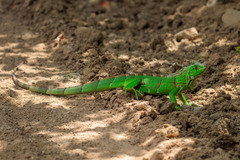


Green Iguana
Iguana iguana
Silhouette: Jack Mayer Wood · PhyloPic
- KingdomAnimalia (Animals)
- PhylumChordata (Chordates)
- ClassSquamata
- FamilyIguanidae (Iguanas and Chuckwallas)
- GenusIguana (Typical Iguanas)
- SpeciesIguana iguana (Green Iguana)
In 3 days ~70% in a week ~90%
189 Verified sightings at Parque Natural Metropolitano From 2019 to 2026
4,264 In all 44 parks
May Best month
☀️ Diurnal When it's spotted
About the Green Iguana
The green iguana (Iguana iguana), also known as the American iguana or the common green iguana, is a large, arboreal, mostly herbivorous species of lizard of the genus Iguana. Usually, this animal is simply called the iguana. The green iguana ranges over a large geographic area; it is native from southern Brazil and Paraguay as far north as Mexico. It is highly invasive in many subtropical and tropical environments throughout the world.
A herbivore, it has adapted significantly with regard to locomotion and osmoregulation as a result of its diet. It grows to 1.7 m (5.6 ft) in length from head to tail, although a few specimens have grown more than 2 m (6.6 ft) with bodyweights upward of 9 kg (20 lb).
Although this species is commonly kept as a pet because of its disposition and coloration, it can be challenging to care for properly. Its requirements for adequate space, lighting, and heat can be difficult for hobbyists to meet.
The species was first officially described by Swedish botanist Carl Linnaeus in 1758. Since then, numerous subspecies have been identified, but later classified as merely regional variants of the same species. Using nuclear and mitochondrial DNA... Wikipedia →
Sounds
Recording0:22
Costa Rica · 2025
© johnavery · iNaturalist · CC BY-NC 4.0
Recording0:17
Venezuela · 2026
© Marco Romero · iNaturalist · CC BY-NC 4.0
Recording0:10
Taiwan · 2024
© libertine soup · iNaturalist · CC BY-NC 4.0
Recent sightings of Green Iguana in Parque Natural Metropolitano
LIVEiNaturalistGlobal Distribution
Parks Where Found
Cities Where Found
| # | City | Country | Daily sighting probability |
|---|---|---|---|
| 1 | Guayaquil | 🇪🇨 Ecuador | |
| 2 | Cali | 🇨🇴 Colombia | |
| 3 | Barranquilla | 🇨🇴 Colombia | |
| 4 | Manaus | 🇧🇷 Brazil | |
| 5 | São Luís | 🇧🇷 Brazil | |
| 6 | Valencia | 🇻🇪 Venezuela | |
| 7 | Miami | 🇺🇸 United States | |
| 8 | Natal | 🇧🇷 Brazil | |
| 9 | Belém | 🇧🇷 Brazil | |
| 10 | João Pessoa | 🇧🇷 Brazil |
Zoos & Centres Where Found
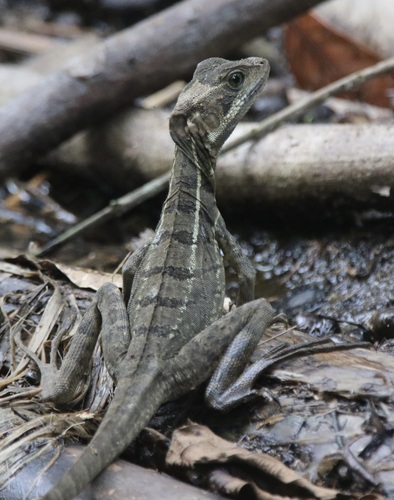
Closest Relatives at Parque Natural Metropolitano




Before you go
What are the chances of seeing a Green Iguana in Parque Natural Metropolitano?
Possible
About 30% of wildlife watchers report a Green Iguana sighting in Parque Natural Metropolitano on a given day, based on 189 verified sightings from GBIF citizen-science data from 2019 to 2026. It is the 2nd most-seen of the 29 reptiles we can rate there. Over three days the chance rises to about 70%, and over a week to about 90%, if each day is a fresh chance.
When is the best time to see a Green Iguana in Parque Natural Metropolitano?
April–May and November
In those months about 40% of wildlife watchers report a Green Iguana in Parque Natural Metropolitano on a given day, against about 10% in September, the lowest month.
What time of day is best to see a Green Iguana?
Between 11 am and 2 pm
Across all the parks we cover, that three-hour window holds the most Green Iguana sightings with a recorded time, and about 9 in 10 of them come between 6 am and 6 pm: it is a daytime animal.
Is Parque Natural Metropolitano the best place to see a Green Iguana?
31st of 44
Of the 44 parks where we can rate Green Iguana sightings, Parque Natural Metropolitano ranks 31st at about 30%. The best odds are in Tortuguero National Park (Costa Rica, about 80%), Parque Estadual Encontro das Águas (Brazil, about 70%) and Tayrona National Natural Park (Colombia, about 70%). All parks ranked.
Where does the Green Iguana sighting chance come from?
GBIF citizen-science records
It is estimated from how often the Green Iguana is recorded against all the reptiles logged in Parque Natural Metropolitano (189 verified sightings from 2019 to 2026), calibrated against known sighting rates. Figures are rounded to the nearest 10% because citizen-science data supports honest approximations, not decimals, and months with records from fewer than five people show "—". How it works.
