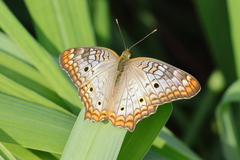
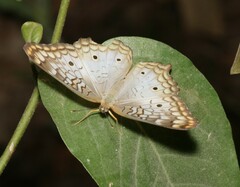
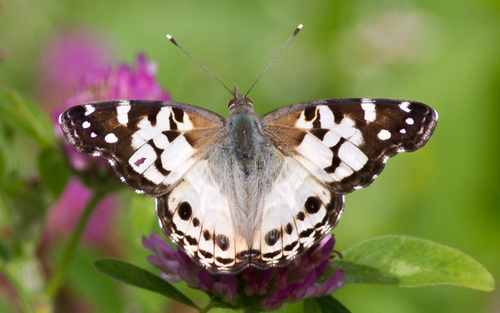
White Peacock

White Peacock

Anartia jatrophae

Daily sighting probability ~10% · With luck
at Padre Island National Seashore

In 3 days ~40% in a week ~70%

17 Verified sightings at Padre Island National Seashore From 2019 to 2026
2,443 In all 52 parks
September Best month
☀️ Diurnal When it's spotted

About the White Peacock

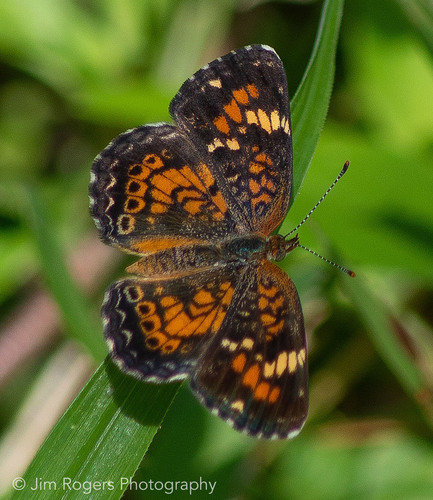
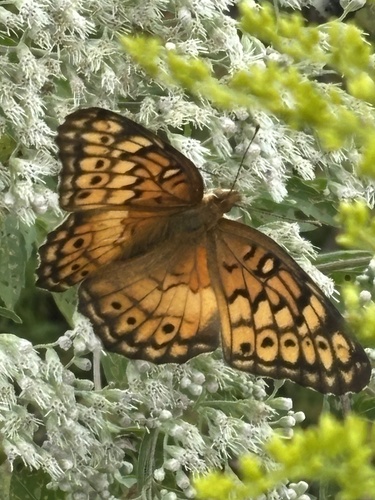
Anartia jatrophae, the white peacock, is a species of butterfly found in the southeastern United States, Central America, and throughout much of South America. The white peacock's larval hosts are water hyssop (Bacopa monnieri), lemon bacopa (Bacopa caroliniensis), tropical waterhyssop (Bacopa innominata), frogfruit (Phyla nodiflora), lanceleaf frogfruit (Phyla lanceolata), and Carolina wild petunia (Ruellia caroliniana).

The males of the species display a unique territorial behavior, in which they stake out a territory typically 15 meters in diameter that contains larval host plants. They perch in this area and aggressively protect it from other insects and other male white peacocks. Wikipedia →

Global Distribution

Parks Where Found

# Park Country Daily sighting probability
1 Los Haitises National Park 🇩🇴 Dominican Republic
~50%
2 Big Cypress National Preserve 🇺🇸 United States
~40%
3 Everglades National Park 🇺🇸 United States
~40%
4 Piedras Blancas National Park 🇨🇷 Costa Rica
~40%
5 Palo Verde National Park 🇨🇷 Costa Rica
~40%
6 Iberá National Park 🇦🇷 Argentina
~40%
7 Ciénaga de Zapata 🇨🇺 Cuba
~40%
8 El Impenetrable National Park 🇦🇷 Argentina
~40%
9 Biotopo Cerro Cahuí 🇬🇹 Guatemala
~40%
10 Chagres National Park 🇵🇦 Panama
~40%
11 Merritt Island National Wildlife Refuge 🇺🇸 United States
~40%
12 Blue and John Crow Mountains National Park 🇯🇲 Jamaica
~40%
13 Soberanía National Park 🇵🇦 Panama
~30%
14 Anavilhanas National Park 🇧🇷 Brazil
~30%
15 Bastimentos Island National Marine Park 🇵🇦 Panama
~30%
16 Ría Lagartos Biosphere Reserve 🇲🇽 Mexico
~30%
17 Tortuguero National Park 🇨🇷 Costa Rica
~30%
18 Tikal National Park 🇬🇹 Guatemala
~30%
19 Caroni Swamp 🇹🇹 Trinidad and Tobago
~30%
20 Gandoca-Manzanillo Wildlife Refuge 🇨🇷 Costa Rica
~30%
21 Braulio Carrillo National Park 🇨🇷 Costa Rica
~30%
22 Marino Ballena National Park 🇨🇷 Costa Rica
~30%
23 Serra dos Órgãos National Park 🇧🇷 Brazil
~20%
24 Arrecifes de Cozumel National Park 🇲🇽 Mexico
~20%
25 Pico Bonito National Park 🇭🇳 Honduras
~20%
26 Manu National Park 🇵🇪 Peru
~20%
27 Tijuca National Park 🇧🇷 Brazil
~20%
28 Carara National Park 🇨🇷 Costa Rica
~20%
29 Las Baulas Marine National Park 🇨🇷 Costa Rica
~20%
30 Corcovado National Park 🇨🇷 Costa Rica
~20%
31 Parque Natural Metropolitano 🇵🇦 Panama
~20%
32 Amacayacu National Natural Park 🇨🇴 Colombia
~20%
33 Ostional Wildlife Refuge 🇨🇷 Costa Rica
~20%
34 La Amistad International Park (Panama) 🇵🇦 Panama
~20%
35 El Palmar National Park 🇦🇷 Argentina
~20%
36 Cumbres de Monterrey National Park 🇲🇽 Mexico
~20%
37 Sian Ka'an Biosphere Reserve 🇲🇽 Mexico
~20%
38 Padre Island National Seashore 🇺🇸 United States
~10%
39 Masaya Volcano National Park 🇳🇮 Nicaragua
~10%
40 Main Ridge Forest Reserve 🇹🇹 Trinidad and Tobago
~10%
41 Cahuita National Park 🇨🇷 Costa Rica
~10%
42 Calakmul Biosphere Reserve 🇲🇽 Mexico
~10%
43 Farallones de Cali National Natural Park 🇨🇴 Colombia
~10%
44 Tenorio Volcano National Park 🇨🇷 Costa Rica
~10%
45 Bahía de Loreto National Park 🇲🇽 Mexico
~10%
46 Manuel Antonio National Park 🇨🇷 Costa Rica
~10%
47 Arenal Volcano National Park 🇨🇷 Costa Rica
~10%
48 Cañón del Sumidero National Park 🇲🇽 Mexico
~10%
49 Iguazú National Park 🇦🇷 Argentina
~10%
50 Iguaçu National Park 🇧🇷 Brazil
~10%
51 Tapantí-Macizo de la Muerte National Park 🇨🇷 Costa Rica
~10%
52 Big Bend National Park 🇺🇸 United States
~10%

Cities Where Found

# City Country Daily sighting probability
1 Santa Cruz de la Sierra 🇧🇴 Bolivia
~50%
2 São Luís 🇧🇷 Brazil
~50%
3 Salvador 🇧🇷 Brazil
~40%
4 Barranquilla 🇨🇴 Colombia
~40%
5 Santo Domingo 🇩🇴 Dominican Republic
~40%
6 Goiânia 🇧🇷 Brazil
~40%
7 Valencia 🇻🇪 Venezuela
~40%
8 João Pessoa 🇧🇷 Brazil
~30%
9 Havana 🇨🇺 Cuba
~30%
10 Recife 🇧🇷 Brazil
~30%

Before you go

What are the chances of seeing a White Peacock in Padre Island National Seashore?

With luck

About 10% of wildlife watchers report a White Peacock sighting in Padre Island National Seashore on a given day, based on 17 verified sightings from GBIF citizen-science data from 2019 to 2026. It is the 19th most-seen of the 74 insects we can rate there. Over three days the chance rises to about 40%, and over a week to about 70%, if each day is a fresh chance.

When is the best time to see a White Peacock in Padre Island National Seashore?

September

In that month about 40% of wildlife watchers report a White Peacock in Padre Island National Seashore on a given day, against under 5% in December to June, the lowest months. That is one of Padre Island National Seashore's wettest months, with about 120 mm of rain against 40 mm in February.

What time of day is best to see a White Peacock?

Between 10 am and 1 pm

Across all the parks we cover, that three-hour window holds the most White Peacock sightings with a recorded time, and about 9 in 10 of them come between 6 am and 6 pm: it is a daytime animal.

Which relatives of the White Peacock live in Padre Island National Seashore?

Same family: Nymphalidae

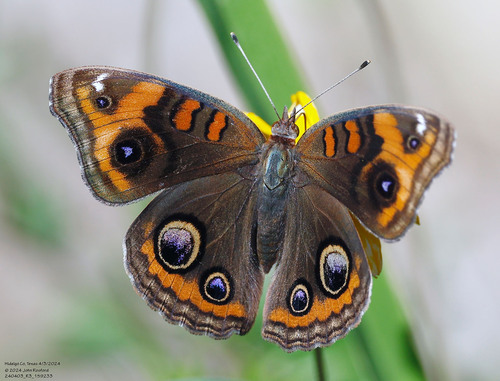
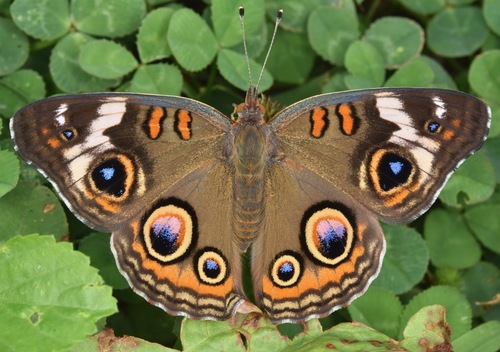
The closest relatives of the White Peacock that you can see in Padre Island National Seashore (family Nymphalidae, Brush-footed Butterflies) are Twintip Buckeye (about 40%), Common Buckeye (about 40%) and Phaon Crescent (about 30%), with each one's daily chance of a sighting.

Where does the White Peacock sighting chance come from?

GBIF citizen-science records

It is estimated from how often the White Peacock is recorded against all the insects logged in Padre Island National Seashore (17 verified sightings from 2019 to 2026), calibrated against known sighting rates. Figures are rounded to the nearest 10% because citizen-science data supports honest approximations, not decimals, and months with records from fewer than five people show "—". How it works.

← Back to Padre Island National Seashore