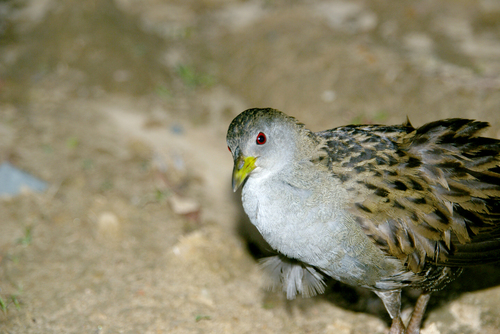
American Purple Gallinule

American Purple Gallinule

Porphyrio martinica

Silhouette: Sheatherius · PhyloPic

Daily sighting probability <5% · Rare
at Rio de Janeiro

In 3 days <5% in a week ~10%

36 Verified sightings at Rio de Janeiro
15,625 In all 47 parks From 2019 to 2026
August Best month
☀️ Diurnal When it's spotted

About the American Purple Gallinule

The purple gallinule (Porphyrio martinica) is a species of swamphen found in the Americas. It is in the order Gruiformes, meaning "crane-like", an order which also contains cranes, rails, and crakes. The purple gallinule is a rail species, placing it into the family Rallidae. It is also known locally as the yellow-legged gallinule. The specific name martinica denotes "of Martinique".

The purple gallinule is a medium-sized rail, measuring 26–37 cm (10–15 in) in length, spanning 50–61 cm (20–24 in) across the wings and weighing 141–305 g (5.0–10.8 oz). Males, averaging 257 g (9.1 oz) in mass, are slightly larger than females, at 215 g (7.6 oz) on average. An adult purple gallinule has purple-blue plumage that will shine green and turquoise when in good lighting. Adults also have a pale blue shield on their forehead, which connects with the red and yellow bill. Darkness or low light can dim the bright purple-blue plumage of the adult to make them look dusky or brownish, although the forehead shield color differentiates them from similar species such as common gallinules. Immature purple gallinules are a brown-bronze color, with purple feathers on chest, and the bill and... Wikipedia →

Sounds

Call1:14

Brazil · 2026

© JAYRSON ARAUJO DE OLIVEIRA · XC1080165 · CC BY-NC-SA 4.0

Alarm call0:08

Costa Rica · 2022

© AUDEVARD Aurélien · XC1071737 · CC BY-NC-SA 4.0

Flight call0:08

Ecuador · 2003

© John V. Moore · XC257459 · CC BY-NC-SA 4.0

Global Distribution

Parks Where Found

# Park Country Daily sighting probability
1 Palo Verde National Park 🇨🇷 Costa Rica
~40%
2 Lago de Yojoa 🇭🇳 Honduras
~40%
3 Biotopo Cerro Cahuí 🇬🇹 Guatemala
~40%
4 Soberanía National Park 🇵🇦 Panama
~40%
5 Tortuguero National Park 🇨🇷 Costa Rica
~30%
6 Piedras Blancas National Park 🇨🇷 Costa Rica
~30%
7 Everglades National Park 🇺🇸 United States
~20%
8 Manu National Park 🇵🇪 Peru
~20%
9 Cerro Azul Meámbar National Park 🇭🇳 Honduras
~20%
10 Caroni Swamp 🇹🇹 Trinidad and Tobago
~20%
11 Manuel Antonio National Park 🇨🇷 Costa Rica
~10%
12 Carara National Park 🇨🇷 Costa Rica
~10%
13 Iberá National Park 🇦🇷 Argentina
~10%
14 La Amistad International Park (Panama) 🇵🇦 Panama
~10%
15 Bastimentos Island National Marine Park 🇵🇦 Panama
~10%
16 Tikal National Park 🇬🇹 Guatemala
~10%
17 Ciénaga de Zapata 🇨🇺 Cuba
~10%
18 Amacayacu National Natural Park 🇨🇴 Colombia
~10%
19 San Lorenzo Protected Forest 🇵🇦 Panama
~10%
20 Braulio Carrillo National Park 🇨🇷 Costa Rica
~10%
21 Marino Ballena National Park 🇨🇷 Costa Rica
<5%
22 Big Cypress National Preserve 🇺🇸 United States
<5%
23 Chapada Diamantina National Park 🇧🇷 Brazil
<5%
24 Santa Rosa National Park 🇨🇷 Costa Rica
<5%
25 Gandoca-Manzanillo Wildlife Refuge 🇨🇷 Costa Rica
<5%
26 Parque Estadual Encontro das Águas 🇧🇷 Brazil
<5%
27 Celaque National Park 🇭🇳 Honduras
<5%
28 Galápagos Islands 🇪🇨 Ecuador
<5%
29 Los Haitises National Park 🇩🇴 Dominican Republic
<5%
30 Calakmul Biosphere Reserve 🇲🇽 Mexico
<5%
31 Main Ridge Forest Reserve 🇹🇹 Trinidad and Tobago
<5%
32 Corcovado National Park 🇨🇷 Costa Rica
<5%
33 Arrecifes de Cozumel National Park 🇲🇽 Mexico
<5%
34 Iguaçu National Park 🇧🇷 Brazil
<5%
35 Merritt Island National Wildlife Refuge 🇺🇸 United States
<5%
36 Chagres National Park 🇵🇦 Panama
<5%
37 Sierra de la Macarena National Park 🇨🇴 Colombia
<5%
38 Arenal Volcano National Park 🇨🇷 Costa Rica
<5%
39 Yasuní National Park 🇪🇨 Ecuador
<5%
40 Iguazú National Park 🇦🇷 Argentina
<5%
41 Ría Lagartos Biosphere Reserve 🇲🇽 Mexico
<5%
42 Las Baulas Marine National Park 🇨🇷 Costa Rica
<5%
43 Sian Ka'an Biosphere Reserve 🇲🇽 Mexico
<5%
44 Tambopata National Reserve 🇵🇪 Peru
<5%
45 Parque Natural Metropolitano 🇵🇦 Panama
<5%
46 Tenorio Volcano National Park 🇨🇷 Costa Rica
<5%
47 Table Mountain National Park 🇿🇦 South Africa
<5%

Cities Where Found

# City Country Daily sighting probability
1 Bogota 🇨🇴 Colombia
~30%
2 Fortaleza 🇧🇷 Brazil
~20%
3 Recife 🇧🇷 Brazil
~20%
4 Barranquilla 🇨🇴 Colombia
~20%
5 Santa Cruz de la Sierra 🇧🇴 Bolivia
~20%
6 Miami 🇺🇸 United States
~10%
7 San Pedro Sula 🇭🇳 Honduras
~10%
8 Maracaibo 🇻🇪 Venezuela
<5%
9 Panama City 🇵🇦 Panama
<5%
10 João Pessoa 🇧🇷 Brazil
<5%

Zoos & Centres Where Found

# Zoo / Centre Country
1 Parque das Aves 🇧🇷 Brazil In captivity
2 Toronto Zoo 🇨🇦 Canada In captivity
3 Phoenix Zoo 🇺🇸 United States In captivity
4 Aviario Nacional de Colombia 🇨🇴 Colombia In captivity
5 Mangal das Garças 🇧🇷 Brazil In captivity
6 Parque Zoológico Miguel Ángel de Quevedo 🇲🇽 Mexico In captivity
7 Parque Zoobotânico Orquidário Municipal de Santos 🇧🇷 Brazil In captivity
8 Parque museo La Venta 🇲🇽 Mexico In captivity
9 Wiwa Quito 🇪🇨 Ecuador In captivity

Before you go

What are the chances of seeing an American Purple Gallinule in Rio de Janeiro?

Rare

Under 5% of wildlife watchers report an American Purple Gallinule sighting in Rio de Janeiro on a given day, based on 36 verified sightings from GBIF citizen-science data. It is the 191st most-seen of the 278 birds we can rate there. Over three days the chance rises to under 5%, and over a week to about 10%, if each day is a fresh chance.

When is the best time to see an American Purple Gallinule in Rio de Janeiro?

Any time of year

In every month with enough records, under 5% of wildlife watchers report an American Purple Gallinule in Rio de Janeiro on a given day, so our monthly data shows no clear season.

What time of day is best to see an American Purple Gallinule?

Between 8 and 11 am

Across all the parks we cover, that three-hour window holds the most American Purple Gallinule sightings with a recorded time, and about 9 in 10 of them come between 6 am and 6 pm: it is a daytime animal.

Is Rio de Janeiro the best place to see an American Purple Gallinule?

24th of 33

Of the 33 cities where we can rate American Purple Gallinule sightings, Rio de Janeiro ranks 24th at under 5%. The best odds are in Bogota (Colombia, about 30%), Fortaleza (Brazil, about 20%) and Recife (Brazil, about 20%).

Which relatives of the American Purple Gallinule live in Rio de Janeiro?

Same family: Rallidae

The closest relatives of the American Purple Gallinule that you can see in Rio de Janeiro (family Rallidae, Rails, Gallinules, and Coots) are Gray-cowled Wood-Rail (about 10%), Slaty-breasted Wood-Rail (about 10%) and Common Moorhen (about 10%), with each one's daily chance of a sighting.

Where does the American Purple Gallinule sighting chance come from?

GBIF citizen-science records

It is estimated from how often the American Purple Gallinule is recorded against all the birds logged in Rio de Janeiro (36 verified sightings), calibrated against known sighting rates. Figures are rounded to the nearest 10% because citizen-science data supports honest approximations, not decimals, and months with records from fewer than five people show "—". How it works.

← Back to Rio de Janeiro