Black-necked Stilt

Black-necked Stilt

Himantopus mexicanus

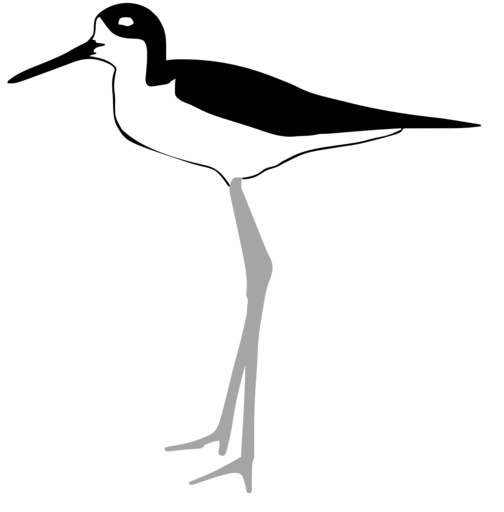
Silhouette: Edwin Price · PhyloPic

Daily sighting probability <5% · Rare
at Santa Rosa National Park

In 3 days ~10% in a week ~20%

24 Verified sightings at Santa Rosa National Park From 2019 to 2026
12,129 In all 50 parks
December Best month
☀️ Diurnal When it's spotted

About the Black-necked Stilt

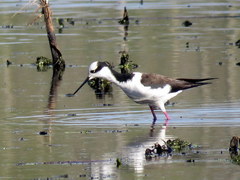
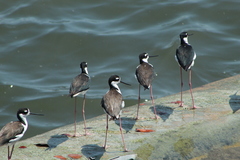
The black-necked stilt (Himantopus mexicanus), also called the pied stilt, is a locally abundant shorebird of North and South American wetlands and coastlines. It is found from the coastal areas of California through much of the interior western United States and along the Gulf of Mexico as far east as Florida, then south through Central America and the Caribbean to Brazil, Peru and the Galápagos Islands, with an isolated population, the Hawaiian stilt, in Hawaii. The northernmost populations, particularly those from inland, are migratory, wintering from the extreme south of the United States to southern Mexico, rarely as far south as Costa Rica; on the Baja California peninsula it is only found regularly in winter. Some authorities, including the IUCN, treat it as a synonym of Himantopus himantopus.

The black-necked stilt was formally described in 1776 as Charadrius mexicanus by the German zoologist Philipp Statius Müller. The species is now placed in the genus Himantopus that was introduced in 1760 by the French ornithologist Mathurin Jacques Brisson.

Three subspecies are recognised: Wikipedia →

Sounds

Call1:01

French Guiana · 2024

© Tristan Guillebot de Nerville · XC1139159 · CC BY-NC-SA 4.0

Alarm call0:41

Costa Rica · 2013

© Albert Lastukhin · XC1101811 · CC BY-NC-ND 4.0

Song0:21

Uruguay · 2013

© Pedro Rinaldi · XC824587 · CC BY-NC-SA 4.0

Global Distribution

Parks Where Found

# Park Country Daily sighting probability
1 Celestún Biosphere Reserve 🇲🇽 Mexico
~50%
2 Palo Verde National Park 🇨🇷 Costa Rica
~50%
3 Ría Lagartos Biosphere Reserve 🇲🇽 Mexico
~30%
4 Iberá National Park 🇦🇷 Argentina
~30%
5 Jaragua National Park 🇩🇴 Dominican Republic
~20%
6 Carara National Park 🇨🇷 Costa Rica
~20%
7 Ciénaga de Zapata 🇨🇺 Cuba
~20%
8 Arrecifes de Cozumel National Park 🇲🇽 Mexico
~20%
9 Galápagos Islands 🇪🇨 Ecuador
~20%
10 El Vizcaíno Biosphere Reserve 🇲🇽 Mexico
~20%
11 Caroni Swamp 🇹🇹 Trinidad and Tobago
~20%
12 Lago de Yojoa 🇭🇳 Honduras
~20%
13 Padre Island National Seashore 🇺🇸 United States
~10%
14 Merritt Island National Wildlife Refuge 🇺🇸 United States
~10%
15 El Impenetrable National Park 🇦🇷 Argentina
~10%
16 Bastimentos Island National Marine Park 🇵🇦 Panama
~10%
17 Everglades National Park 🇺🇸 United States
~10%
18 Cerro Azul Meámbar National Park 🇭🇳 Honduras
~10%
19 Los Haitises National Park 🇩🇴 Dominican Republic
~10%
20 Tortuguero National Park 🇨🇷 Costa Rica
~10%
21 Cañón del Sumidero National Park 🇲🇽 Mexico
<5%
22 Big Cypress National Preserve 🇺🇸 United States
<5%
23 Calakmul Biosphere Reserve 🇲🇽 Mexico
<5%
24 Montes Azules Biosphere Reserve 🇲🇽 Mexico
<5%
25 La Amistad International Park (Panama) 🇵🇦 Panama
<5%
26 Tayrona National Natural Park 🇨🇴 Colombia
<5%
27 Santa Rosa National Park 🇨🇷 Costa Rica
<5%
28 Las Baulas Marine National Park 🇨🇷 Costa Rica
<5%
29 Cahuita National Park 🇨🇷 Costa Rica
<5%
30 Henri Pittier National Park 🇻🇪 Venezuela
<5%
31 Parque Estadual Encontro das Águas 🇧🇷 Brazil
<5%
32 Sian Ka'an Biosphere Reserve 🇲🇽 Mexico
<5%
33 Death Valley National Park 🇺🇸 United States
<5%
34 Channel Islands National Park 🇺🇸 United States
<5%
35 Gandoca-Manzanillo Wildlife Refuge 🇨🇷 Costa Rica
<5%
36 Chagres National Park 🇵🇦 Panama
<5%
37 Machalilla National Park 🇪🇨 Ecuador
<5%
38 Manuel Antonio National Park 🇨🇷 Costa Rica
<5%
39 Soberanía National Park 🇵🇦 Panama
<5%
40 Elk Island National Park 🇨🇦 Canada
<5%
41 Yellowstone National Park 🇺🇸 United States
<5%
42 Grand Canyon National Park 🇺🇸 United States
<5%
43 Big Bend National Park 🇺🇸 United States
<5%
44 Zion National Park 🇺🇸 United States
<5%
45 Iguaçu National Park 🇧🇷 Brazil
<5%
46 Iguazú National Park 🇦🇷 Argentina
<5%
47 Piedras Blancas National Park 🇨🇷 Costa Rica
<5%
48 Arenal Volcano National Park 🇨🇷 Costa Rica
<5%
49 Saguaro National Park 🇺🇸 United States
<5%
50 Manu National Park 🇵🇪 Peru
<5%

Cities Where Found

# City Country Daily sighting probability
1 Ciudad Juárez 🇲🇽 México
~60%
2 Mesa 🇺🇸 United States
~50%
3 León 🇲🇽 México
~40%
4 Cochabamba 🇧🇴 Bolivia
~40%
5 Rosario 🇦🇷 Argentina
~20%
6 Panama City 🇵🇦 Panama
~20%
7 Barranquilla 🇨🇴 Colombia
~20%
8 Lima 🇵🇪 Peru
~20%
9 San Luis Potosí 🇲🇽 México
~20%
10 San Francisco 🇺🇸 United States
~20%

Zoos & Centres Where Found

# Zoo / Centre Country
1 Busch Gardens Tampa 🇺🇸 United States In captivity
2 Moscow Zoo 🇷🇺 Russia In captivity
3 National Zoological Park 🇺🇸 United States In captivity
4 ZooParc de Beauval 🇫🇷 France In captivity
5 Planckendael Zoo 🇧🇪 Belgium In captivity
6 Le Pal 🇫🇷 France In captivity
7 Ostrava Zoo 🇨🇿 Czechia In captivity
8 Minnesota Zoo 🇺🇸 United States In captivity
9 Ecological Center of Sonora 🇲🇽 Mexico In captivity
10 Milwaukee County Zoo 🇺🇸 United States In captivity
11 Phoenix Zoo 🇺🇸 United States In captivity
12 Louisville Zoo 🇺🇸 United States In captivity
13 Oklahoma City Zoo and Botanical Garden 🇺🇸 United States In captivity
14 Berlin Zoological Garden 🇩🇪 Germany In captivity
15 Paignton Zoo 🇬🇧 United Kingdom In captivity
16 Temaikén 🇦🇷 Argentina In captivity
17 ZooTampa 🇺🇸 United States In captivity
18 Fort Worth Zoo 🇺🇸 United States In captivity
19 Houston Zoo 🇺🇸 United States In captivity
20 Karlsruhe Zoo 🇩🇪 Germany In captivity
21 San Antonio Zoo 🇺🇸 United States In captivity
22 Cameron Park Zoo 🇺🇸 United States In captivity
23 Philadelphia Zoo 🇺🇸 United States In captivity
24 Fresno Chaffee Zoo 🇺🇸 United States In captivity
25 Honolulu Zoo 🇺🇸 United States In captivity
26 London Zoo 🇬🇧 United Kingdom In captivity
27 Ueno Zoo 🇯🇵 Japan In captivity
28 Riverbanks Zoo 🇺🇸 United States In captivity
29 Tier- und Freizeitpark Thüle 🇩🇪 Germany In captivity
30 Lincoln Park Zoo 🇺🇸 United States In captivity
31 Zamość Zoo 🇵🇱 Poland In captivity
32 Vogelpark Avifauna 🇳🇱 Netherlands In captivity
33 Aviario Nacional de Colombia 🇨🇴 Colombia In captivity
34 Odense Zoo 🇩🇰 Denmark In captivity
35 Kakegawa Kachoen 🇯🇵 Japan In captivity
36 Tierpark Hexentanzplatz 🇩🇪 Germany In captivity
37 Ueno Zoological Gardens (West Garden) 🇯🇵 Japan In captivity
38 Happy Hollow Park & Zoo 🇺🇸 United States In captivity
39 Bois de la Bâtie 🇨🇭 Switzerland In captivity
40 New York Aquarium 🇺🇸 United States In captivity
41 Chilean National Zoo 🇨🇱 Chile In captivity
42 Kobe Animal Kingdom 🇯🇵 Japan In captivity
43 Tierpark Limbach-Oberfrohna 🇩🇪 Germany In captivity
44 Tracy Aviary 🇺🇸 United States In captivity
45 Amazon World Zoo Park 🇬🇧 United Kingdom In captivity
46 Aquarium of the Pacific 🇺🇸 United States In captivity
47 Florida Aquarium 🇺🇸 United States In captivity
48 Monterey Bay Aquarium 🇺🇸 United States In captivity
49 National Aviary 🇺🇸 United States In captivity
50 Aquarium Berlin 🇩🇪 Germany In captivity

Before you go

What are the chances of seeing a Black-necked Stilt in Santa Rosa National Park?

Rare

Under 5% of wildlife watchers report a Black-necked Stilt sighting in Santa Rosa National Park on a given day, based on 24 verified sightings from GBIF citizen-science data from 2019 to 2026. It is the 170th most-seen of the 233 birds we can rate there. Over three days the chance rises to about 10%, and over a week to about 20%, if each day is a fresh chance.

When is the best time to see a Black-necked Stilt in Santa Rosa National Park?

May and December

In those months about 10% of wildlife watchers report a Black-necked Stilt in Santa Rosa National Park on a given day, against under 5% in January–April and June–November, the lowest months.

What time of day is best to see a Black-necked Stilt?

Between 8 and 11 am

Across all the parks we cover, that three-hour window holds the most Black-necked Stilt sightings with a recorded time, and about 9 in 10 of them come between 6 am and 6 pm: it is a daytime animal.

Which relatives of the Black-necked Stilt live in Santa Rosa National Park?

Same order: Charadriiformes

The closest relatives of the Black-necked Stilt that you can see in Santa Rosa National Park (order Charadriiformes, Shorebirds and Allies) are Hudsonian Whimbrel (about 20%), Spotted Sandpiper (about 10%) and Whimbrel (about 10%), with each one's daily chance of a sighting.

Where does the Black-necked Stilt sighting chance come from?

GBIF citizen-science records

It is estimated from how often the Black-necked Stilt is recorded against all the birds logged in Santa Rosa National Park (24 verified sightings from 2019 to 2026), calibrated against known sighting rates. Figures are rounded to the nearest 10% because citizen-science data supports honest approximations, not decimals, and months with records from fewer than five people show "—". How it works.

← Back to Santa Rosa National Park