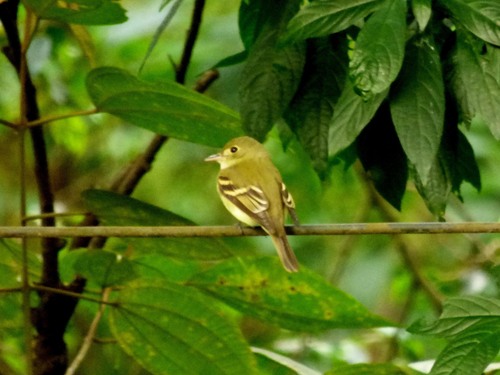
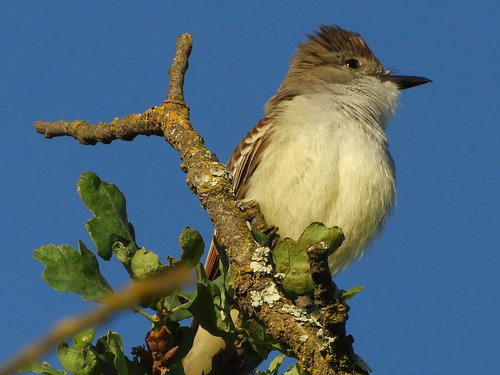
Fork-tailed Flycatcher

Fork-tailed Flycatcher

Tyrannus savana

Silhouette: Andy Wilson · PhyloPic

LCLeast ConcernNTVUENCR
Daily sighting probability <5% · Rare
at Washington

In 3 days ~10% in a week ~20%

19 Verified sightings at Washington
4,770 In all 40 parks From 2019 to 2026
May Best month
☀️ Diurnal When it's spotted

About the Fork-tailed Flycatcher

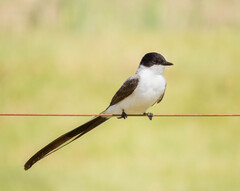
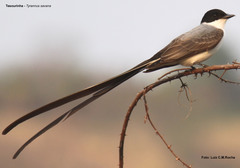
The fork-tailed flycatcher (Tyrannus savana) is a passerine bird of the tyrant flycatcher family and is a member of a genus typically referred to as kingbirds. Named for the long, forked tail, particularly in males, fork-tailed flycatchers are seen in shrubland, savanna, lightly forested and grassland areas, from southern Mexico to Argentina. They are frequently observed on conspicuous perches whence they sally after insect prey. Northern populations near southern Mexico tend to be permanent residents, while fork-tailed flycatchers that live further south are migrants with a reputation for wandering as far north as New Brunswick, Canada.

The fork-tailed flycatcher was described in 1760 by Mathurin Jacques Brisson under the French name "le tyran à queue fourchue" (lit. 'the fork-tailed tyrant') and then again in 1780 by Georges-Louis Buffon under the name "le savana" (because it lived in savannahs), but it was not until 1802 that François Marie Daudin coined the binomial name Tyrannus savana. The type locality is Suriname.

Four subspecies are recognised: Tyrannus savana monachus Hartlaub, 1844 – southern Mexico to Colombia, the Guianas, and northern Brazil Tyrannus savana... Wikipedia →

Sounds

Call1:30

Brazil · 2025

© JAYRSON ARAUJO DE OLIVEIRA · XC1059176 · CC BY-NC-SA 4.0

Recording0:30

Brazil · 2020

© Marcelo da Rocha · XC592934 · CC BY-NC-SA 4.0

Chamado0:14

Brazil · 2018

© Caio Brito · XC556663 · CC BY-NC-SA 4.0

Global Distribution

Parks Where Found

# Park Country Daily sighting probability
1 Iberá National Park 🇦🇷 Argentina
~50%
2 Emas National Park 🇧🇷 Brazil
~40%
3 El Palmar National Park 🇦🇷 Argentina
~30%
4 Serra da Canastra National Park 🇧🇷 Brazil
~20%
5 Iguazú National Park 🇦🇷 Argentina
~20%
6 Parque Estadual Encontro das Águas 🇧🇷 Brazil
~10%
7 Iguaçu National Park 🇧🇷 Brazil
~10%
8 Caroni Swamp 🇹🇹 Trinidad and Tobago
~10%
9 Sierra de la Macarena National Park 🇨🇴 Colombia
~10%
10 Piedras Blancas National Park 🇨🇷 Costa Rica
~10%
11 Utría National Natural Park 🇨🇴 Colombia
~10%
12 El Impenetrable National Park 🇦🇷 Argentina
~10%
13 Chapada Diamantina National Park 🇧🇷 Brazil
~10%
14 San Lorenzo Protected Forest 🇵🇦 Panama
~10%
15 Anavilhanas National Park 🇧🇷 Brazil
~10%
16 Cerro Azul Meámbar National Park 🇭🇳 Honduras
~10%
17 Chapada dos Guimarães National Park 🇧🇷 Brazil
~10%
18 Lago de Yojoa 🇭🇳 Honduras
~10%
19 Amacayacu National Natural Park 🇨🇴 Colombia
~10%
20 Península Valdés 🇦🇷 Argentina
<5%
21 Henri Pittier National Park 🇻🇪 Venezuela
<5%
22 Parque Natural Metropolitano 🇵🇦 Panama
<5%
23 Calakmul Biosphere Reserve 🇲🇽 Mexico
<5%
24 Yasuní National Park 🇪🇨 Ecuador
<5%
25 Itatiaia National Park 🇧🇷 Brazil
<5%
26 Darién National Park 🇵🇦 Panama
<5%
27 Chagres National Park 🇵🇦 Panama
<5%
28 Cuyabeno Wildlife Reserve 🇪🇨 Ecuador
<5%
29 Serra dos Órgãos National Park 🇧🇷 Brazil
<5%
30 Soberanía National Park 🇵🇦 Panama
<5%
31 Main Ridge Forest Reserve 🇹🇹 Trinidad and Tobago
<5%
32 La Amistad International Park (Panama) 🇵🇦 Panama
<5%
33 Tambopata National Reserve 🇵🇪 Peru
<5%
34 Celestún Biosphere Reserve 🇲🇽 Mexico
<5%
35 Rincón de la Vieja National Park 🇨🇷 Costa Rica
<5%
36 Tayrona National Natural Park 🇨🇴 Colombia
<5%
37 Los Nevados National Natural Park 🇨🇴 Colombia
<5%
38 Farallones de Cali National Natural Park 🇨🇴 Colombia
<5%
39 Tijuca National Park 🇧🇷 Brazil
<5%
40 Manu National Park 🇵🇪 Peru
<5%

Cities Where Found

# City Country Daily sighting probability
1 São Luís 🇧🇷 Brazil
~50%
2 Rosario 🇦🇷 Argentina
~20%
3 Santa Cruz de la Sierra 🇧🇴 Bolivia
~20%
4 Porto Alegre 🇧🇷 Brazil
~10%
5 Curitiba 🇧🇷 Brazil
~10%
6 Asuncion 🇵🇾 Paraguay
~10%
7 Brasilia 🇧🇷 Brazil
~10%
8 San Pedro Sula 🇭🇳 Honduras
~10%
9 Campo Grande 🇧🇷 Brazil
~10%
10 Fortaleza 🇧🇷 Brazil
~10%

Zoos & Centres Where Found

# Zoo / Centre Country
1 Aviario Nacional de Colombia 🇨🇴 Colombia In captivity

Before you go

What are the chances of seeing a Fork-tailed Flycatcher in Washington?

Rare

Under 5% of wildlife watchers report a Fork-tailed Flycatcher sighting in Washington on a given day, based on 19 verified sightings from GBIF citizen-science data. It is the 105th most-seen of the 267 birds we can rate there. Over three days the chance rises to about 10%, and over a week to about 20%, if each day is a fresh chance.

When is the best time to see a Fork-tailed Flycatcher in Washington?

May

In that month about 10% of wildlife watchers report a Fork-tailed Flycatcher in Washington on a given day, against under 5% in June to April, the lowest months.

What time of day is best to see a Fork-tailed Flycatcher?

Between 2 and 5 pm

Across all the parks we cover, that three-hour window holds the most Fork-tailed Flycatcher sightings with a recorded time, and nearly all of them come between 6 am and 6 pm: it is a daytime animal.

Is Washington the best place to see a Fork-tailed Flycatcher?

24th of 33

Of the 33 cities where we can rate Fork-tailed Flycatcher sightings, Washington ranks 24th at under 5%. The best odds are in São Luís (Brazil, about 50%), Rosario (Argentina, about 20%) and Santa Cruz de la Sierra (Bolivia, about 20%).

Where does the Fork-tailed Flycatcher sighting chance come from?

GBIF citizen-science records

It is estimated from how often the Fork-tailed Flycatcher is recorded against all the birds logged in Washington (19 verified sightings), calibrated against known sighting rates. Figures are rounded to the nearest 10% because citizen-science data supports honest approximations, not decimals, and months with records from fewer than five people show "—". How it works.

← Back to Washington