
Vaux's Swift

Vaux's Swift

Chaetura vauxi

Silhouette: Aviceda (vectorized by T. Michael Keesey) · PhyloPic

LCLeast ConcernNTVUENCR
Daily sighting probability ~40% · Likely
at Arrecifes de Cozumel National Park

In 3 days ~80% in a week >90%

846 Verified sightings at Arrecifes de Cozumel National Park From 2019 to 2026
8,400 In all 53 parks
July Best month
🌅 Crepuscular When it's spotted

About the Vaux's Swift

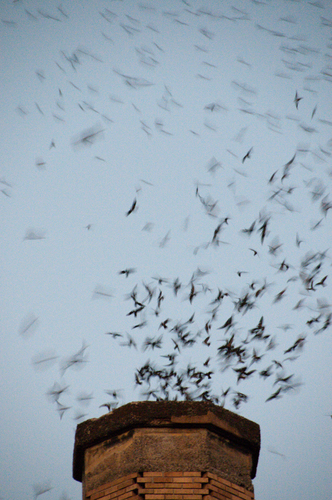
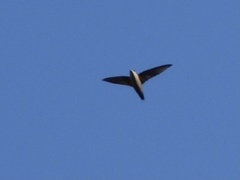
Vaux's swift (Chaetura vauxi) is a small swift native to North America, Central America, and northern South America. It was named for the American scientist William Sansom Vaux. This is a small swift, even compared to other Chaetura species, at 10.7 to 11.2 cm (4.2 to 4.4 in) long and weighing 18 g (0.63 oz). The northern populations are slightly larger at 11.5 cm (4.5 in), probably according to the Bergmann's Rule and/or migration requirements. It has a cigar-shaped body, crescentic wings and a short bluntly squared-off tail. The head, upperparts and wings are dusky black, and the underparts, rump and tail coverts are greyish brown. The throat is paler grey, becoming whitish in northern birds. The sexes are similar, but juveniles have dusky bases to the throat feathers.

Vaux's swift breeds in highlands from southern Alaska to central California and from southern Mexico, the northern Yucatán Peninsula, to eastern Panama and northern Venezuela. The United States' populations are migratory, wintering from central Mexico south through the Central American breeding range. The resident breeding birds in the southern part of the range are sometimes... Wikipedia →

Sounds

Flight call0:26

Mexico · 2015

© Frank Lambert · XC256663 · CC BY-NC-ND 4.0

Call0:49

United States · 2015

© Elias Aristides Elias · XC240483 · CC BY-NC-SA 4.0

Flight call0:05

United States · 2011

© Paul Marvin · XC150252 · CC BY-NC-SA 3.0

Global Distribution

Parks Where Found

# Park Country Daily sighting probability
1 Arrecifes de Cozumel National Park 🇲🇽 Mexico
~40%
2 Sian Ka'an Biosphere Reserve 🇲🇽 Mexico
~30%
3 Tikal National Park 🇬🇹 Guatemala
~20%
4 Cusuco National Park 🇭🇳 Honduras
~20%
5 Pico Bonito National Park 🇭🇳 Honduras
~20%
6 Henri Pittier National Park 🇻🇪 Venezuela
~20%
7 Redwood National Park 🇺🇸 United States
~20%
8 El Triunfo 🇲🇽 Mexico
~20%
9 Celaque National Park 🇭🇳 Honduras
~10%
10 La Tigra National Park 🇭🇳 Honduras
~10%
11 Masaya Volcano National Park 🇳🇮 Nicaragua
~10%
12 Coiba National Park 🇵🇦 Panama
~10%
13 Montes Azules Biosphere Reserve 🇲🇽 Mexico
~10%
14 Olympic National Park 🇺🇸 United States
~10%
15 Glacier National Park 🇺🇸 United States
~10%
16 Monteverde Cloud Forest Reserve 🇨🇷 Costa Rica
~10%
17 Lago de Yojoa 🇭🇳 Honduras
~10%
18 Tenorio Volcano National Park 🇨🇷 Costa Rica
~10%
19 Calakmul Biosphere Reserve 🇲🇽 Mexico
~10%
20 Rincón de la Vieja National Park 🇨🇷 Costa Rica
~10%
21 Sequoia and Kings Canyon National Parks 🇺🇸 United States
~10%
22 Cockscomb Basin Wildlife Sanctuary 🇧🇿 Belize
<5%
23 Cerro Azul Meámbar National Park 🇭🇳 Honduras
<5%
24 Arenal Volcano National Park 🇨🇷 Costa Rica
<5%
25 Braulio Carrillo National Park 🇨🇷 Costa Rica
<5%
26 La Amistad International Park (Panama) 🇵🇦 Panama
<5%
27 Ostional Wildlife Refuge 🇨🇷 Costa Rica
<5%
28 Volcán Barú National Park 🇵🇦 Panama
<5%
29 Biotopo Cerro Cahuí 🇬🇹 Guatemala
<5%
30 Reserva de la Biosfera Mariposa Monarca 🇲🇽 Mexico
<5%
31 Tapantí-Macizo de la Muerte National Park 🇨🇷 Costa Rica
<5%
32 Cañón del Sumidero National Park 🇲🇽 Mexico
<5%
33 Chirripó National Park 🇨🇷 Costa Rica
<5%
34 Pacific Rim National Park Reserve 🇨🇦 Canada
<5%
35 Great Bear Rainforest 🇨🇦 Canada
<5%
36 Yosemite National Park 🇺🇸 United States
<5%
37 Los Quetzales National Park 🇨🇷 Costa Rica
<5%
38 Poás Volcano National Park 🇨🇷 Costa Rica
<5%
39 Soberanía National Park 🇵🇦 Panama
<5%
40 Irazú Volcano National Park 🇨🇷 Costa Rica
<5%
41 Channel Islands National Park 🇺🇸 United States
<5%
42 Ría Lagartos Biosphere Reserve 🇲🇽 Mexico
<5%
43 Carara National Park 🇨🇷 Costa Rica
<5%
44 Celestún Biosphere Reserve 🇲🇽 Mexico
<5%
45 Cabo Blanco Absolute Nature Reserve 🇨🇷 Costa Rica
<5%
46 Death Valley National Park 🇺🇸 United States
<5%
47 Saguaro National Park 🇺🇸 United States
<5%
48 Parque Natural Metropolitano 🇵🇦 Panama
<5%
49 Joshua Tree National Park 🇺🇸 United States
<5%
50 Gandoca-Manzanillo Wildlife Refuge 🇨🇷 Costa Rica
<5%
51 Palo Verde National Park 🇨🇷 Costa Rica
<5%
52 Grand Canyon National Park 🇺🇸 United States
<5%
53 Rocky Mountain National Park 🇺🇸 United States
<5%

Cities Where Found

# City Country Daily sighting probability
1 San Salvador 🇸🇻 El Salvador
~30%
2 Guatemala City 🇬🇹 Guatemala
~20%
3 Portland 🇺🇸 United States
~20%
4 San José 🇨🇷 Costa Rica
~10%
5 Mexico City 🇲🇽 México
~10%
6 Managua 🇳🇮 Nicaragua
~10%
7 San Pedro Sula 🇭🇳 Honduras
<5%
8 Seattle 🇺🇸 United States
<5%
9 Vancouver 🇨🇦 Canada
<5%
10 San Francisco 🇺🇸 United States
<5%

Before you go

What are the chances of seeing a Vaux's Swift in Arrecifes de Cozumel National Park?

Likely

About 40% of wildlife watchers report a Vaux's Swift sighting in Arrecifes de Cozumel National Park on a given day, based on 846 verified sightings from GBIF citizen-science data from 2019 to 2026. It is the 25th most-seen of the 205 birds we can rate there. Over three days the chance rises to about 80%, and over a week to over 90%, if each day is a fresh chance.

When is the best time to see a Vaux's Swift in Arrecifes de Cozumel National Park?

July

In that month about 80% of wildlife watchers report a Vaux's Swift in Arrecifes de Cozumel National Park on a given day, against about 30% in October to February, the lowest months.

What time of day is best to see a Vaux's Swift?

Between 6 and 9 pm

Across all the parks we cover, that three-hour window holds the most Vaux's Swift sightings with a recorded time, and about 7 in 10 of them come between 6 am and 6 pm: it is most active around dawn and dusk.

Is Arrecifes de Cozumel National Park the best place to see a Vaux's Swift?

Yes

Of the 53 parks where we can rate Vaux's Swift sightings, Arrecifes de Cozumel National Park has the highest daily chance: about 40%. Next come Sian Ka'an Biosphere Reserve (Mexico, about 30%) and Tikal National Park (Guatemala, about 20%). All parks ranked.

Where does the Vaux's Swift sighting chance come from?

GBIF citizen-science records

It is estimated from how often the Vaux's Swift is recorded against all the birds logged in Arrecifes de Cozumel National Park (846 verified sightings from 2019 to 2026), calibrated against known sighting rates. Figures are rounded to the nearest 10% because citizen-science data supports honest approximations, not decimals, and months with records from fewer than five people show "—". How it works.

← Back to Arrecifes de Cozumel National Park