

Completed



Monarch
Danaus plexippus
- KingdomAnimalia (Animals)
- PhylumArthropoda (Arthropods)
- ClassInsecta (Insects)
- OrderLepidoptera (Butterflies and Moths)
- FamilyNymphalidae (Brush-footed Butterflies)
- GenusDanaus (Tiger Milkweed Butterflies)
- SpeciesDanaus plexippus (Monarch)
In 3 days ~30% in a week ~60%
17 Verified sightings at Zion National Park From 2019 to 2026
3,584 In all 48 parks
August Best month
☀️ Diurnal When it's spotted

Completed
About the Monarch
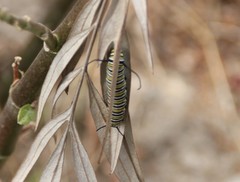
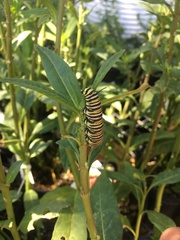
The monarch butterfly or simply monarch (Danaus plexippus) is a milkweed butterfly (subfamily Danainae) in the family Nymphalidae. Other common names, depending on region, include milkweed, common tiger, wanderer, and black-veined brown. It is among the most familiar of North American butterflies and an iconic pollinator, although it is not an especially effective pollinator of milkweeds. Its wings feature an easily recognizable black, orange, and white pattern, with a wingspan of 8.9–10.2 cm (3.5–4.0 in). A Müllerian mimic, the viceroy butterfly, is similar in color and pattern, but is markedly smaller and has an extra black stripe across each hindwing.
The eastern North American monarch population is notable for its annual southward late-summer/autumn instinctive migration from the northern and central United States and southern Canada to Florida and Mexico. During the fall migration, monarchs cover thousands of miles, with a corresponding multigenerational return north in spring. The western North American population of monarchs west of the Rocky Mountains often migrates to sites in southern California, but have been found in overwintering Mexican sites, as well. Populations are found further south in the Americas, and in parts of Europe, Oceania, and Southeast Asia. Wikipedia →
Recent sightings of Monarch in Zion National Park
LIVEiNaturalistGlobal Distribution
Parks Where Found
Cities Where Found
| # | City | Country | Daily sighting probability |
|---|---|---|---|
| 1 | Guatemala City | 🇬🇹 Guatemala | |
| 2 | Detroit | 🇺🇸 United States | |
| 3 | León | 🇲🇽 México | |
| 4 | Minneapolis [Saint Paul] | 🇺🇸 United States | |
| 5 | Puebla | 🇲🇽 México | |
| 6 | Toronto | 🇨🇦 Canada | |
| 7 | San Luis Potosí | 🇲🇽 México | |
| 8 | Chicago | 🇺🇸 United States | |
| 9 | Medellín | 🇨🇴 Colombia | |
| 10 | Lima | 🇵🇪 Peru |
Zoos & Centres Where Found
| # | Zoo / Centre | Country | |
|---|---|---|---|
| 1 | Key West Butterfly and Nature Conservatory | 🇺🇸 United States |
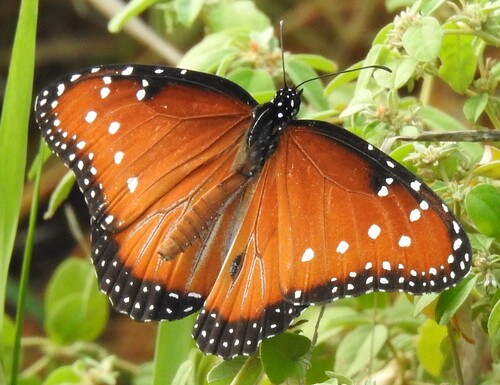
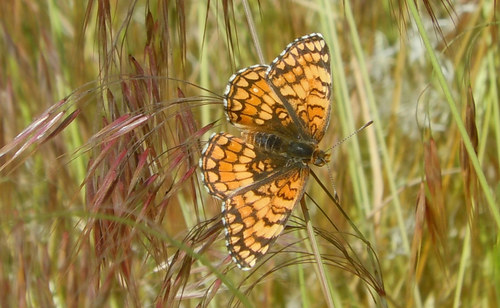
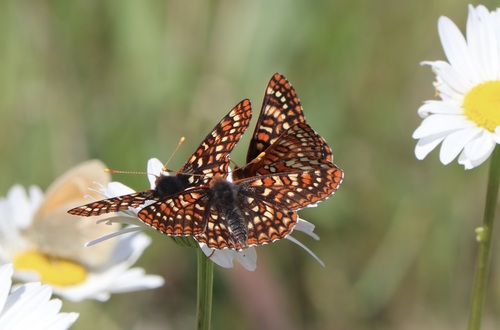
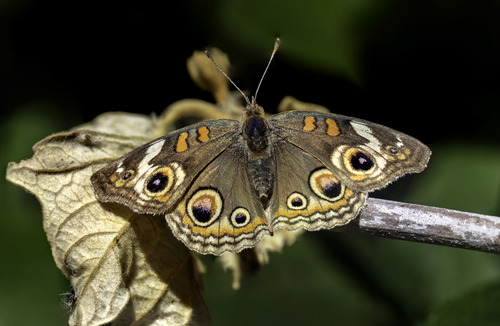
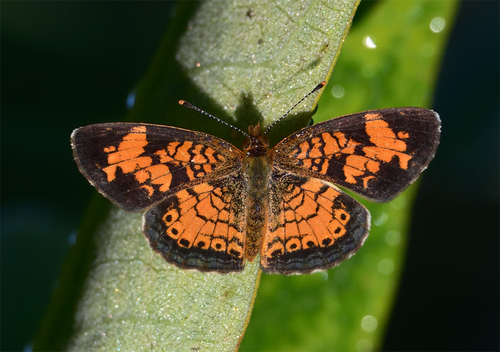
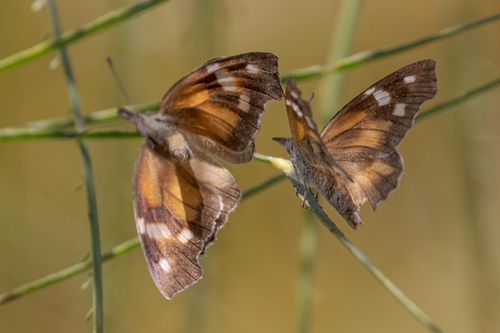
Closest Relatives at Zion National Park






Before you go
What are the chances of seeing a Monarch in Zion National Park?
With luck
About 10% of wildlife watchers report a Monarch sighting in Zion National Park on a given day, based on 17 verified sightings from GBIF citizen-science data from 2019 to 2026. It is the 39th most-seen of the 114 insects we can rate there. Over three days the chance rises to about 30%, and over a week to about 60%, if each day is a fresh chance.
When is the best time to see a Monarch in Zion National Park?
August
In that month about 30% of wildlife watchers report a Monarch in Zion National Park on a given day, against under 5% in July and December–May, the lowest months.
What time of day is best to see a Monarch?
Between 11 am and 2 pm
Across all the parks we cover, that three-hour window holds the most Monarch sightings with a recorded time, and about 9 in 10 of them come between 6 am and 6 pm: it is a daytime animal.
Is Zion National Park the best place to see a Monarch?
39th of 48
Of the 48 parks where we can rate Monarch sightings, Zion National Park ranks 39th at about 10%. The best odds are in Reserva de la Biosfera Mariposa Monarca (Mexico, about 90%), Acadia National Park (United States, about 40%) and Shenandoah National Park (United States, about 40%). All parks ranked.
Where does the Monarch sighting chance come from?
GBIF citizen-science records
It is estimated from how often the Monarch is recorded against all the insects logged in Zion National Park (17 verified sightings from 2019 to 2026), calibrated against known sighting rates. Figures are rounded to the nearest 10% because citizen-science data supports honest approximations, not decimals, and months with records from fewer than five people show "—". How it works.
